
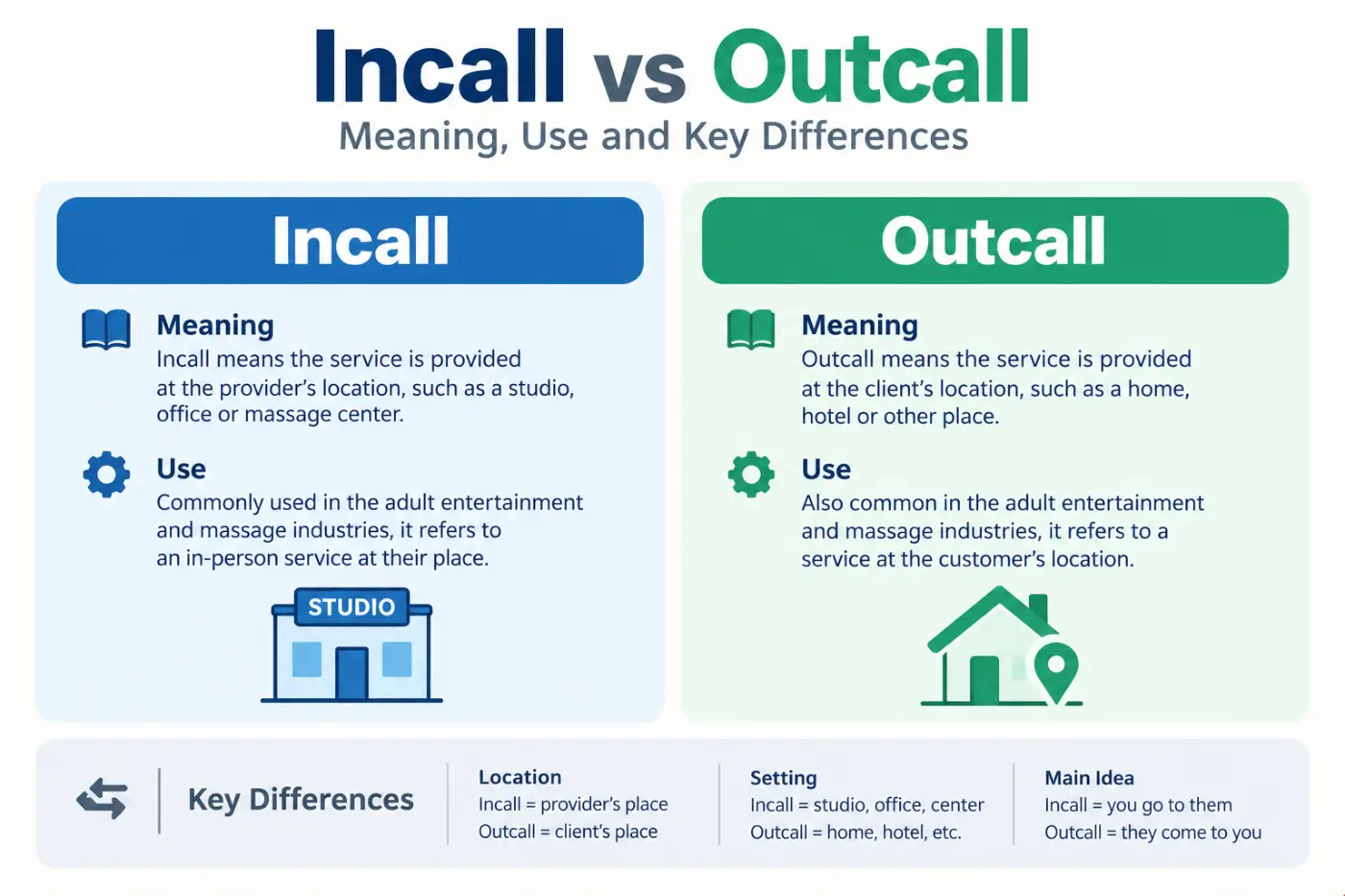
If you’ve seen the terms incall and outcall in a service listing, you might wonder what separates them. The difference is simple. With an incall appointment, the customer visits the service provider’s location. With an outcall appointment, the provider travels to the customer’s chosen location.
The distinction matters because it can affect travel plans, pricing, privacy, scheduling, and the type of appointment you can book. A massage therapist might offer sessions at a private studio and travel to clients’ homes. A healthcare professional might provide care at a clinic or visit a patient’s residence. Both arrangements follow the same basic principle.
Understanding incall vs outcall also helps you read service descriptions accurately and avoid booking the wrong type of appointment. Although both terms describe how a service takes place, they don’t tell you everything about the provider’s qualifications, safety standards, or fees. You should check those details separately.
This guide explains the meanings, spelling, pronunciation, grammar, regional usage, and practical differences between the two terms. You’ll also find real world examples and answers to common questions so you can choose the right expression with confidence.
A related grammar guide is Comprable Vs Comparable Which Word Is Correct in 2026.
Quick Answer
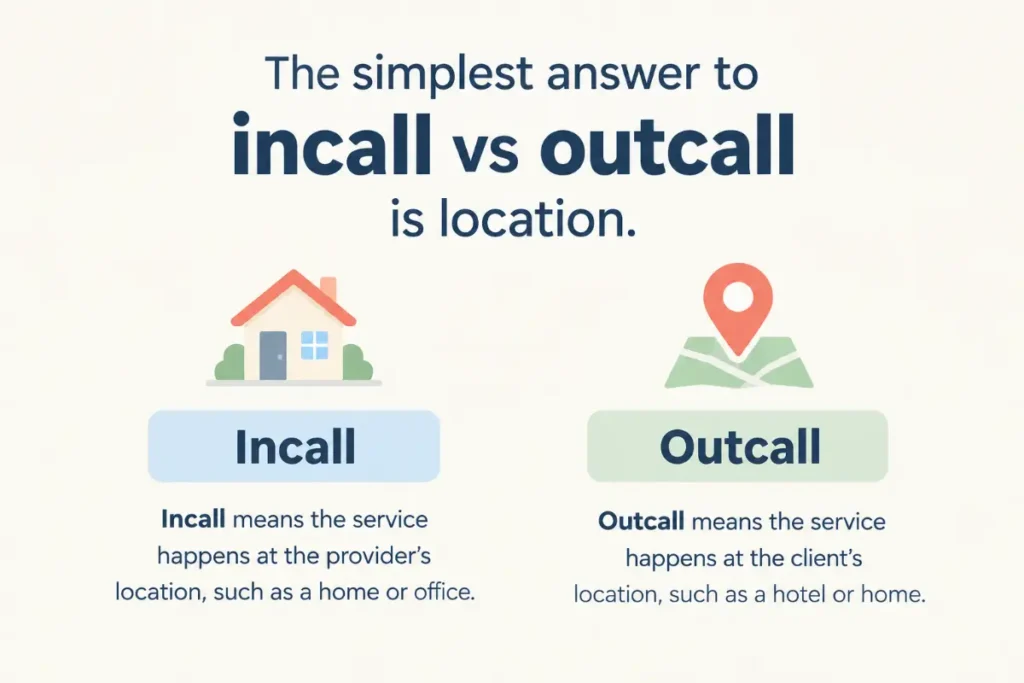
An incall service takes place at the provider’s location, so the customer travels to the provider. An outcall service takes place at a location chosen by the customer, so the provider travels to the customer. Both terms are valid English expressions, and the correct choice depends on the service arrangement.
What Incall and Outcall Mean
What Is an Incall Service
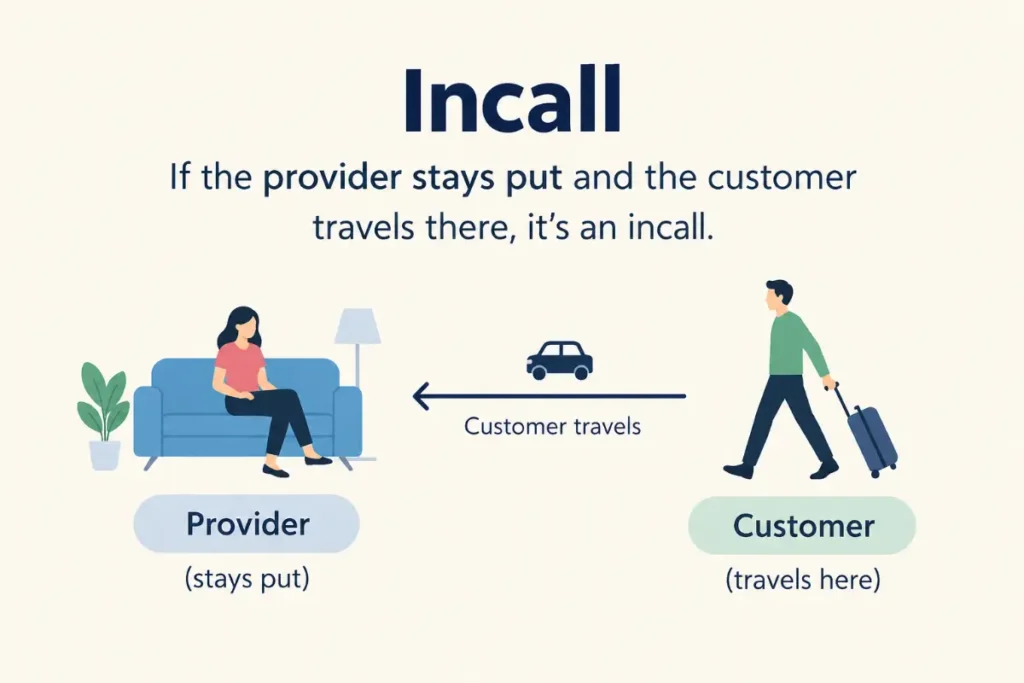
An incall service is an appointment that takes place at the service provider’s designated location. The customer travels to that location rather than asking the provider to come to them.
The location might be a professional office, a salon, a massage studio, a clinic, or another approved place of business. The exact setting depends on the industry and the provider’s working arrangements.
For example, imagine that you book a massage at a therapist’s studio. You drive to the studio, arrive at the scheduled time, and receive the treatment there. That appointment is an incall service.
Providers may prefer this arrangement because they can work from one location, organize their schedules, and keep their equipment in a dedicated space. Customers may prefer it because they don’t need to arrange a suitable treatment area at home.
However, an incall appointment doesn’t automatically mean the service costs less or offers more privacy. Those details depend on the provider’s policies and the type of service.
What Is an Outcall Service
An outcall service is an appointment that takes place at the customer’s location or another agreed upon location away from the provider’s usual premises. The provider travels to deliver the service.
Common examples include a massage therapist visiting a hotel, a hairstylist traveling to a client’s home, or a healthcare professional making a home visit. In each case, the professional goes to the customer rather than requiring the customer to visit a permanent business location.
Outcall appointments can save customers travel time and make certain services easier to access. They’re particularly useful for people with busy schedules, limited transportation, mobility needs, or a preference for receiving a service in familiar surroundings.
The arrangement can also create extra work for the provider. Travel time, parking, equipment transport, and distance may affect the price or available appointment times.
An outcall booking doesn’t necessarily mean the provider will travel anywhere. Many professionals limit their service area and require a suitable location before confirming an appointment.
Incall vs Outcall Comparison Table
The following table summarizes the main differences.
| Feature | Incall | Outcall |
|---|---|---|
| Meaning | Customer visits the provider | Provider visits the customer |
| Travel | Customer travels | Provider travels |
| Location | Provider’s designated premises | Customer’s home, hotel, office, or agreed location |
| Scheduling | Usually based on the provider’s location and availability | Also depends on travel time and service area |
| Pricing | May exclude travel expenses | May include travel fees or minimum booking charges |
| Equipment | Often already available at the service location | May need to be transported |
| Customer convenience | Works well for customers who can travel | Works well for customers who prefer on site service |
| Provider convenience | Allows work from one established location | Requires travel planning |
| Common settings | Clinics, salons, studios, offices | Homes, hotels, offices, care facilities |
| Grammar | Noun modifier or industry specific term | Noun modifier or industry specific term |
The key difference is the direction of travel. The customer goes to the provider for an incall appointment, while the provider goes to the customer for an outcall appointment. Other details, including price and availability, vary by business.
Which Term Is Correct
Both incall and outcall are legitimate terms in service related English. Neither one is inherently incorrect, and neither is a misspelling of the other. They describe two different ways to arrange an appointment.
The word you should use depends on who travels and where the service takes place. If the customer visits the professional’s location, use incall. If the professional travels to the customer, use outcall.
For example, a massage therapist might advertise both options. Customers can visit the therapist’s studio for an incall session or arrange an outcall session at home, depending on availability.
These terms are especially common in industries that offer both fixed location appointments and mobile services. They aren’t equally common in every field, though. In general healthcare, expressions such as home visit, mobile appointment, and on site service may sound more familiar or professional.
Is Incall One Word or Two
Incall is commonly written as one word in service listings and industry specific language. The same applies to outcall. However, some writers use expressions such as in call or out call in particular contexts.
The correct choice depends on the intended meaning. In a telephone conversation, for example, an incoming call is a call that reaches the person receiving it. That meaning differs from incall as a service arrangement.
When describing a provider’s appointment options, use incall and outcall consistently. Avoid switching between one word and two words without a clear reason.
Does the Context Change the Meaning
Yes. Although the basic idea remains the same, the terms can carry different practical details across industries.
In massage therapy, an incall session generally happens at a therapist’s studio, while an outcall session happens at a customer’s home or hotel. In healthcare, a clinic appointment and a home visit provide a similar contrast, but professionals may use those more familiar terms instead.
In consulting, a professional might work at an office or travel to a client’s workplace. A business could describe these arrangements as office based and on site services rather than using the two terms discussed here.
The safest approach is to read the complete service description. The label alone may not tell you the exact address, travel limits, extra fees, or equipment requirements.
Key Differences Explained
Spelling and Word Formation
Both terms follow a similar pattern. Each combines a short directional element with the word call to describe a service arrangement.
Incall begins with in, which suggests movement inward or attendance at a particular place. Outcall begins with out, which suggests movement away from a person’s usual location to another place.
These meanings help explain why the words work as a pair. They don’t mean that the customer is making an incoming telephone call or placing an outgoing call. In service listings, they describe the location of an appointment.
Meaning and Grammar
Both words commonly function as nouns or as modifiers before another noun. For example, you can refer to an incall appointment, an outcall service, or the availability of outcall visits.
The terms are often used as shorthand. A listing might say that a provider offers incall and outcall services without spelling out the complete arrangements in every sentence.
However, they’re specialized expressions rather than universal terms for all types of appointments. In a formal report, you may want to write that a professional provides services at their office or travels to clients’ locations. That phrasing makes the arrangement clear to readers who don’t know the industry terminology.
Pronunciation
Both words have two syllables and use the same main stress pattern. The stress falls on the first syllable.
Incall is commonly pronounced as in kawl, while outcall is commonly pronounced as owt kawl. The vowel in call can vary slightly by regional accent.
Neither word needs a complicated pronunciation rule. If you can say the ordinary words in and out followed by call, you can usually pronounce these compounds correctly.
Formality and Professional Tone
Incall and outcall are direct and useful within industries that regularly offer both arrangements. They’re especially practical in short service listings, booking forms, and scheduling conversations.
Outside those settings, some readers may find the terms unfamiliar. For example, a hospital website might communicate more clearly by saying that a clinician offers home visits instead of describing them as outcalls.
Choose the expression your audience is most likely to understand. If you serve a broad audience, explain the arrangement in plain English the first time you use either term.
Regional Usage
The underlying distinction remains the same across major varieties of English. There isn’t a standard American versus British spelling change that makes one word correct in the United States and the other correct in the United Kingdom.
Still, local industry habits can affect how familiar these expressions sound. A mobile service company might use different wording from a massage studio or a private healthcare practice.
For international audiences, a short explanation can prevent confusion. You don’t need to change the basic meaning, just make the travel arrangement explicit.
Ten Natural Example Sentences
These examples show how to use both terms in everyday communication. The first five describe appointments at the provider’s location, while the next five describe services delivered at the customer’s location.
- The massage therapist offers incall appointments at her downtown studio.
- I booked an incall session because the clinic is close to my office.
- Please check the provider’s incall availability before confirming your appointment.
- The salon accepts incall bookings from Tuesday through Saturday.
- An incall appointment may be more convenient if you already live nearby.
- The therapist offers outcall services for clients who prefer home visits.
- We requested an outcall appointment at our hotel.
- The company charges an additional travel fee for outcall bookings outside its service area.
- The stylist confirmed that outcall service was available for our event.
- Before booking an outcall appointment, ask the provider what equipment you need to supply.
Each sentence uses the terms to describe the location arrangement rather than the nature or quality of the service. The surrounding details explain how that arrangement affects the appointment.
Common Mistakes to Avoid
Confusing Service Calls With Telephone Calls
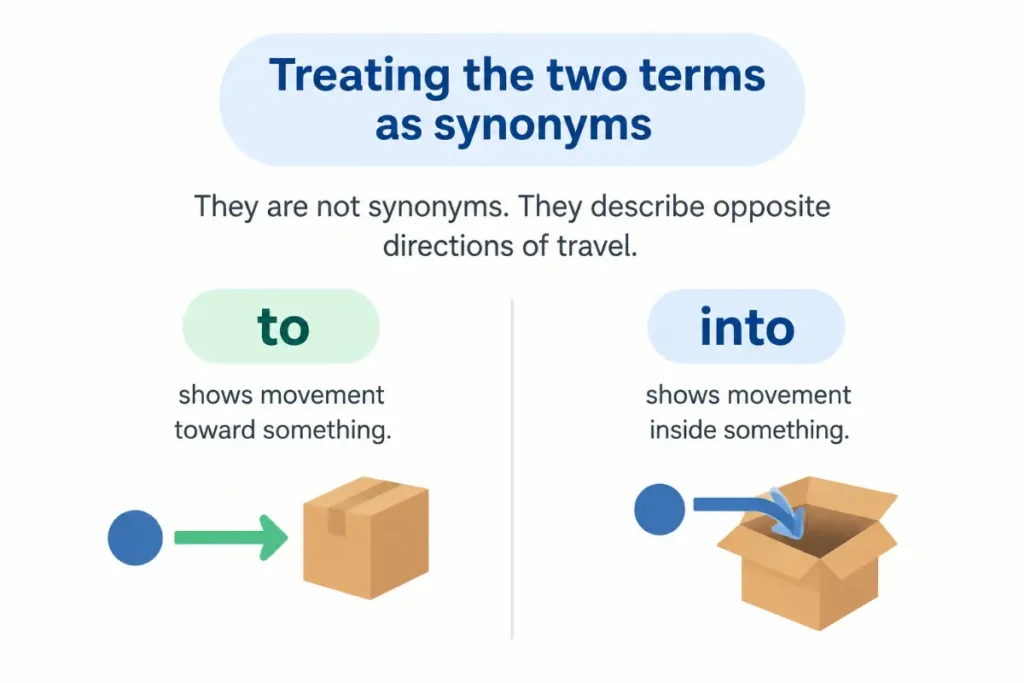
One common mistake is assuming that incall and outcall always refer to telephone activity. In telecommunications, incoming and outgoing calls describe the direction of a phone connection. In service listings, the two terms usually describe where a face to face appointment happens.
Incorrect for the intended service meaning. The company offers incoming calls at the customer’s home.
Clearer version. The company offers outcall services at the customer’s home.
The revised sentence explains that the provider travels to the customer.
Assuming One Form Is Incorrect
Neither form is automatically wrong. Treating outcall as a misspelling of incall, or the reverse, changes the meaning instead of correcting the spelling.
Incorrect. The correct spelling is incall because outcall is not a real word.
Correct. Incall and outcall are both used for different service arrangements.
Using the Terms Without Explaining the Location
Readers unfamiliar with industry language may not understand a listing that says only incall available. Add a short explanation if your audience includes first time customers.
Unclear. We offer incall and outcall.
Clearer. We offer appointments at our studio and mobile appointments at customer locations.
The clearer wording communicates the same options without relying on specialized vocabulary.
Ignoring Travel Fees
An outcall appointment may require extra travel, but the word itself doesn’t promise a particular price. Some providers include travel in the rate, while others charge separately.
For example, a listing that says outcall available doesn’t necessarily mean travel is free. Customers should check the total price before booking.
Mixing Different Spelling Styles
Writers sometimes alternate between incall, in call, and in-call in the same service description. That inconsistency can make a listing look careless.
Choose one form that fits your industry and use it throughout the page. If you follow a company’s established style guide, keep its preferred spelling unless there is a clear reason to revise it.
For another common grammar confusion, see hope you are doing well Meaning And Better Ways To Use It.
Pronunciation Guide
Both terms are easy to pronounce once you recognize their two parts.
| Word | IPA | Syllables | Simple pronunciation |
|---|---|---|---|
| Incall | /ˈɪnˌkɔːl/ | in call | in kawl |
| Outcall | /ˈaʊtˌkɔːl/ | out call | owt kawl |
The IPA shown here represents a common pronunciation pattern. Exact vowel sounds can vary by accent, particularly the vowel in call.
How to Pronounce Incall
Say the first part like the word in, then say call. Put the strongest stress on the first syllable.
The word should sound like one connected compound rather than two unrelated words. You don’t need to pause between its parts.
How to Pronounce Outcall
Start with out and follow it with call. Again, stress the first syllable.
The main pronunciation mistake is usually not the individual sounds. It’s confusing the meaning with telephone terminology or placing unnecessary emphasis on the second part.
If you’re speaking with someone unfamiliar with the phrase, you can avoid confusion by explaining that you mean an appointment at the provider’s location or a service delivered at the customer’s location.
Etymology and Word Origin
The two terms follow a familiar English word formation pattern. They combine directional elements with call to create expressions associated with different service arrangements.
The prefix in commonly conveys movement toward the inside of a place or a position within something. The word out often conveys movement away from an established point or toward an exterior location. These basic meanings help explain the contrast between the terms.
The word call has a long history in English and can refer to summoning someone, requesting someone’s presence, or making contact. In business settings, a call can also refer to a visit made by a professional or representative.
Together, these elements form practical labels for different ways to provide a service. However, the meaning of a compound word depends on its established use, not just the meanings of its individual parts.
There isn’t a need to assign an exact invention date to either term to understand how it works today. Their current service related meanings are the useful point for most readers.
Regional Usage
American English
In the United States, both terms appear in certain service industries, particularly in listings that distinguish between appointments at a provider’s location and appointments at a customer’s location.
However, their familiarity depends on the audience. People who regularly book mobile massage or similar services may recognize them immediately. Others may understand home visit, mobile service, or appointment at our location more quickly.
For a US business website, use incall and outcall if your customers already know the terms. Otherwise, explain each option in plain language.
British English
The basic distinction remains understandable in British English, but local providers may favor other expressions, such as home visit, mobile appointment, or service at your address.
There is no general rule that makes incall an American spelling and outcall a British spelling. The difference concerns the arrangement, not a national spelling standard.
Australian English
Australian service providers may use similar terminology when describing mobile appointments and fixed location services. However, the exact wording varies by industry and business.
For general readers, phrases such as in studio and mobile service may communicate the arrangement more naturally than specialized labels.
Canadian English
Canadian English follows the same broad distinction. A customer who travels to a professional’s premises receives the service at that location, while a professional who travels to the customer provides a mobile or on site service.
As in the United States and other English speaking regions, the best wording depends on the type of business and the people reading the listing.
Grammar Rules and Part of Speech
Both terms function mainly as compound nouns or as modifiers in service related writing. Their grammar is straightforward, but a few patterns are worth understanding.
Using the Terms as Nouns
You can use either term to name an appointment type or service option.
Examples include these sentences.
- Incall is available on weekdays.
- Outcall costs depend on the travel distance.
In these examples, each term refers to a service arrangement. The surrounding sentence determines its grammatical role.
Using the Terms as Modifiers
The words also appear before nouns to describe a type of appointment, service, or booking.
- We offer incall appointments at our studio.
- The provider accepts outcall bookings within a limited area.
This pattern is common in short descriptions because it saves space. In longer explanations, you can replace the specialized term with a more descriptive phrase.
Using the Terms in Formal Writing
Neither term is automatically ungrammatical in formal writing. However, professional writing should account for its audience.
A service provider writing for industry professionals may reasonably use both expressions without further explanation. A public health organization writing for the general public may communicate more clearly with terms such as clinic appointment and home visit.
The goal isn’t to avoid specialized language at all costs. It’s to use language that accurately communicates the intended arrangement.
Capitalization and Punctuation
In ordinary sentences, write incall and outcall in lowercase unless they appear at the beginning of a sentence or in a title that follows a capitalization style.
Neither term normally requires quotation marks. You also don’t need a hyphen in the common one word forms used in service listings.
Consistency matters more than decorative punctuation. Use the same spelling throughout your website, booking form, and customer messages.
Real Life Usage Examples
The following examples show how the distinction works in different communication settings.
Daily Conversation
A person might ask a massage therapist, Do you offer appointments at your studio, or can you come to my home.
The therapist could answer, I offer both options. You can book a studio appointment or request a mobile visit.
This exchange communicates the arrangement directly. It also shows that a conversation doesn’t need industry terminology to explain the difference.
Email and Workplace Communication
A company arranging employee wellness sessions might write, We would like to request an outcall appointment for our office wellness event.
A service provider might reply, Our team can travel to your office on Friday, provided the location falls within our service area.
These examples show how a business can describe travel requirements and scheduling in a professional tone.
Academic and Educational Writing
A report about mobile service delivery could explain that providers may operate from a permanent facility or travel to clients’ locations.
Another paper might compare the cost of fixed location appointments with mobile appointments, including the effect of travel time on service delivery.
In academic writing, descriptive terms are often preferable unless the industry specific labels are central to the research. Define specialized terms before relying on them throughout a paper.
News and Journalism
A local news report about home healthcare might explain that a clinic has expanded its home visit program to serve people who struggle to travel.
A business report about mobile personal care could describe how providers offer appointments at their studios and at customer locations.
Journalists should choose familiar wording and explain specialized expressions when the intended audience may not recognize them.
Literature and Storytelling
A story about a traveling massage therapist might describe a client who books a home appointment because the weather makes driving difficult.
Another story might feature a customer who visits a small studio for a scheduled treatment before returning to work.
Writers can use either term when the context supports it, but plain descriptions often create a clearer picture for readers who aren’t familiar with service industry language.
Related and Confused Terms
Several expressions describe similar arrangements, but they aren’t perfect substitutes in every situation.
1. Home visit. A professional travels to someone’s home to provide a service. This is common in healthcare and social care.
2. Mobile service. A business brings its service to different locations rather than relying entirely on a permanent premises. It can describe many industries.
3. On site service. A provider delivers a service at a particular location, such as a customer’s office or worksite. The phrase doesn’t always mean a home visit.
4. In studio. A customer visits a studio where the professional works. This is often clearer than specialized terminology for creative or personal care services.
5. At home appointment. A broad phrase for a service delivered at someone’s residence. It describes the location without requiring the reader to know industry shorthand.
6. Clinic appointment. A customer visits a healthcare facility to receive care. This can describe an arrangement similar to an incall service, though the terms aren’t interchangeable in every healthcare context.
7. Incoming call. A telephone call that reaches a person or organization. This is different from an appointment at a provider’s location.
8. Outgoing call. A telephone call placed by a person or organization. It describes communication rather than the location of a service appointment.
These distinctions matter because similar looking words can belong to different contexts. Before choosing a synonym, identify the exact idea you want to communicate.
Expert Editor Insight
An experienced editor looks at meaning before spelling. Since both terms are valid in service related contexts, changing one to the other without checking the sentence can introduce an error rather than fix one. Spelling and grammar tools may recognize the words differently depending on their dictionaries and context settings. If a tool flags either term, check the intended meaning and your industry’s preferred style before making a change. For general audiences, a phrase such as appointment at our studio or service at your location often communicates the idea more clearly.
Need another quick comparison? Read Gnaw or Knaw Which Spelling Is Correct.
Conclusion
The difference between incall vs outcall comes down to who travels to the appointment. With incall, the customer visits the provider’s location. With outcall, the provider travels to the customer. Both terms are valid, and neither is a misspelling of the other. Their suitability depends on the service, the audience, and the context in which you use them. For clear professional writing, explain the arrangement if your readers may not recognize the terminology.
A simple editing tip can help you remember the distinction. Ask yourself who is traveling. If the customer goes to the provider, use incall. If the provider goes to the customer, use outcall.
FAQs
Is Incall a Real Word?
Yes. Incall is used in service related English to describe an appointment that takes place at the provider’s location. The customer travels to the professional rather than asking the professional to travel to them. Although the term is familiar in some industries, other readers may find studio appointment or office appointment easier to understand.
Is Outcall a Real Word?
Yes. Outcall is a recognized term in service listings and other contexts where professionals travel to customers. It usually describes a service delivered at a customer’s home, hotel, office, or another agreed location. The word doesn’t automatically mean that travel is included in the price. Providers may set service areas, travel fees, and other booking conditions.
What Is the Difference Between Incall and Outcall?
The difference is who travels to the appointment. With an incall arrangement, the customer visits the provider’s location. With an outcall arrangement, the provider travels to the customer. Both expressions are valid, so neither is a universal replacement for the other. Check the service description to confirm the location, price, and scheduling requirements.
How Do You Pronounce These Terms?
Incall is commonly pronounced as in kawl, while outcall sounds like owt kawl. Both words have two syllables, with the main stress on the first syllable. The vowel in call can vary by regional accent. You can pronounce the words naturally by connecting their familiar parts without adding a pause between them.
Can Incall or Outcall Start a Sentence?
Yes. Both terms can begin a sentence when they function as nouns or when the sentence structure calls for them. For example, you could write, Incall appointments take place at our studio. You could also write, Outcall services require advance booking. Capitalize the first word as usual when it begins a sentence.
What Is Another Word for Outcall?
Useful alternatives include mobile service, home visit, on site appointment, and service at your location. The best choice depends on the industry. Healthcare providers often use home visit, while businesses may prefer on site service or mobile appointment. These expressions explain the arrangement without assuming the reader knows specialized service terminology.
Why Do People Confuse These Terms?
People often confuse the terms because both describe service appointments and share the word call. The prefixes in and out suggest opposite directions, but readers may not know which person travels. Telephone terminology can add to the confusion. A short explanation of the appointment location usually resolves the problem immediately.
Are These Terms Appropriate in Formal Writing?
Both terms can work in formal writing when the audience understands them. However, general business documents, academic papers, and public information pages may benefit from more descriptive wording. Phrases such as appointment at the provider’s office and service delivered at the customer’s location make the arrangement clear. Follow your organization’s style guide and define specialized terms when needed.