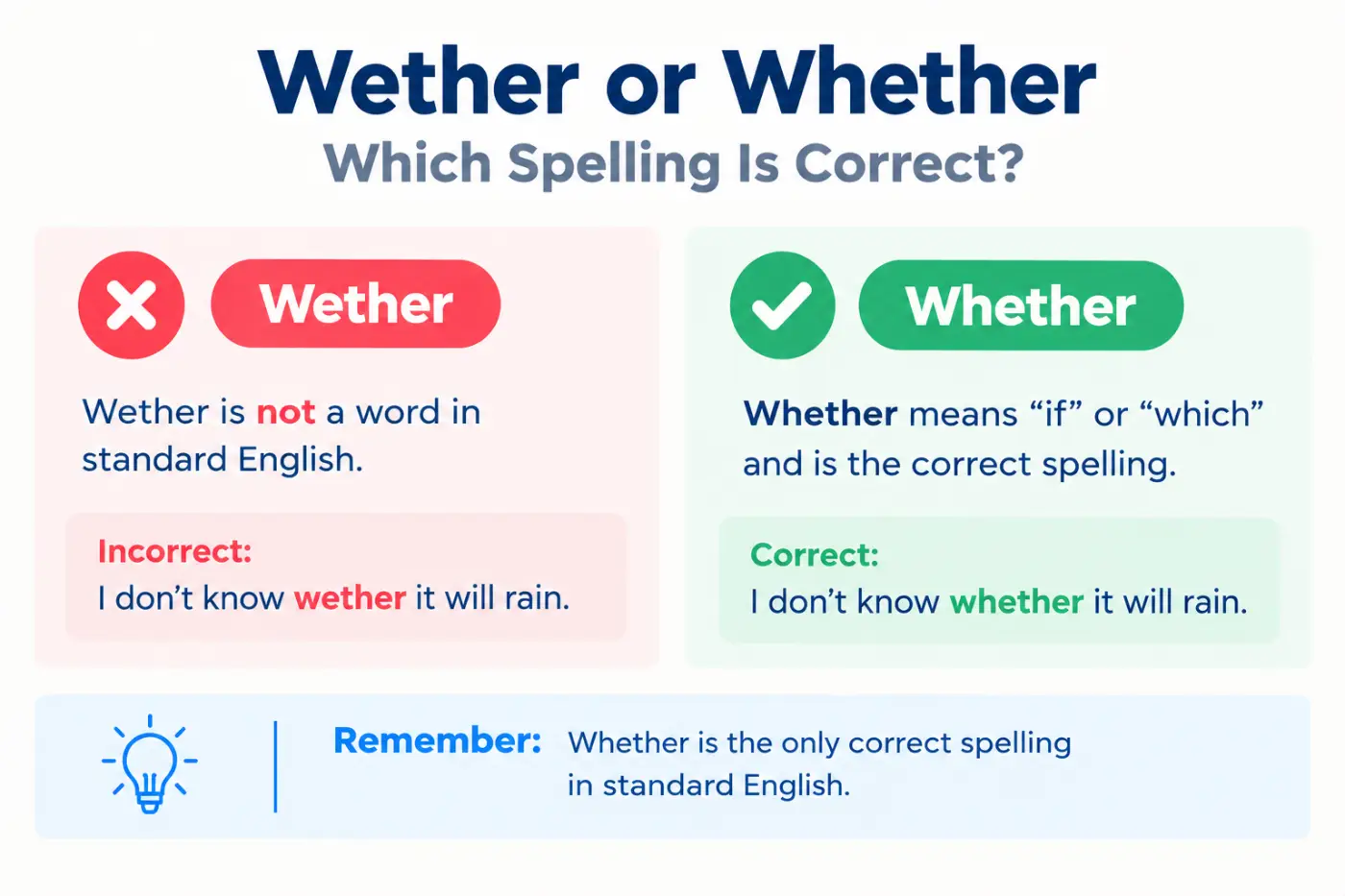
Wether or Whether Which Spelling Is Correct

Wether or Whether Which Spelling Is Correct

Wether or whether can be confusing because the two words look almost identical and sound alike in many English accents. However, they have very different meanings. Whether is a conjunction that introduces alternatives or expresses uncertainty, while wether is a specialized noun used mainly in farming and animal husbandry. The good news is that you … Read more

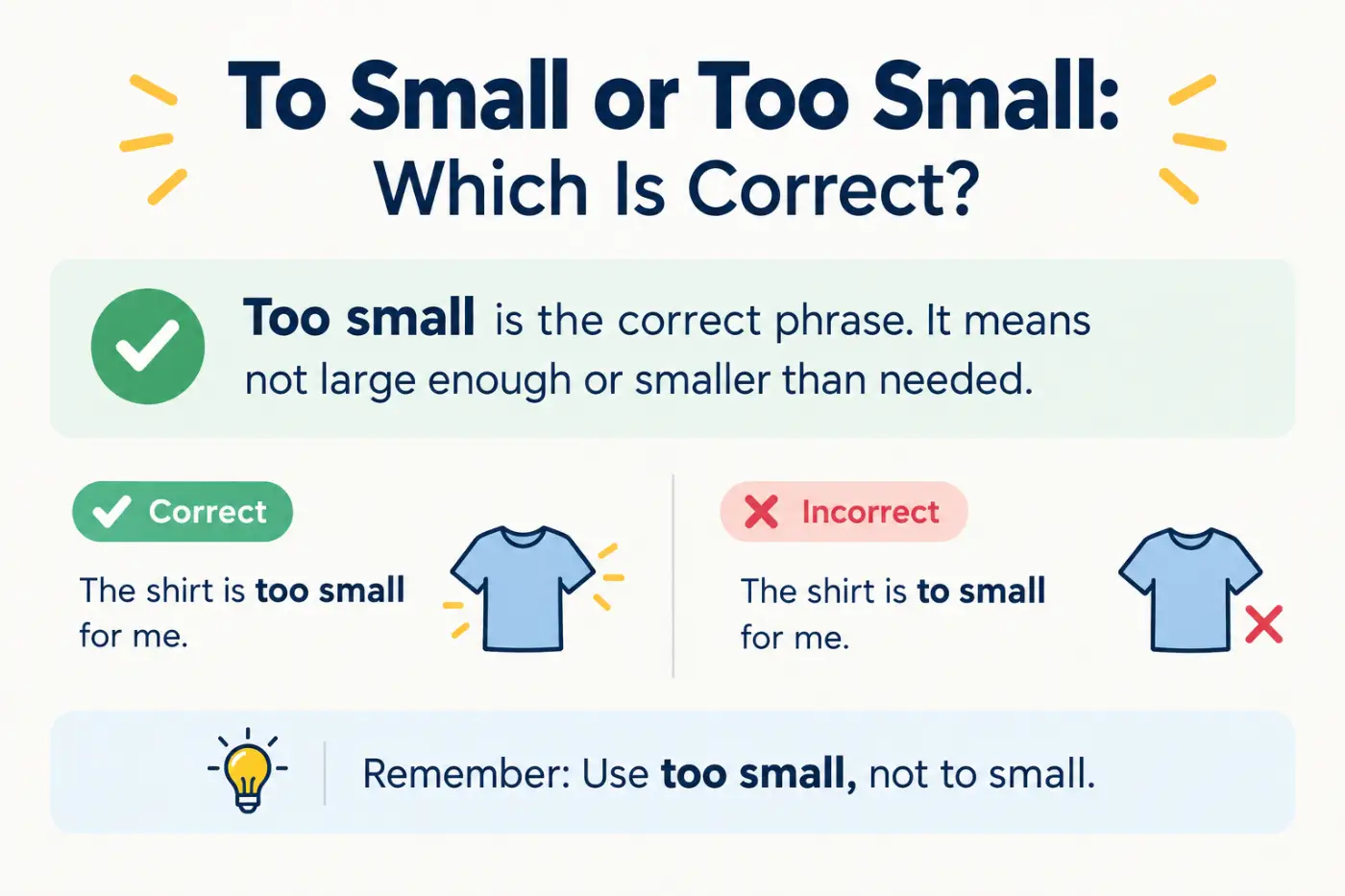
To Small or Too Small: Which Is Correct?

Too Small or Too Small_ Grammar Guide

To small or too small is a common English spelling confusion because the words to and too sound alike in everyday speech. However, they have different meanings and grammatical functions. When you want to say that something does not have enough size, too small is the correct expression. For example, you should write, The shoes … Read more

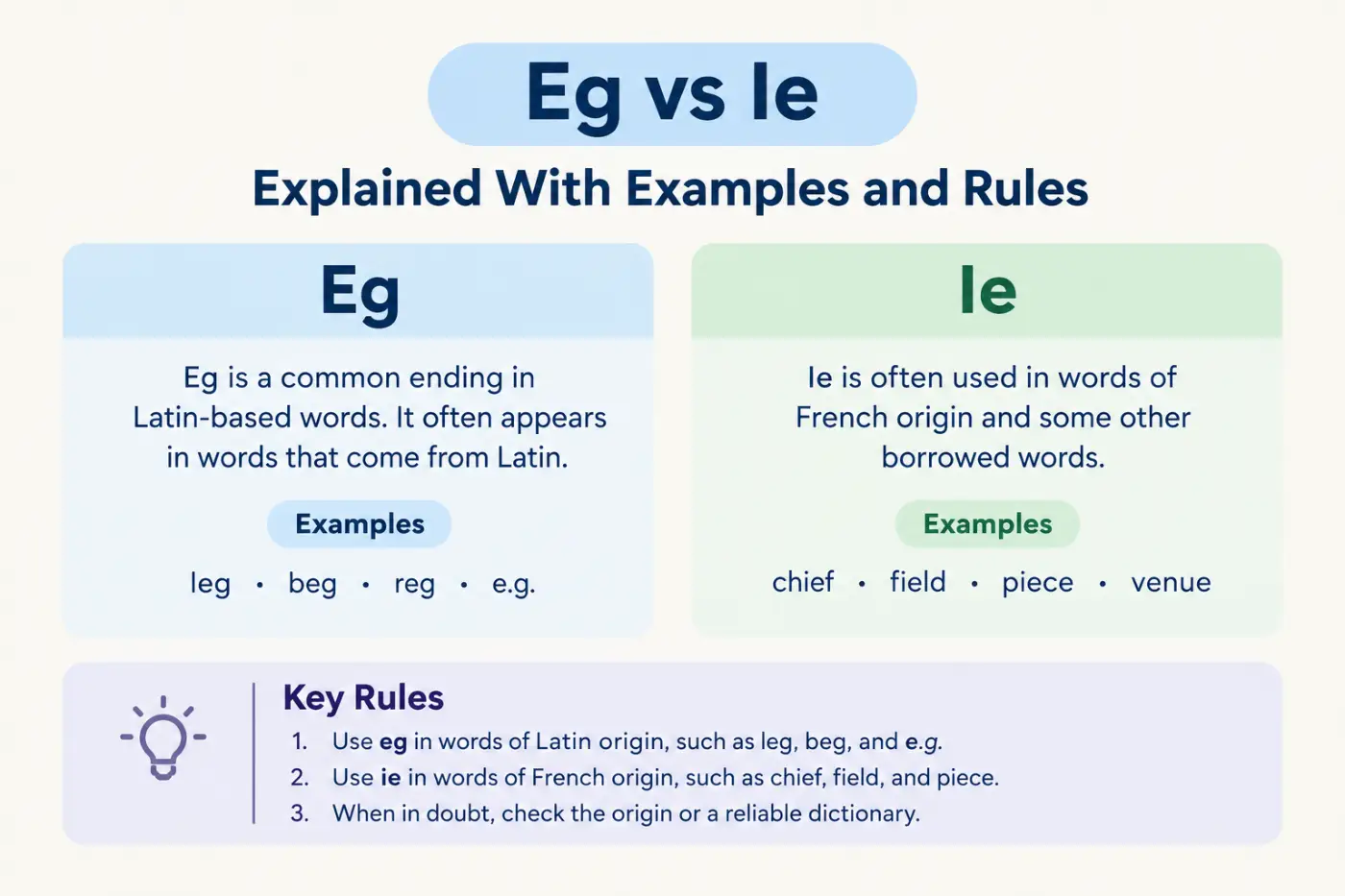
Eg vs Ie Explained With Examples and Rules

Eg vs Ie Explained With Examples and Rules

Writers often mix up e.g. and i.e. because both abbreviations come from Latin and appear in the middle of sentences. They look similar, and both can introduce information inside parentheses or after a comma. However, they serve different purposes. One introduces examples, while the other explains exactly what something means. The easiest way to remember … Read more

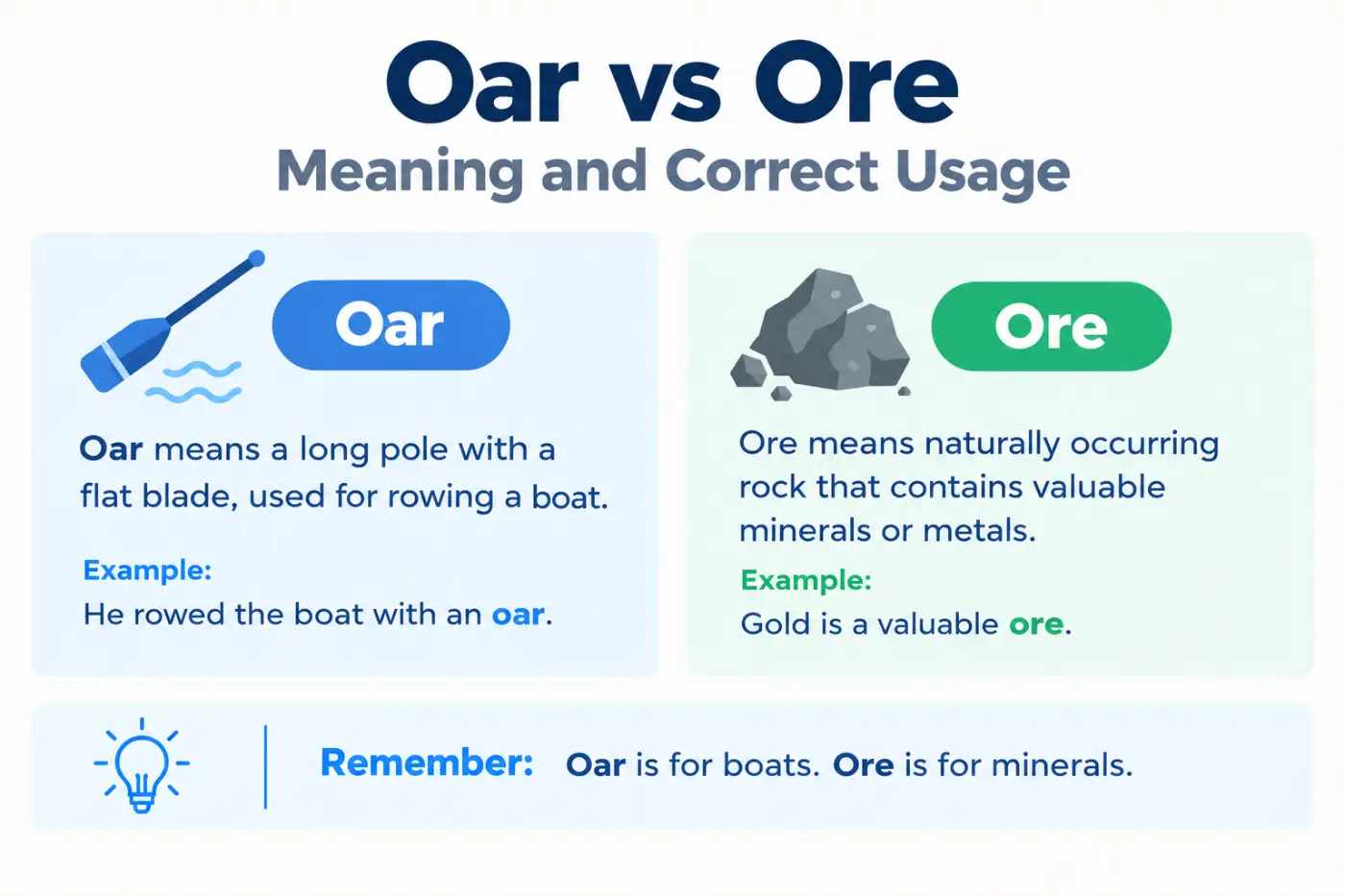
Oar vs Ore Meaning and Correct Usage

Oar vs Ore Meaning and Correct Usage

Have you ever paused while writing about a boat or a mining operation because you couldn’t decide between oar vs ore? The two words sound the same in standard American English, so hearing them doesn’t tell you which spelling to use. Their meanings, however, are completely different. One belongs on the water, and the other … Read more

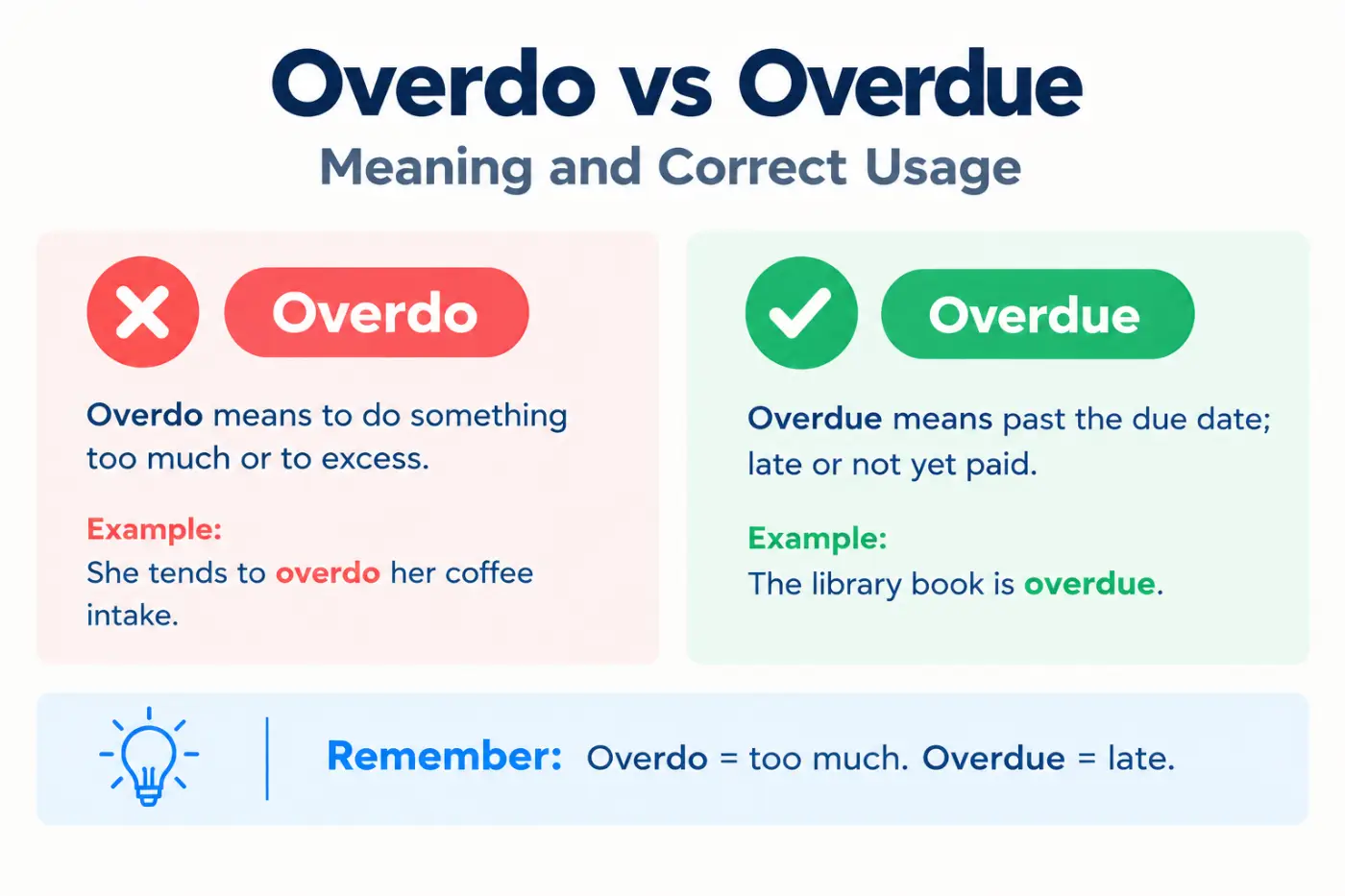
Overdo vs Overdue: Meaning and Correct Usage

Overdo vs Overdue: Meaning and Correct Usage

Overdo vs overdue can be confusing because the two words look almost identical. They share the letters over and have similar endings, but their meanings are quite different. One describes doing too much, while the other describes something that should have happened or been completed earlier. Think about two everyday situations. You exercise for three … Read more

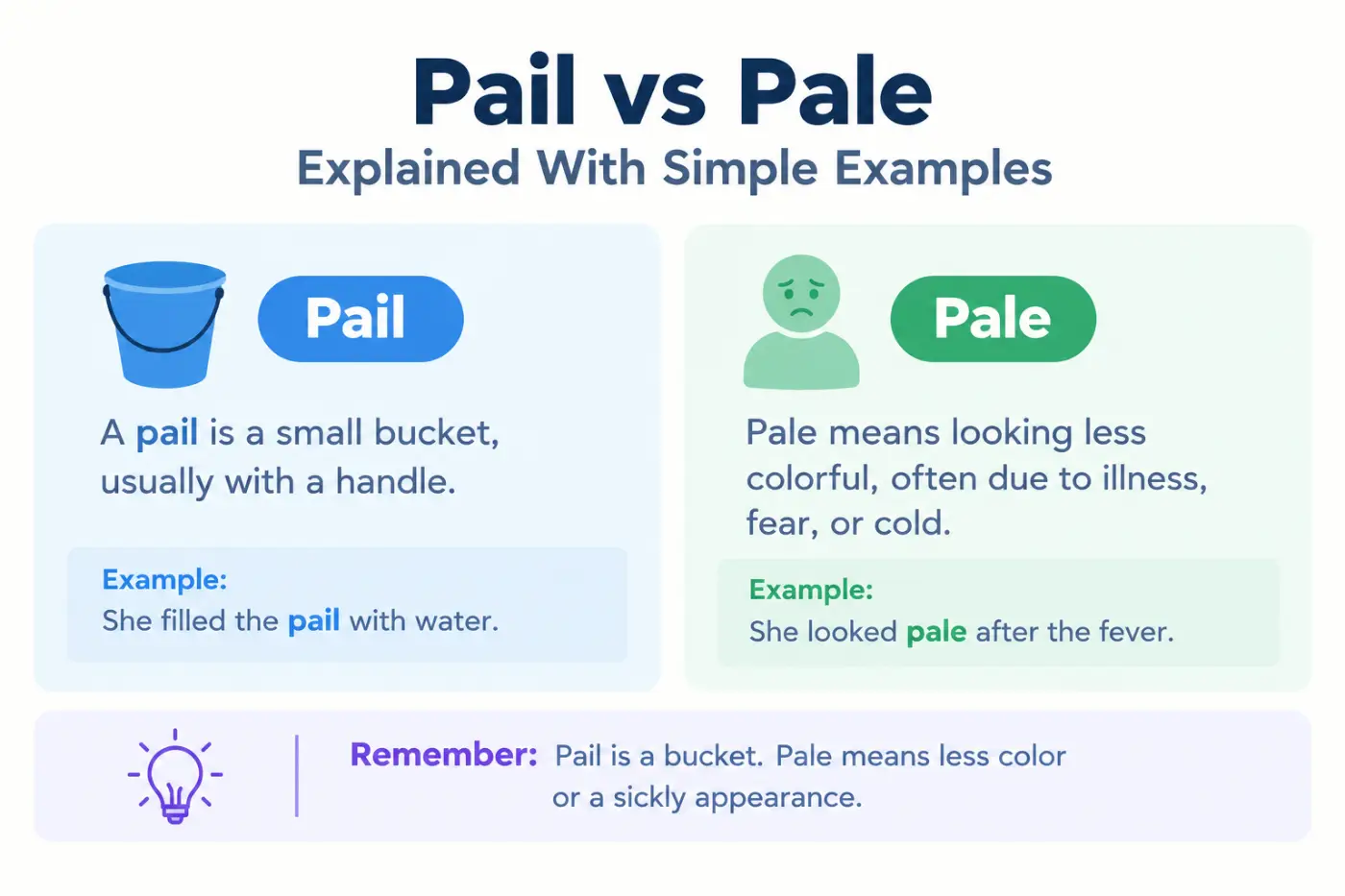
Pail vs Pale Explained With Simple Examples

Pail vs Pale Explained With Simple Examples

Have you ever wondered if you should write pail vs pale? These words sound exactly alike in standard American English, but their meanings are completely different. A pail is a container, often used for water, sand, or paint. Pale is an adjective that describes a light color, a person’s complexion, or something that seems less … Read more

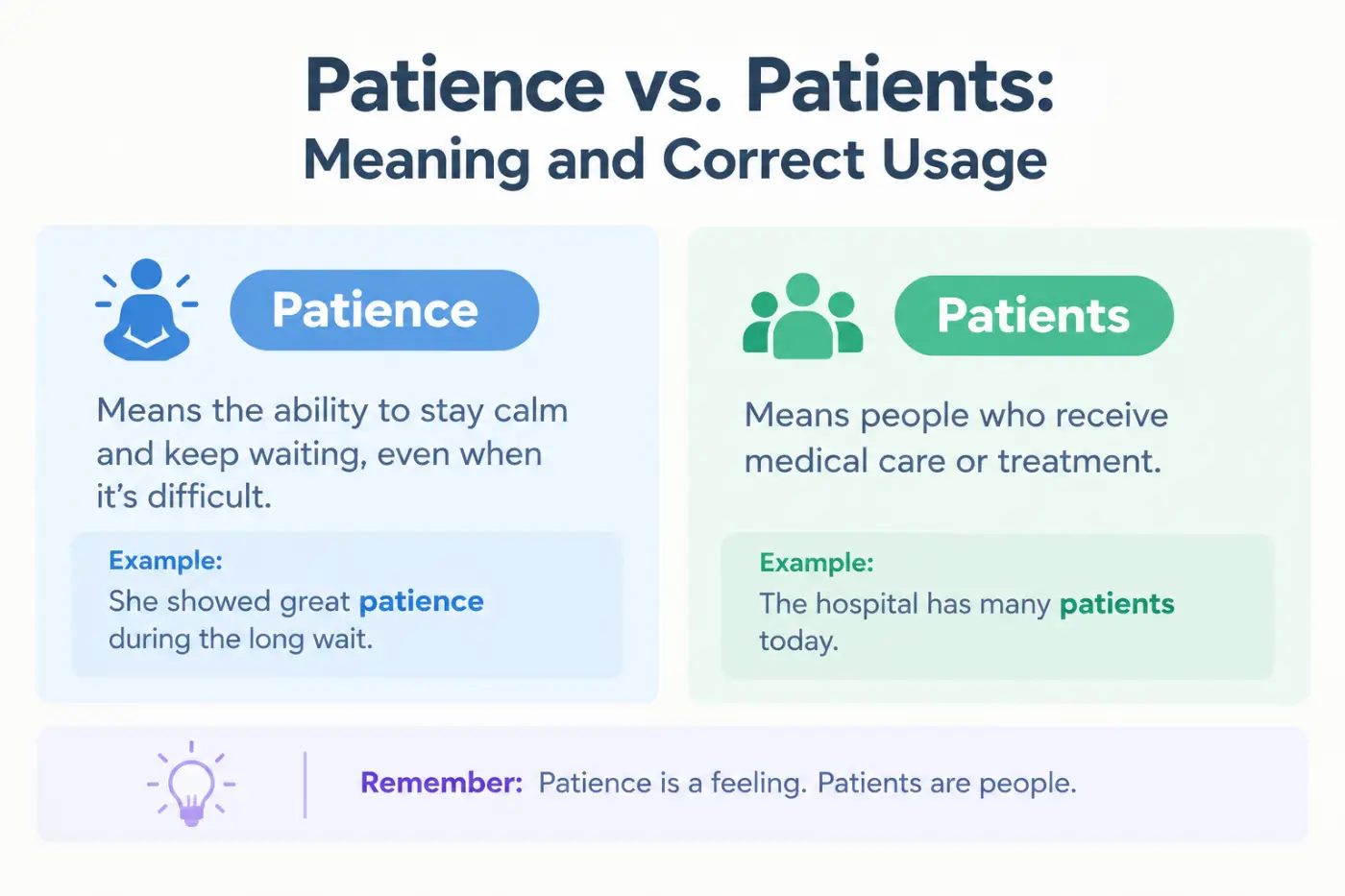
Patience vs Patients: Meaning and Correct Usage

Patience vs Patients: Meaning and Correct Usage

Have you ever written about a doctor who needs patience vs patients and wondered which word is correct? These words look almost identical, but they have very different meanings. Patience describes the ability to wait calmly or handle difficult situations without getting upset. Patients refers to people who receive medical care from doctors, nurses, or … Read more

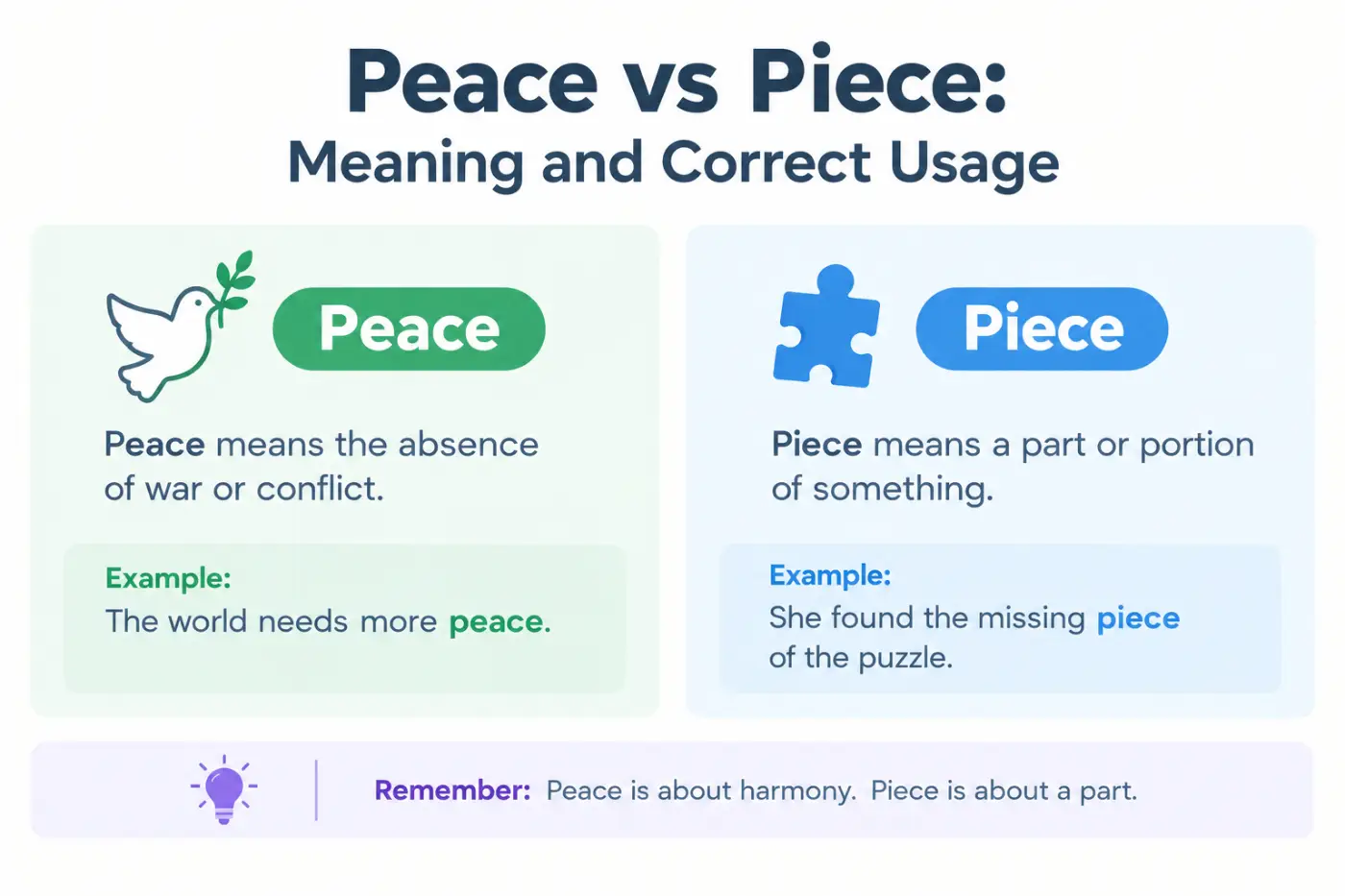
Peace vs Piece: Meaning and Correct Usage

Peace vs Piece: Meaning and Correct Usage

Have you ever stopped while writing a sentence because you couldn’t remember if you needed peace vs piece? You’re not alone. These two words sound exactly alike in standard American English, but their meanings are completely different. Choosing the wrong one can change your sentence from a message about harmony into a reference to an … Read more

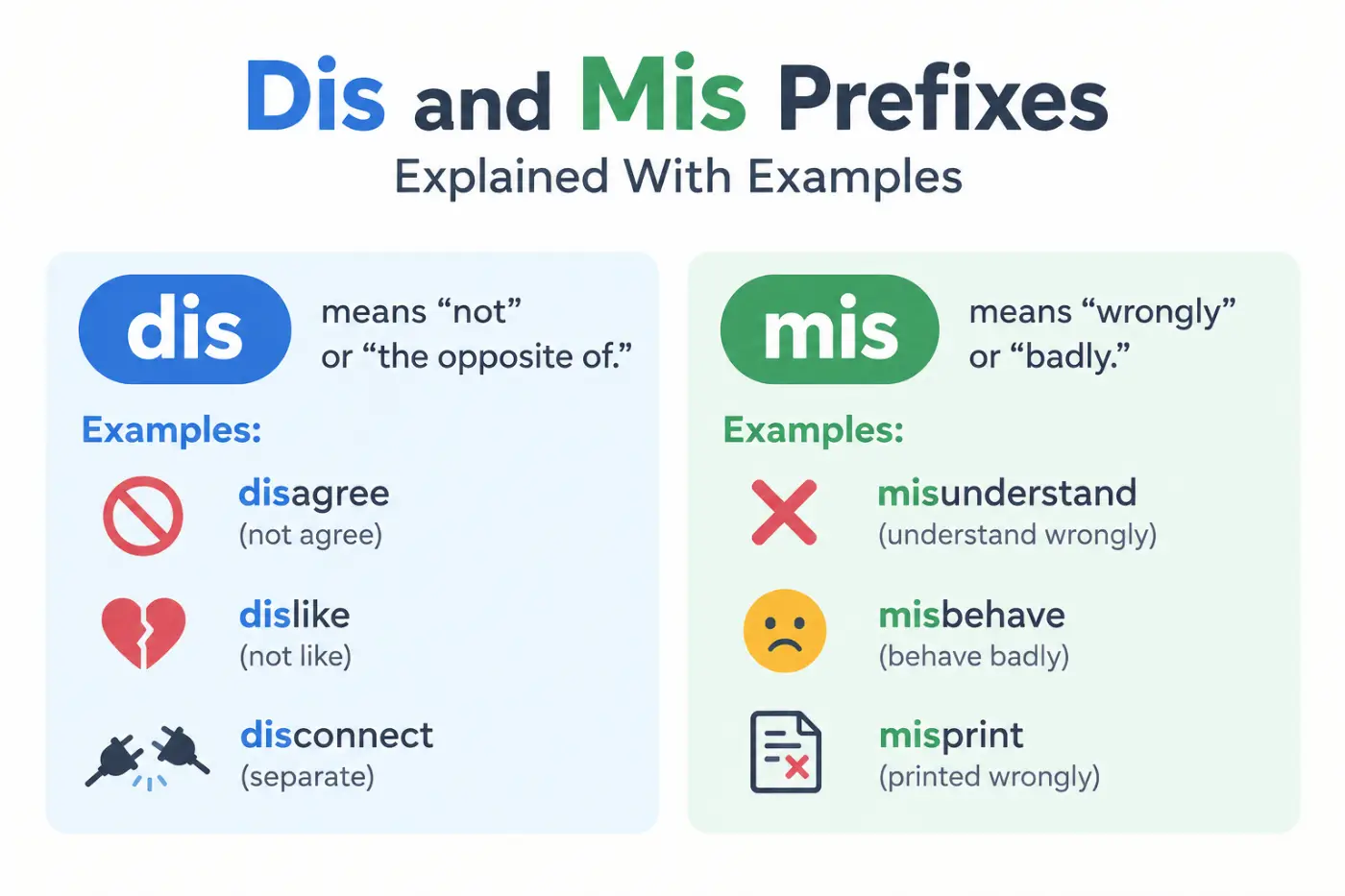
Dis and Mis Prefixes Explained With Examples

Dis and Mis Prefixes Explained With Examples

The prefixes dis and mis can look similar because both appear at the beginning of English words and change their meanings. However, they don’t usually express the same idea. Dis often shows opposition, separation, reversal, or a lack of something. Mis usually points to a mistake, an incorrect action, or a faulty understanding. Think about … Read more