
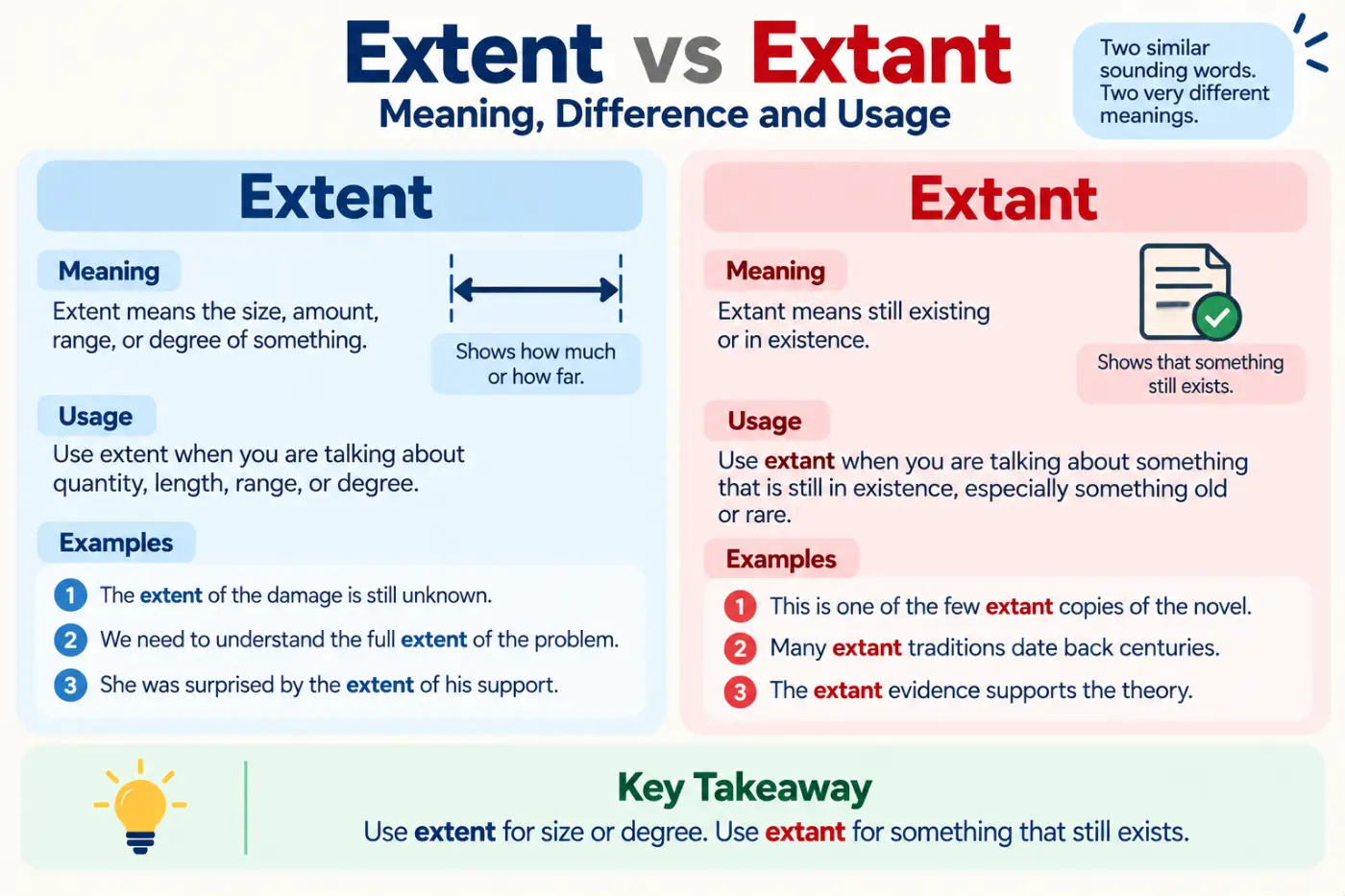
The confusion between extent vs extant usually comes from pronunciation and spelling. Both words begin with the same letters and can appear in formal writing, but they have completely different meanings. Extent refers to the size, range, degree, or scope of something. Extant means still existing or surviving from an earlier time.
The difference becomes much easier once you connect each word with a simple idea. Think of extent as answering a question about how much, how far, or how large. Think of extant as answering a question about existence. You might discuss the extent of damage after a storm, while a historian might study extant records from an ancient civilization.
This distinction matters because choosing the wrong word can change the meaning of a sentence completely. In this guide, you’ll learn the definitions, grammar, pronunciation, origins, regional usage, common mistakes, and practical examples. You’ll also get an easy memory trick that can help you choose the right word without stopping to second guess yourself.
You may also want to read seperate or separate Correct Spelling and Usage Guide.
Quick Definition
Extent is a noun meaning the size, range, degree, or limits of something. Extant is an adjective meaning still existing, especially something that has survived from the past. They are different parts of speech and cannot normally replace each other.
Quick Answer
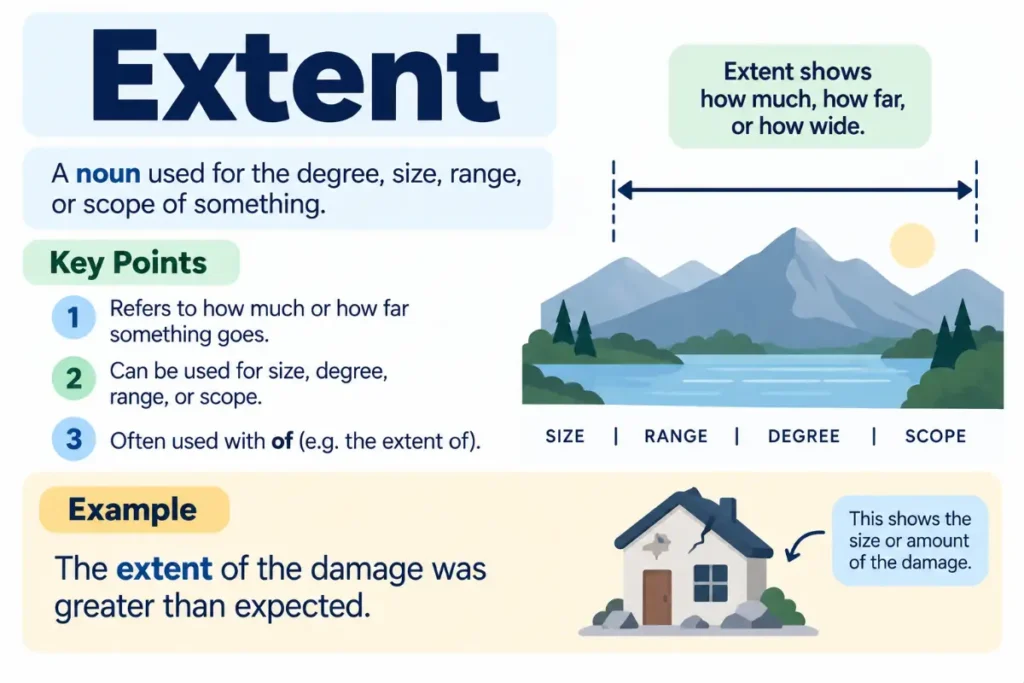
Extent is a noun that describes the degree, size, range, or scope of something. For example, The extent of the damage surprised everyone.
Extant is an adjective that describes something that still exists. For example, Few extant copies of the ancient manuscript remain.
The easiest distinction is simple. Extent describes how much or how far. Extant describes something that still exists.
Comparison Table Extent vs Extant
| Form | Meaning | Part of Speech | Origin | Usage Frequency | Formality | Common Contexts | Example |
|---|---|---|---|---|---|---|---|
| Extent | The size, degree, range, or scope of something | Noun | Latin through Old French and Middle English | Common | Neutral to formal | Size, degree, impact, research, measurement | We do not yet know the extent of the damage. |
| Extant | Still existing or surviving | Adjective | Latin through Middle English | Less common | Formal | History, archaeology, literature, research, law | Several extant copies of the text have been studied. |
Meaning and Definition
Meaning of Extent
Extent is a noun. It refers to the amount, size, range, degree, or limits of something.
The word often appears when someone wants to measure or describe how large a situation is. That measurement doesn’t always involve physical distance. It can describe physical size, emotional impact, damage, influence, responsibility, knowledge, or many other abstract ideas.
Consider these examples.
The extent of the flood damage was difficult to estimate.
The sentence doesn’t simply say that the damage existed. It asks us to consider how serious or widespread that damage was.
The company underestimated the extent of the problem.
Here, extent refers to the scale of the problem.
The word commonly appears with phrases such as the extent of, to some extent, to a certain extent, and to what extent.
For example, you might say:
We understand the extent of the financial loss.
The new policy helped to some extent.
The study asks to what extent sleep affects concentration.
These patterns are common in both everyday and formal English.
Meaning of Extant
Extant is an adjective. It describes something that still exists, especially something that has survived from an earlier period.
The word is often used in historical, academic, archaeological, literary, and scholarly contexts. It can describe documents, manuscripts, buildings, records, artworks, languages, traditions, or other things that remain available today.
For example:
Only a few extant copies of the book survive.
The researcher examined every extant record from the period.
The word often carries an implied contrast. If something is described as extant, there may be other examples that disappeared, were destroyed, or are no longer known to exist.
An extant manuscript is therefore not simply a manuscript. It is a manuscript that has survived.
This gives the word a distinctly historical flavor in many contexts. It can appear in general writing, but it is much more common in subjects that deal with surviving evidence from the past.
Key Differences Explained
- Meaning. Extent describes size, degree, range, or scope. Extant describes continued existence.
- Part of speech. Extent is a noun. Extant is an adjective.
- Question answered. Extent often answers how much, how large, how far, or how serious. Extant answers which things still exist.
- Typical context. Extent appears in discussions of damage, influence, responsibility, size, impact, and degree. Extant often appears in history, archaeology, literature, and research.
- Pronunciation. The two words have different vowel sounds and stress patterns even though their spelling looks similar.
- Formality. Extent is common in everyday and formal English. Extant is less common in ordinary conversation and appears more often in specialized or formal writing.
- Grammar. You can say the extent of the problem. You cannot normally replace extent with extant because extant is an adjective.
- Meaning in context. If the sentence discusses quantity or degree, extent is usually the word you need. If it discusses survival or continued existence, extant is usually appropriate.
Which Form Is Correct
Both words are correct. The key issue is meaning rather than spelling.
Use extent when you are talking about the size, degree, range, or scope of something.
Use extant when you are describing something that still exists, especially something that has survived from the past.
Standard English dictionaries treat these as separate words with separate definitions. Their similar appearance can cause confusion, but they are not alternate spellings of the same word.
A useful editorial test is to replace the word mentally with a simpler expression. If you could say size, degree, range, or scope, choose extent. If you could say still existing or surviving, choose extant.
For example:
The extent of the damage was enormous.
The meaning is the degree or scale of the damage.
The extant manuscript contains several unusual illustrations.
The meaning is that the manuscript still exists.
That quick substitution test works in most situations.
Sentence Examples
Here are natural examples using extent.
- We didn’t realize the extent of the damage until morning.
- The report explains the extent of the company’s financial losses.
- To some extent, I agree with your argument.
- Scientists are still studying the full extent of the environmental impact.
- The teacher asked students to discuss the extent of the problem.
- No one knew the extent of the storm until the roads reopened.
- The investigation revealed the extent of the security failure.
- The survey measured the extent of customer dissatisfaction.
- Her influence extends far beyond the extent of her official role.
- Researchers are debating the extent to which the findings apply to other groups.
Now consider examples using extant.
- Several extant letters provide clues about the author’s life.
- The museum owns one of the few extant examples of the original design.
- Researchers compared the extant manuscripts to identify differences.
- Few extant buildings from that period remain intact.
- The historian examined every extant document available to the public.
These examples show why the two words cannot simply be swapped. The first group describes degree, scale, or scope. The second group describes survival.
Common Mistakes and Misspellings
Confusing Meaning
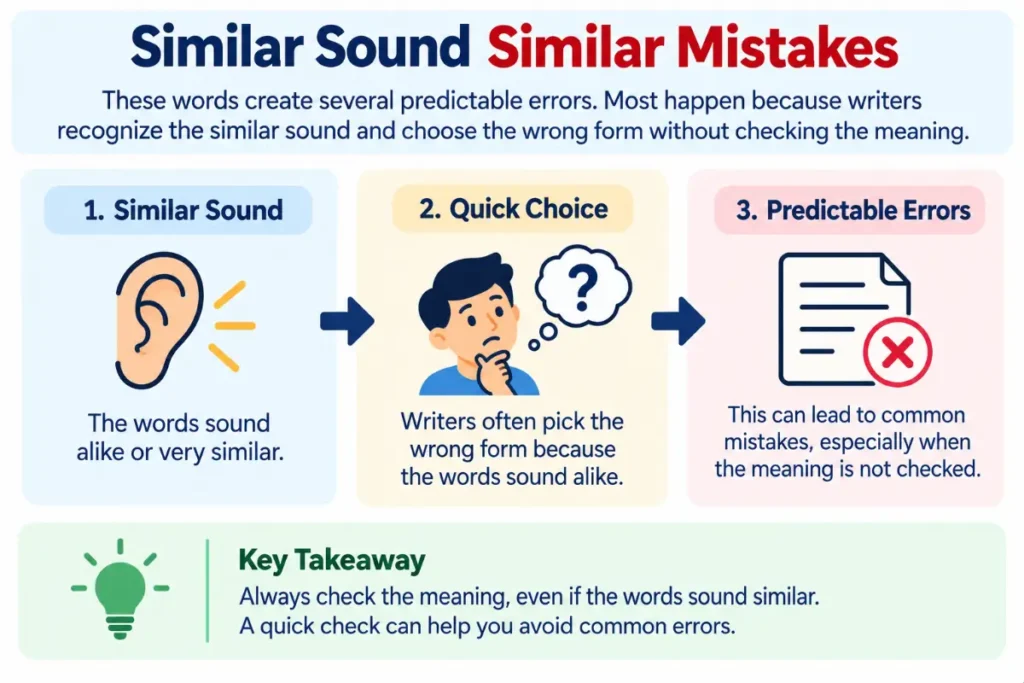
The most common problem isn’t really spelling. It’s using the wrong word because the two forms look alike.
Incorrect in meaning:
The extant of the damage was severe.
Correct:
The extent of the damage was severe.
The sentence needs the noun that describes degree or scale.
Using Extant for Size
Some writers assume that extant refers to the amount or size of something because it resembles extent.
For example:
The extant of the problem remains unclear.
The correct sentence is:
The extent of the problem remains unclear.
Extant does not mean amount, size, or degree.
Using Extent for Survival
The reverse mistake can happen too.
For example:
Only three extent manuscripts survive.
The intended word is extant.
Correct:
Only three extant manuscripts survive.
Here the adjective describes manuscripts that still exist.
Confusing Extant With Existing
Extant is related to the idea of existing, but it often has a more specialized tone. Writers frequently use it when discussing something that has survived from an earlier period.
For example:
Several existing records are available.
Several extant records from the nineteenth century are available.
Both sentences can be grammatical, but extant sounds more specialized and emphasizes survival.
Treating Them as Spelling Variants
Another mistake is assuming that one word is an alternate spelling of the other. They are not.
The difference is not like color and colour, where regional spelling explains the variation. Extent and extant are separate words with different meanings and grammatical roles.
Pronunciation Guide
Extent is commonly pronounced /ɪkˈstɛnt/ in American English.
You can think of it as:
ik STENT.
The stress falls on the second syllable.
Extant is commonly pronounced /ˈɛkstənt/ in American English.
A simple pronunciation guide is:
EK stuhnt.
The main stress falls on the first syllable.
This difference can help you keep the words apart when speaking. Extent has stronger stress toward the end. Extant usually places the main stress at the beginning.
Because both words contain the letters ext at the beginning, learners sometimes focus too much on the spelling and not enough on the sound. It helps to learn each word together with its meaning.
Try saying these pairs aloud.
The extent of the damage.
The extant manuscript.
The first phrase concerns degree or scale. The second describes something that survives.
A related grammar guide is Kinesthesiology vs Kinesiology Simple Rules Explained 2026.
Etymology and Word Origin
Extent and extant share a distant Latin connection, which helps explain their similar appearance. Their meanings developed along different paths, however.
Extent comes from Latin roots associated with stretching out or reaching. The Latin verb extendere means to stretch out or spread out. English eventually developed extent as a noun referring to the amount, range, or degree to which something extends.
That historical idea still appears in modern usage. When we talk about the extent of a problem, we are asking how far that problem reaches or how large its effect is.
Extant also traces back to Latin. It comes from a form related to extare, meaning to stand out or be present. The word entered English with the sense of something that remains in existence.
That historical connection explains the modern meaning of extant. An extant manuscript is one that has remained available or survived.
The two words therefore have related historical roots but developed distinct meanings. Their shared beginnings are one reason they can look deceptively similar today.
Regional Usage
American English
Both words are standard in American English. Extent is much more common in everyday communication because people frequently discuss the degree or scale of things. Extant appears less often in ordinary conversation and more often in academic, historical, archaeological, legal, and literary contexts.
For an American reader, the distinction is straightforward. Use extent for degree or scope. Use extant for continued existence.
British English
British English uses both words with the same basic meanings. There is no major British spelling difference that changes the distinction.
British academic and historical writing may use extant quite naturally because the word fits discussions about manuscripts, records, historical evidence, and surviving artifacts.
Extent remains the more familiar word in general communication.
Australian English
Australian English also uses both words according to their standard meanings. No significant regional variation changes the basic distinction.
Extent appears naturally in general writing and conversation. Extant tends to appear in specialized contexts where writers need to describe something that has survived.
Canadian English
Canadian English follows the same distinction. Extent describes degree, range, or scope, while extant describes something that remains in existence.
Canadian writers generally do not need a special regional spelling rule for these words. The choice depends on meaning and grammar.
Grammar Rules and Part of Speech
Understanding the grammar makes the difference much easier to remember.
Extent is a noun. It can function as the subject or object of a sentence and frequently appears after the word the.
Common patterns include:
The extent of the damage.
The extent of the problem.
The full extent of the impact.
To some extent.
The phrase to some extent means partly or to a limited degree.
For example:
I agree with the decision to some extent.
This means the speaker agrees partly but not completely.
The phrase to what extent is common in questions and formal writing.
To what extent does exercise affect sleep?
Here the writer is asking about the degree of influence.
Extant is an adjective. It describes a noun.
For example:
An extant manuscript.
You cannot normally use extant by itself as a noun.
For example:
The extant was significant.
This is incorrect if the intended meaning is degree.
The correct sentence would be:
The extent was significant.
Similarly:
The extent manuscript is valuable.
This is incorrect if you mean a manuscript that still exists.
The correct form is:
The extant manuscript is valuable.
Punctuation does not normally create a special issue with either word. The main challenge is selecting the correct term before you build the sentence around it.
Real Life Usage Examples
Daily Conversation
In everyday speech, extent is far more likely to appear.
I didn’t realize the extent of the traffic problem until I got downtown.
The sentence describes how serious or widespread the traffic problem was.
You might also say:
To some extent, I understand why she was upset.
This expresses partial agreement or understanding.
Extant is possible in conversation but sounds formal and specialized.
For example:
The library still has several extant copies.
A historian might say this naturally, but most casual speakers would probably say:
The library still has several surviving copies.
That difference in register is useful. A word can be correct without being the most natural choice for every situation.
Email and Workplace Communication
Extent is common in professional communication.
We need to understand the full extent of the delays before setting a new deadline.
The report does not yet show the extent of the financial impact.
Extant can appear in specialized workplace settings.
For example:
Please review the extant records before preparing the final report.
This could fit archival, legal, historical, or research work. In ordinary office communication, surviving records may sound more natural.
Academic Writing
Academic writing often uses both words.
Researchers examined the extent of the relationship between income and education.
The study considers the extent to which social factors influence the results.
Extant is particularly useful in historical research.
The researchers compared extant manuscripts from several collections.
The project focuses on extant examples of early American architecture.
The formal tone of extant makes it especially useful when precision and historical context matter.
News and Journalism
Journalists commonly use extent when describing the scale of an event.
Officials are still assessing the extent of the damage.
Investigators are working to determine the extent of the disruption.
Extant can appear in articles about history culture archaeology and literature.
The exhibition includes several extant works from the artist’s early period.
The archive contains one of the few extant records from the settlement.
Literature and Storytelling
Extent can help describe the scale of an experience.
Only later did she understand the extent of his sacrifice.
The character had no idea of the extent of the danger around him.
Extant can give historical storytelling a more scholarly tone.
The narrator studies the few extant records left by the travelers.
Only one extant account describes the final days of the expedition.
Related and Confused Terms
Several words connect closely with these terms. Knowing them can sharpen your vocabulary and help you select the right expression.
Degree
Degree refers to the amount or level of something. It often overlaps with extent.
The degree of damage was difficult to measure.
The extent of the damage was difficult to measure.
Both can work in this context, although the exact emphasis may differ.
Scope
Scope refers to the range or boundaries of something.
The scope of the project expanded.
The extent of the project’s influence was unexpected.
Scope focuses strongly on boundaries or coverage. Extent often emphasizes degree or scale.
Range
Range refers to the limits or spread of something.
The study covers a wide range of topics.
The extent of the study was larger than expected.
Scale
Scale describes the size or level of something.
The scale of the disaster shocked the community.
The extent of the damage was enormous.
These words can overlap, but they aren’t identical in every context.
Existing
Existing means currently present or real. It is a broad everyday term.
Several existing records are available.
Extant can carry a more formal or historical sense when describing something that has survived.
Surviving
Surviving is a straightforward alternative to extant.
Several surviving manuscripts were examined.
Several extant manuscripts were examined.
The first sounds more natural in ordinary conversation. The second sounds more specialized.
Remaining
Remaining means still left or still present.
The remaining documents were moved to a secure location.
Extant can sometimes communicate a similar idea, especially when discussing historical material.
Current
Current means existing or happening now. It does not normally carry the historical survival sense found in extant.
Current records describe the situation today.
Extant records may refer to records that have survived from an earlier period.
A Simple Memory Trick
A quick memory trick can save you from this confusion.
Think of extent as an expansion word. It relates to how far something stretches or how much space or influence it covers.
Think of extant as an existence word. It describes something that remains in existence.
You can remember the difference with two questions.
How much or how far?
Choose extent.
Does it still exist?
Choose extant.
For example:
How much damage occurred?
The extent of the damage.
Does the old document still exist?
An extant document.
This method works better than trying to memorize two dictionary definitions word for word. You connect each term to the question it answers.
Why The Confusion Happens
The two words are easy to confuse because they share several visual features. Both begin with ext and both contain similar consonants. Their pronunciations also overlap enough to cause hesitation for some speakers.
There is another reason. Both words often appear in formal writing, so a reader may encounter them in similar settings. A person reading a historical article might see extent in one sentence and extant in the next. Without a clear understanding of the meanings, the difference can seem minor even though the words perform different grammatical jobs.
Language processing also plays a role. When people read quickly, the brain often recognizes familiar word shapes before analyzing every letter individually. Similar word forms can therefore compete for attention. Context usually resolves the difference, but a writer still needs to choose the correct word.
The best solution is not memorizing the spelling alone. Learn the meaning and grammatical role together.
Expert Editor Insight
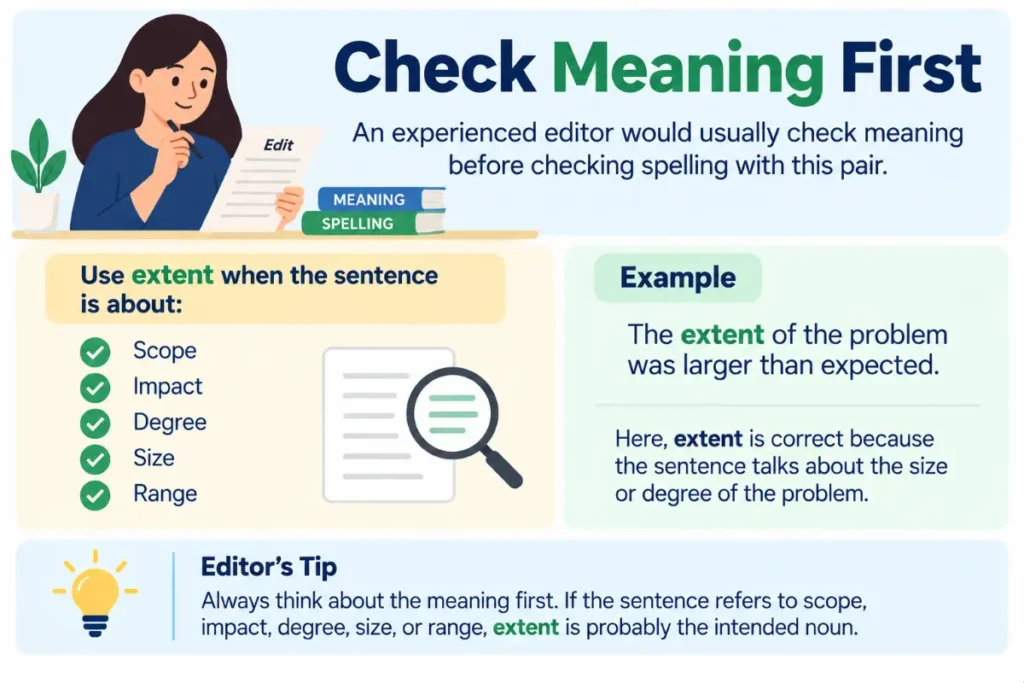
An experienced editor treats these words as a meaning problem rather than a simple spelling problem. Native speakers generally recognize the distinction from context, but writers can still choose the wrong form when they rely on visual similarity. Professional editors check the surrounding noun and ask what the sentence is trying to express. If the sentence concerns scale, degree, range, or impact, extent is likely appropriate. If it describes something that has survived, especially from an earlier period, extant may be the better choice. Grammar and spelling tools can flag unusual usage, but context remains the strongest test.
A related grammar guide is to bad or too bad which is correct.
Conclusion
Extent vs extant becomes much easier once you separate their meanings. Extent is a noun that describes the size, degree, range, or scope of something. Extant is an adjective that describes something that still exists, often something that has survived from an earlier period. They are both correct words, but they cannot normally replace each other.
The fastest way to remember the difference is to ask yourself one question. Are you talking about how much or how far? Use extent. Are you talking about something that still exists? Use extant. That simple test works in everyday writing, academic work, professional communication, and historical discussion.
When proofreading, don’t rely only on how the word looks. Check the meaning and the grammatical role in the sentence. If you’re describing degree or scale, choose extent. If you’re describing survival or continued existence, choose extant.
FAQs
What is the difference between extent and extant?
Extent is a noun that means size, degree, range, or scope. Extant is an adjective that means still existing or surviving. For example, you can discuss the extent of damage, but you can describe an extant manuscript. The two words look similar because of their shared historical roots, but they serve different grammatical roles and express different ideas.
Is extant the same as existing?
Extant and existing can overlap, but they are not always identical in tone. Existing is a common everyday word for something that is present or real. Extant is more formal and often describes something that has survived from an earlier period. Historians may discuss extant manuscripts, while ordinary speakers may simply say surviving manuscripts.
Does extent mean how much?
Yes. Extent can describe how much of something exists, how serious something is, or how far something reaches. For example, the extent of the damage refers to the amount or severity of the damage. It can also refer to range or scope. The phrase to some extent means partly or to a limited degree.
How do you pronounce extant?
Extant is commonly pronounced /ˈɛkstənt/ in American English. A simple guide is EK stuhnt. The main stress falls on the first syllable. The word may sound slightly different across accents, but the first syllable normally receives the strongest emphasis. Learning the sound together with the meaning can help separate it from extent.
How do you pronounce extent?
Extent is commonly pronounced /ɪkˈstɛnt/ in American English. You can think of it as ik STENT. The main stress falls on the second syllable. This stress pattern helps distinguish it from extant, which normally receives stronger stress at the beginning. Listening for the stressed syllable can make the difference easier to recognize in conversation.
Can extent and extant be used interchangeably?
No. They have different meanings and different grammatical roles. Extent is a noun related to degree, range, size, or scope. Extant is an adjective that describes something still existing or surviving. Replacing one with the other can make a sentence grammatically incorrect or change its intended meaning. Always choose based on context.
Is extant common in everyday English?
Extant is a legitimate English word, but it is less common in everyday conversation than extent. You are more likely to see it in academic writing, history, archaeology, literature, archival research, and other specialized contexts. In casual speech, people often choose simpler expressions such as still existing or surviving.
Which word should I use in formal writing?
Use the word that matches your meaning. Choose extent for degree, size, range, or scope. Choose extant when describing something that still exists, especially historical material that has survived. Both are appropriate in formal writing when used correctly. The best choice is not the more sophisticated sounding word. It is the word that accurately expresses the idea.