
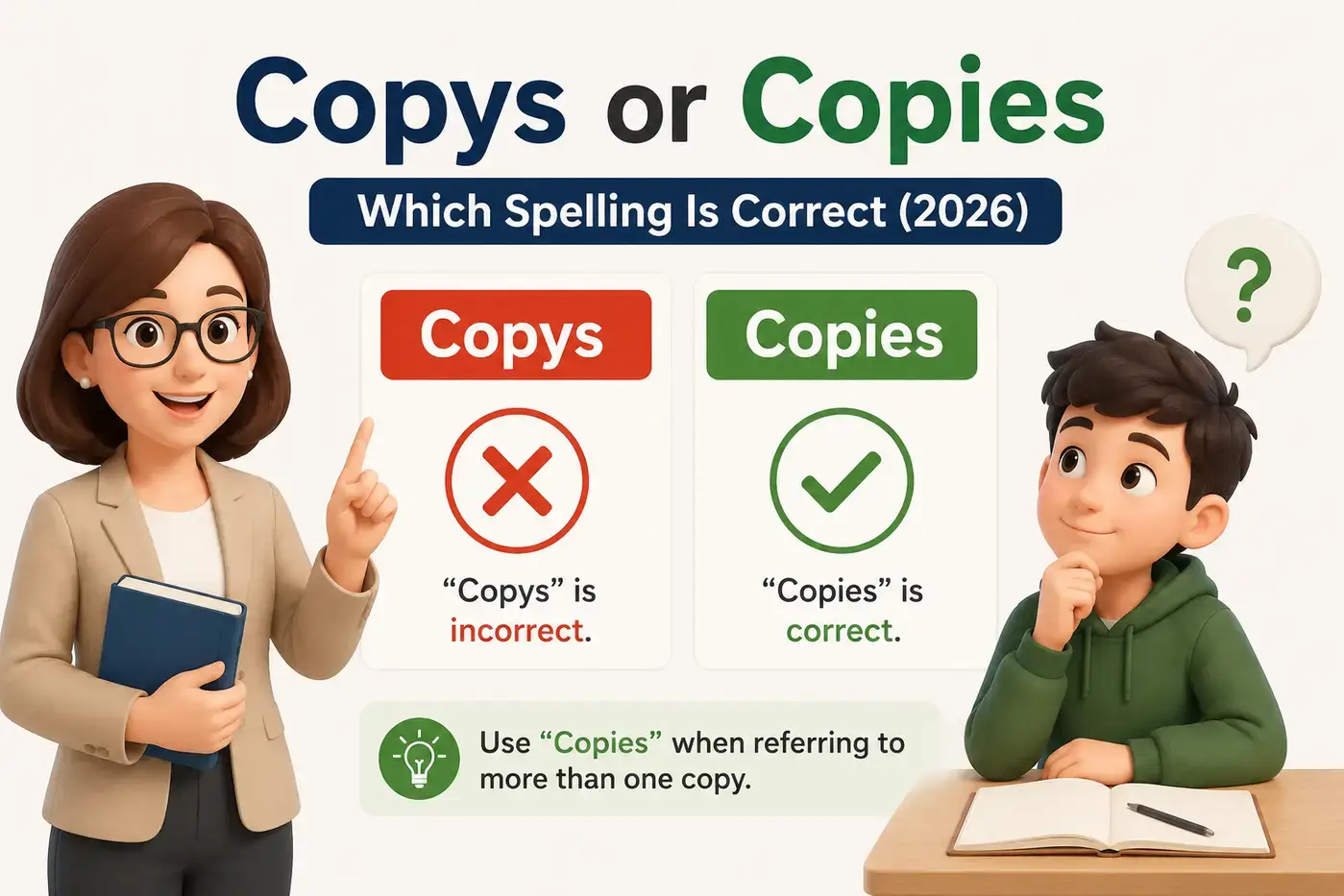
Copys or Copies is a common spelling question that confuses many English learners and native speakers alike. If you searched for copys or copies, you’re likely wondering which form is correct and why the two spellings look so similar. The simple answer is that copies is the correct spelling, while copys is not a valid English word. Understanding this difference will help you avoid one of the most frequent plural spelling mistakes in English.
The confusion comes from a basic English grammar rule for nouns ending in y. Some words form the plural by simply adding s, while others replace the y with ies before adding the plural ending. If you are unfamiliar with this rule, it’s easy to assume that copys is correct. However, English spelling follows a clear pattern, and the word copy always becomes copies in its plural form.
In this complete guide, you’ll learn why copies is the only correct spelling, the grammar rule behind it, how to pronounce the word correctly, and how to use it confidently in everyday writing. You’ll also find real sentence examples, common spelling mistakes, expert writing tips, and easy tricks to remember the correct form. By the end, you’ll never have to wonder about copys or copies again.
For another common grammar confusion, see vallies or valleys Correct Spelling Meaning and Usage Guide.
Copys or Copies Quick Definition
If you’re deciding between these words the correct spelling is copies. It is the plural form of the noun copy and the third person singular form of the verb copy. Copys is a misspelling and is not accepted in standard English.
Copys or Copies Quick Answer
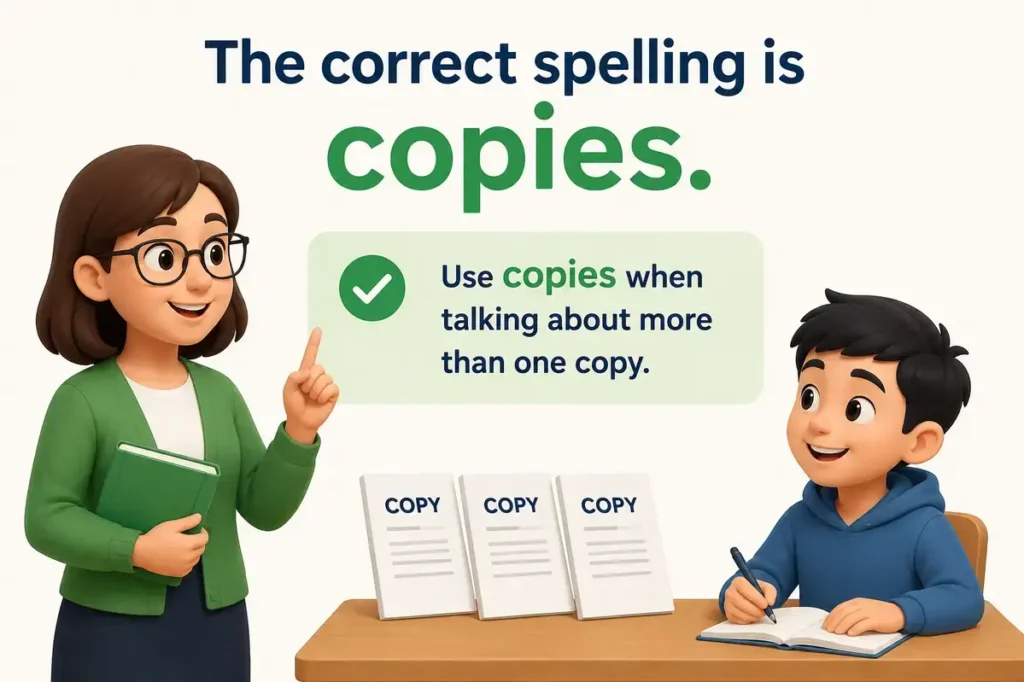
The correct spelling is copies. Use copies when talking about more than one copy.
Examples.
- I printed three copies of the report.
- The library keeps extra copies of popular books.
- She copies her notes before every exam.
Never use copys because it is not a correct English word.
Copys vs Copies Comparison Table
| Feature | Copys | Copies |
|---|---|---|
| Correct spelling | No | Yes |
| Meaning | None in standard English | More than one copy or the third person singular form of the verb copy |
| Part of speech | Not recognized | Noun and verb |
| Grammar status | Misspelling | Grammatically correct |
| Dictionary entry | No | Yes |
| Usage frequency | Extremely rare and almost always an error | Very common |
| Formal writing | Incorrect | Correct |
| Everyday communication | Incorrect | Correct |
| Example | Copys of the file. ✗ | Copies of the file. ✓ |
Meaning Of Copys
The word copys has no meaning in standard English. It does not appear as an accepted spelling in major English dictionaries because it breaks the standard rule for nouns ending in a consonant followed by y.
You might see copys in these situations.
- Typing mistakes.
- Student writing before proofreading.
- Social media posts with spelling errors.
- Automatically generated text that has not been edited.
If you notice copys in your writing replace it with copies.
Meaning Of Copies
Copies has two main uses in English.
As A Noun
Copies is the plural of copy. A copy is a duplicate or reproduction of something.
Examples.
- The teacher handed out twenty copies of the worksheet.
- The bookstore ordered more copies of the novel.
- I saved two copies of the contract.
As A Verb
Copies is the third person singular present tense of the verb copy.
Examples.
- She copies everything into her notebook.
- He copies the design carefully.
- My brother copies my handwriting for fun.
The meaning changes slightly depending on the sentence but the spelling stays the same.
Word Origin
The word copy comes from the Latin word copia meaning abundance or supply. Over time it developed the meaning of a written reproduction and later expanded to include printed documents digital files photographs artwork and many other forms of duplication. Today copy and copies appear in education publishing business law technology and everyday conversation.
Copys vs Copies Key Differences
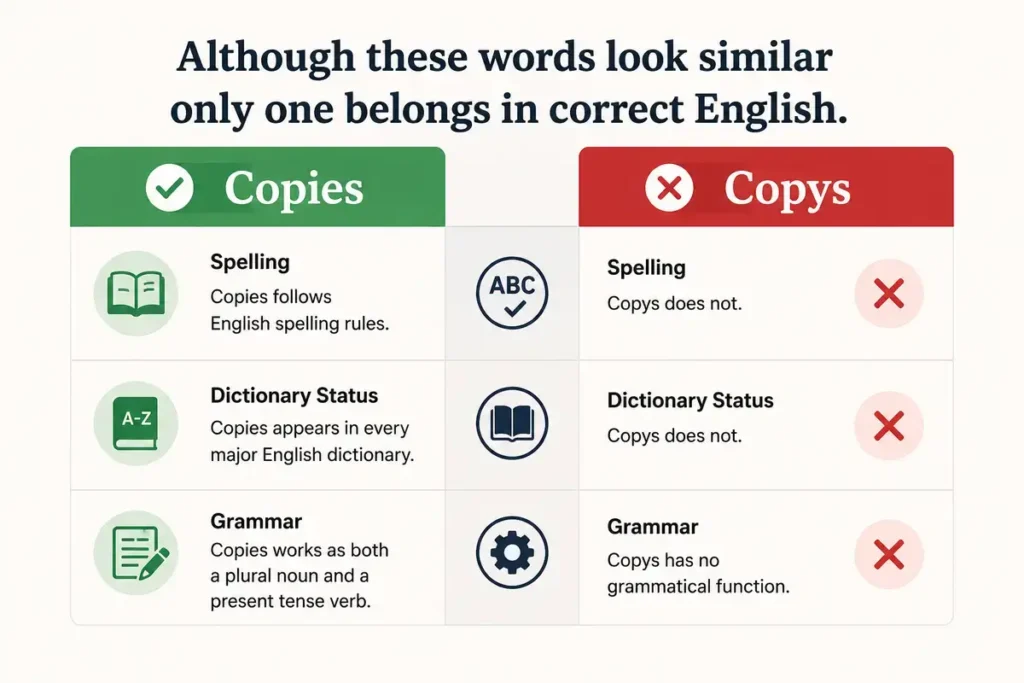
Although these words look similar only one belongs in correct English.
Spelling
Copies follows English spelling rules.
Copys does not.
Dictionary Status
Copies appears in every major English dictionary.
Copys does not.
Grammar
Copies works as both a plural noun and a present tense verb.
Copys has no grammatical function.
Professional Writing
Editors teachers publishers and professional writers always use copies.
Using copys immediately signals a spelling mistake.
Everyday Usage
Native English speakers naturally write and say copies.
You will almost never see copys outside spelling errors.
Which One Is Correct
The correct choice is copies.
The spelling copys is always incorrect.
This follows a common English spelling rule. When a noun ends with a consonant followed by y change the y to ies to make it plural.
Here are a few examples.
- Copy becomes copies.
- Baby becomes babies.
- City becomes cities.
- Lady becomes ladies.
- Country becomes countries.
This rule applies to hundreds of English nouns. There are exceptions for words ending with a vowel followed by y.
Examples.
- Toy becomes toys.
- Boy becomes boys.
- Key becomes keys.
- Day becomes days.
Since copy ends with the consonant p before the y the correct plural is copies.
Examples In Sentences
Copys Examples
The following examples show incorrect usage so you can recognize the mistake.
- I printed three copys of the report. ✗
- She gave me two copys yesterday. ✗
- The office needs more copys. ✗
- He keeps several copys on his computer. ✗
- We ordered extra copys for the meeting. ✗
- Please make five copys before class. ✗
- The library has many copys available. ✗
- She submitted two copys of the application. ✗
- The printer produced ten copys. ✗
- They archived digital copys of every document. ✗
Every sentence above contains the same spelling mistake.
Copies Examples
These examples show the correct spelling in natural English.
- I printed three copies of the report.
- She gave me two copies yesterday.
- The office needs more copies.
- He keeps several copies on his computer.
- We ordered extra copies for the meeting.
- Please make five copies before class.
- The library has many copies available.
- She submitted two copies of the application.
- The printer produced ten copies.
- They archived digital copies of every document.
These are the forms used by native English speakers in schools workplaces publishing and everyday communication.
For another common grammar confusion, see Ninth vs Nineth: Origin, Meaning and Correct Usage (2026).
Common Mistakes
People make the same spelling mistake again and again because English plural rules are not always consistent. Once you understand the pattern the correct spelling becomes easy to remember.
Writing Copys Instead Of Copies
This is by far the most common mistake.
Incorrect.
- I need three copys of the agreement.
Correct.
- I need three copies of the agreement.
The noun copy ends with a consonant followed by y. That means the y changes to ies in the plural form.
Forgetting The Same Rule For Similar Words
Many writers correctly spell copies but make the same mistake with other words.
Incorrect.
- Babys.
- Ladys.
- Familys.
- Partys.
- Countrys.
Correct.
- Babies.
- Ladies.
- Families.
- Parties.
- Countries.
Learning the rule once helps you spell hundreds of English words correctly.
Mixing Up The Noun And Verb
The spelling stays the same but the meaning changes.
As a noun.
- We printed five copies of the presentation.
As a verb.
- She copies everything into her notebook.
The sentence tells you which meaning is intended.
Trusting Autocorrect Too Much
Modern spell checkers catch many mistakes, but not every writing tool works the same way. Some editing apps may miss an error or fail to flag it until later. Reading your work before sending it is still one of the best habits you can build.
Adding An Apostrophe
Some people write copy’s when they mean the plural form.
Incorrect.
- Three copy’s were missing.
Correct.
- Three copies were missing.
An apostrophe shows possession, not a plural noun.
Pronunciation Guide
Fortunately, pronunciation is simple because copy and copies follow predictable English sound patterns.
Copy
IPA
American English.
/ˈkɑː.pi/
Syllable Breakdown
Cop.
Py.
The stress falls on the first syllable.
Copies
IPA
American English.
/ˈkɑː.piz/
Syllable Breakdown
Cop.
Ies.
The first syllable still carries the stress.
Common Pronunciation Mistakes
- Adding an extra syllable.
- Saying the ending like ice instead of eez.
- Placing the stress on the second syllable.
Native speakers pronounce copies smoothly as COP eez.
Etymology And Word Origin
The history of copy stretches back many centuries. It comes from the Latin word copia, which originally meant abundance, plenty or supply. As the word moved into Medieval Latin and later Old French, its meaning gradually shifted toward a written version or reproduction of an original document.
English adopted copy during the Middle Ages. At first, the word mainly referred to handwritten manuscripts because books were copied by hand before the printing press became common. Later, printing technology expanded the meaning. Today, copy can describe almost any duplicate.
Examples include printed documents, books, photographs, artwork, software files, digital backups and legal records. The plural form copies developed naturally by following the standard English spelling rule for nouns ending in a consonant followed by y.
copys and copies Regional Usage
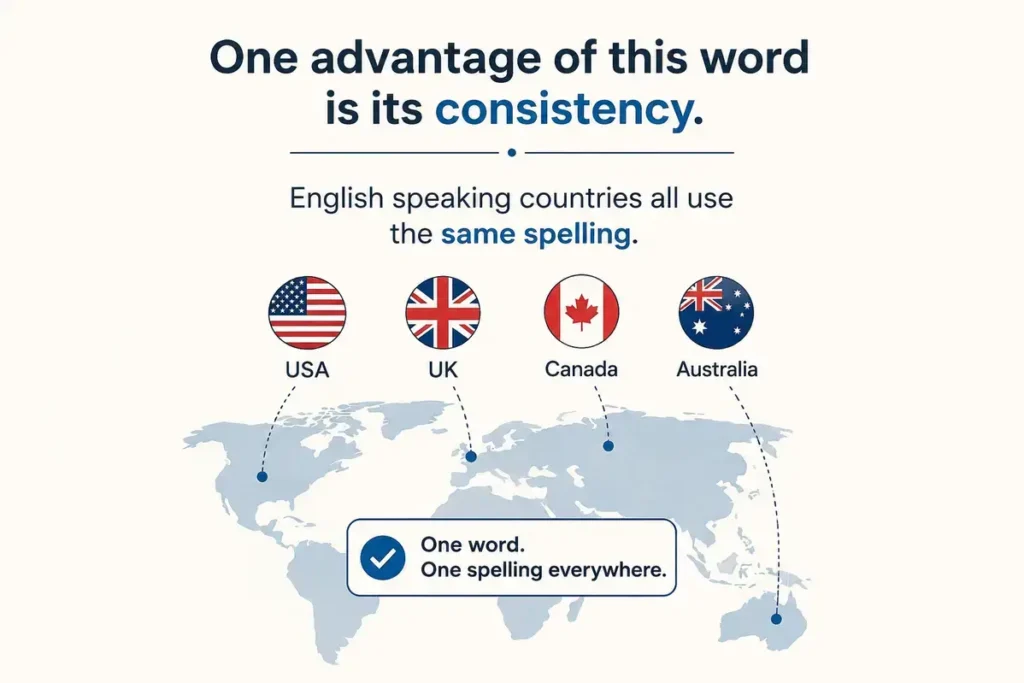
One advantage of this word is its consistency. English speaking countries all use the same spelling.
American English
Americans always write copies.
Examples.
- Please print two copies.
- I emailed digital copies to everyone.
British English
British English follows exactly the same rule.
Examples.
- The solicitor requested certified copies.
- The archive stores historical copies of every record.
Canadian English
Canadian English also uses copies in schools, businesses, government offices and everyday conversation. No spelling variation exists.
Australian English
Australians use copies in the same way.
Examples.
- Bring three copies of your resume.
- The publisher ordered more copies after strong sales.
Regional Preference
Unlike words such as color and colour or center and centre, there is no regional spelling difference here. Every major variety of English accepts copies and rejects copys.
Grammar Rules
Understanding the grammar behind copies makes the spelling much easier to remember.
Parts Of Speech
Copy works as both a noun and a verb.
Examples.
Noun.
- I bought a copy of the magazine.
Verb.
- Please copy this document.
Plural Form
The plural noun is copies.
Examples.
- Five copies were distributed.
- The teacher collected all the copies.
Third Person Singular Verb
The present tense verb becomes copies.
Examples.
- She copies every receipt.
- He copies the format exactly.
Why The Spelling Changes
English follows a clear rule. If a noun ends with a consonant followed by y, remove the y and add ies.
Examples.
- Copy becomes copies.
- City becomes cities.
- Baby becomes babies.
- Party becomes parties.
- Story becomes stories.
Words That Keep The Y
If the letter before y is a vowel, simply add s.
Examples.
- Toy becomes toys.
- Boy becomes boys.
- Key becomes keys.
- Monkey becomes monkeys.
- Day becomes days.
This simple pattern explains why copies is correct and copys is not.
Real Life Usage Examples
You will see copies almost everywhere because the word appears in many parts of daily life.
Daily Conversation
- Can you make two copies for me?
- I left extra copies on the table.
- She keeps backup copies at home.
Academic Writing
Teachers and students use the word regularly.
Examples.
- Submit two printed copies with your assignment.
- The professor handed out copies of the research paper.
Professional Communication
Businesses rely on the word every day.
Examples.
- Please attach signed copies of the agreement.
- Human Resources needs copies of your identification documents.
- Keep digital copies for your records.
Literature And Publishing
Publishers often discuss the number of copies sold.
Examples.
- The novel sold one million copies.
- The first edition included five thousand copies.
Media And Technology
Digital communication has made the word even more common.
Examples.
- Always save backup copies of important files.
- Cloud storage keeps multiple copies of your documents.
- The software automatically creates copies before making changes.
From classrooms to courtrooms and from publishing houses to home printers, copies is part of everyday English. Seeing it in different situations reinforces the correct spelling and makes the incorrect form copys much easier to spot.
Related Words And Confused Terms
If you searched for copys or copies, you might also come across other words that cause similar spelling problems. Most of them follow the same grammar rule. Learning these patterns can help you avoid future mistakes.
Words That Follow The Same Rule
- Baby becomes babies.
- City becomes cities.
- Lady becomes ladies.
- Family becomes families.
- Story becomes stories.
- Party becomes parties.
- Country becomes countries.
- Library becomes libraries.
- Puppy becomes puppies.
- Cherry becomes cherries.
Each of these nouns ends with a consonant followed by y, so the y changes to ies in the plural form.
Words That Do Not Follow The Same Rule
Some nouns end with a vowel followed by y. These words simply add s.
- Toy becomes toys.
- Boy becomes boys.
- Day becomes days.
- Key becomes keys.
- Monkey becomes monkeys.
- Journey becomes journeys.
- Donkey becomes donkeys.
- Valley becomes valleys.
- Essay becomes essays.
- Chimney becomes chimneys.
The letter before y makes all the difference.
Related Grammar Terms
These terms often appear in grammar lessons about copy and copies.
- Singular noun.
- Plural noun.
- Regular plural.
- Consonant.
- Vowel.
- Spelling rule.
- Third person singular verb.
- Present tense.
- English morphology.
- Word formation.
Understanding these concepts makes English spelling much easier to master.
Expert Language Insight
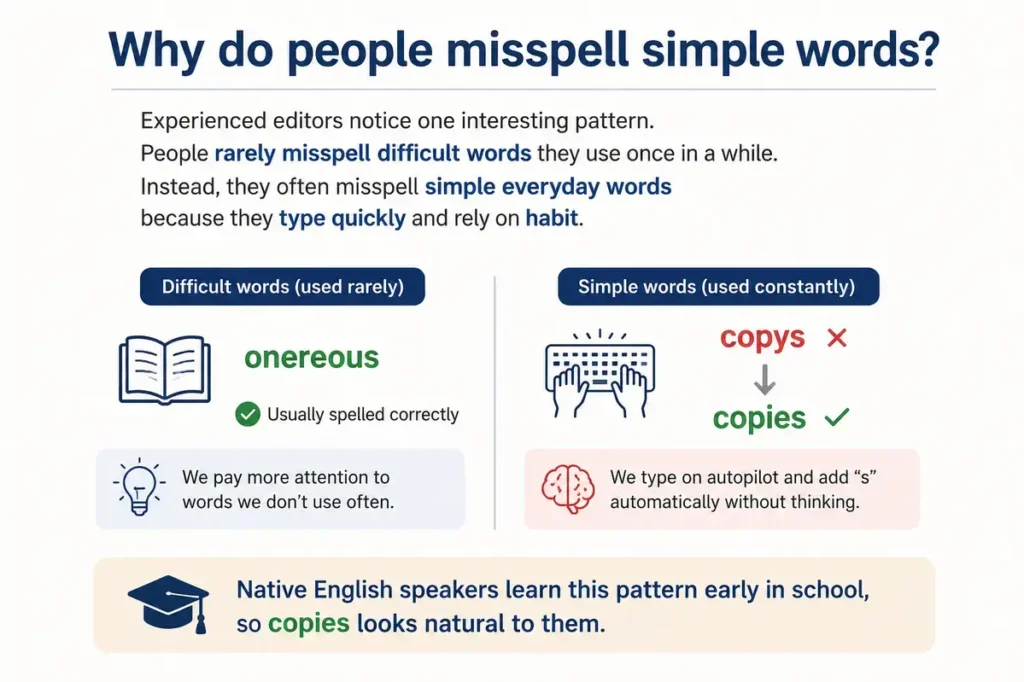
Experienced editors notice one interesting pattern. People rarely misspell difficult words they use once in a while. Instead, they often misspell simple everyday words because they type quickly and rely on habit. Copy is one of those words. The mistake copys usually happens because someone adds s automatically without thinking about the spelling rule. Native English speakers learn this pattern early in school, so copies looks natural to them.
Professional editors have another habit worth copying. They do not memorize every plural individually. They recognize patterns. When a noun ends with a consonant followed by y, they automatically change the ending to ies. That single rule works for hundreds of common English words. Another useful observation comes from reading professionally edited books, newspapers and magazines. You will never find copys in polished writing. If you do see it online, it is almost always a typing mistake or an unedited draft.
If your goal is to write clear, professional English, remember this simple question. Does the word end with a consonant followed by y? If the answer is yes, change y to ies. That small habit will improve your spelling far beyond this single word.
You may also want to read Oar vs Ore Meaning and Correct Usage.
Conclusion
Choosing between copys vs copies becomes easy once you understand the grammar rule. Copies is the only correct spelling in standard English. It serves as both the plural form of copy and the third person singular form of the verb copy. Copys is simply a spelling mistake and should never be used in formal or informal writing.
The reason is straightforward. When a noun ends with a consonant followed by y, you replace the y with ies to make it plural. This same rule applies to many everyday words, including babies, cities, families, and stories. Learning this pattern will help you spell similar words correctly and improve your overall writing accuracy.
Now that you know the difference between copys and copies, you can write with greater confidence in emails, school assignments, business documents, and everyday conversations. Paying attention to small grammar details makes a big difference in how professional and polished your writing appears. Whenever you’re in doubt, remember that copies is always the correct choice.
Frequently Asked Questions
Is copies the correct spelling?
Yes. Copies is the correct spelling. It is the plural form of copy and the third person singular present tense of the verb copy. Copys is not recognized in standard English and should always be corrected.
Why is copys incorrect?
Copys breaks a basic English spelling rule. When a noun ends with a consonant followed by y, the y changes to ies before adding the plural ending. Since copy ends with the consonant p, the correct plural becomes copies.
Is copies a noun or a verb?
It can be both. As a noun, copies means more than one copy. As a verb, copies is the present tense form used with singular subjects such as he, she and it.
How do you remember the spelling of copies?
A simple memory trick is to look at the letter before y. If it is a consonant, change y to ies. Think of words like babies, cities and stories. Copies follows the same pattern.
Do British and American English spell copies differently?
No. American English, British English, Canadian English and Australian English all use the same spelling. Copies is correct everywhere, while copys is incorrect in every major variety of English.
Can copies refer to digital files?
Yes. Modern English uses copies for both physical and digital duplicates. You can make copies of documents, photos, videos, spreadsheets, emails and computer files.
Why do so many people search for copys or copies?
The confusion comes from English plural spelling rules. Many people know that most nouns simply add s, so they naturally write copys before learning the rule for nouns ending in a consonant followed by y.
Is copies used in formal writing?
Absolutely. Copies is the standard spelling in academic papers, legal documents, business communication, journalism and everyday writing. Professional editors expect this spelling in every context.