
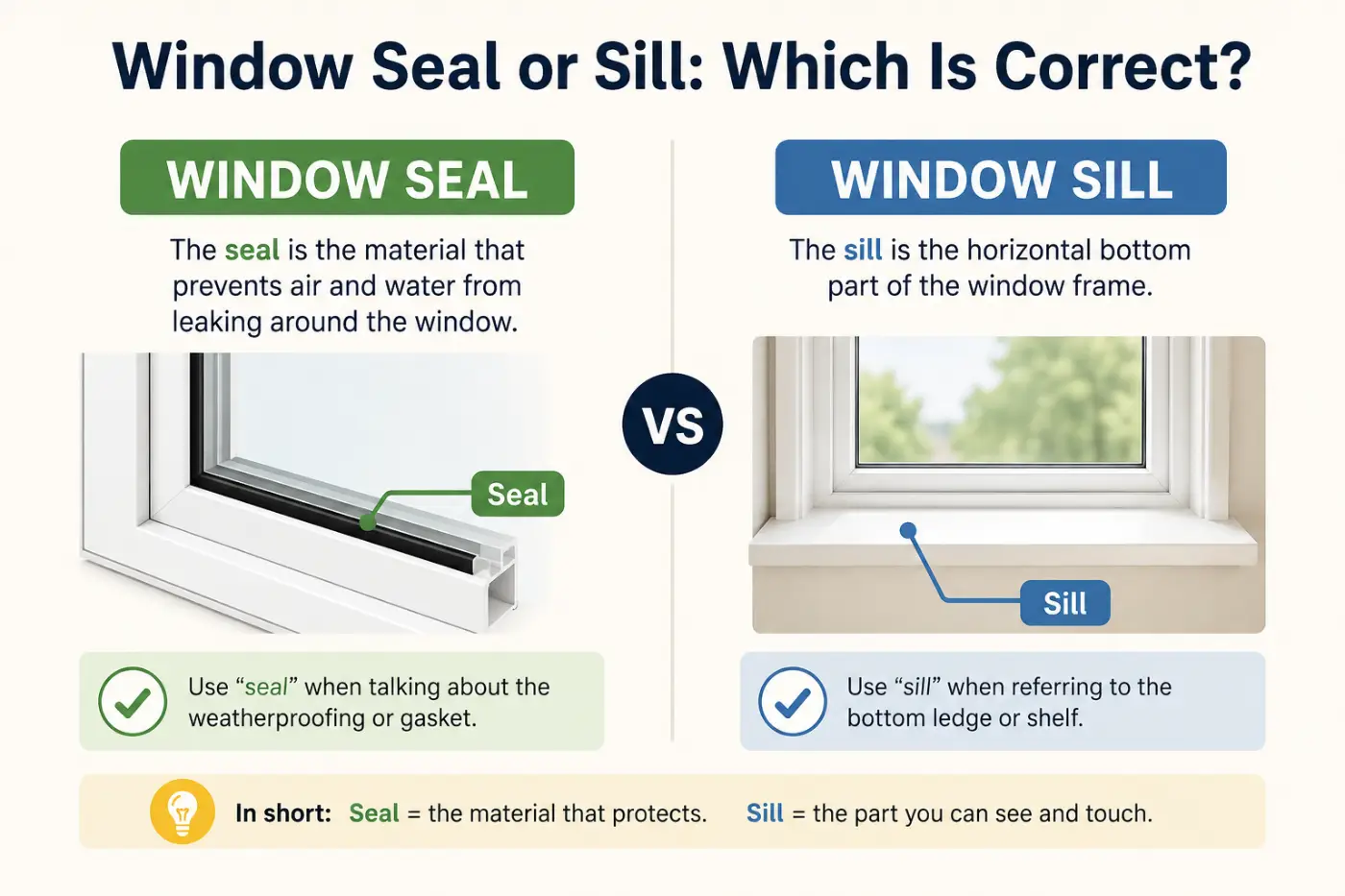
If you are talking about a drafty window, a leaking frame, or the ledge at the bottom of a window, choosing the right word can be confusing. The difference between Window Seal or Sill is simple: a seal closes gaps to help keep air and water out, while a sill is the horizontal surface at the bottom of a window. Both terms are correct, but they name different parts.
A window seal is usually made from rubber, foam, silicone, or another sealing material. It helps create a tight barrier between parts of the window or between the window frame and the surrounding structure. A sill, on the other hand, is the ledge that supports the lower edge of the window and may direct water away from the wall.
Knowing the distinction helps you describe repairs accurately, understand contractor instructions, and choose the right replacement material. This guide explains the meaning, location, purpose, and common uses of each term, along with examples, pronunciation, grammar, and practical tips for identifying window parts.
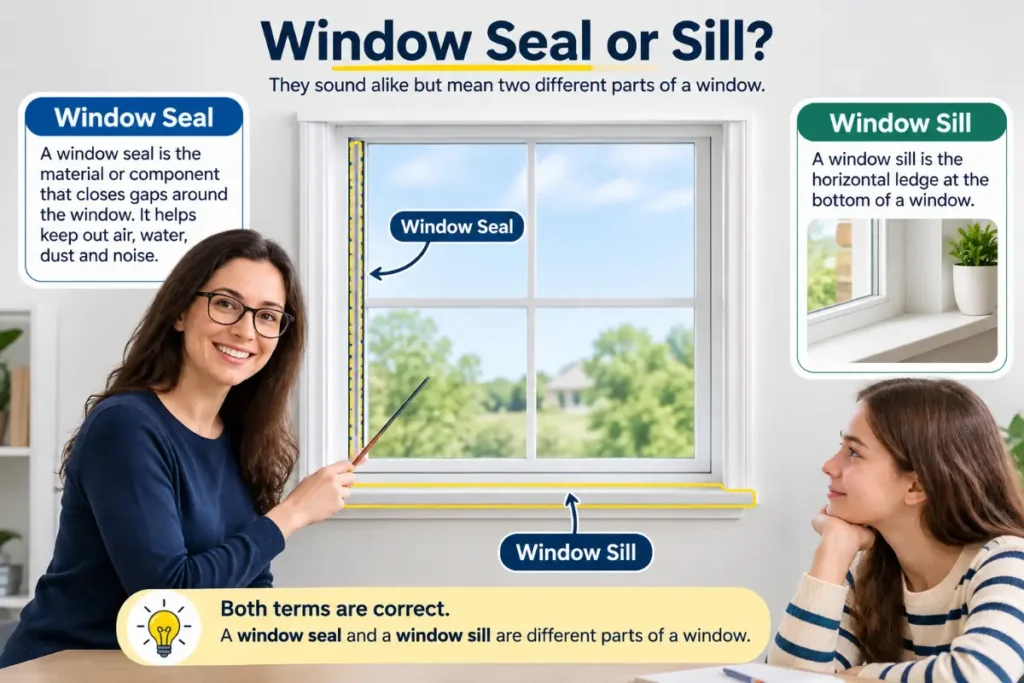
Still confused? Compare Piece of Mind or Peace of Mind Which Is Correct.
Quick Answer
A window seal is a material or component that closes a gap around a window to reduce air and water leakage. A window sill is the horizontal ledge at the bottom of the window, inside or outside the building. Use seal when discussing protection against leaks and drafts, and sill when referring to the bottom ledge.
Comparison Table
| Feature | Window Seal | Window Sill |
|---|---|---|
| Meaning | Material or component that closes a gap | Horizontal ledge at the bottom of a window |
| Main purpose | Helps block air, water, dust, and noise | Supports the window area and helps manage water |
| Part of speech | Noun | Noun |
| Physical form | Often a flexible strip, gasket, or applied material | Usually a solid horizontal surface |
| Common materials | Rubber, silicone, foam, weatherstripping | Wood, stone, concrete, metal, vinyl |
| Location | Around moving window parts or frame joints | Along the bottom of the window opening |
| Common problem | Cracking, shrinking, gaps, air leakage | Rotting, cracking, water damage, poor drainage |
| Repair | Replace weatherstripping or reseal joints | Repair, refinish, or replace the ledge |
| Example | The window seal needs replacing. | The plant is sitting on the window sill. |
Meaning and Definition
What Is a Window Seal?
A window seal is a barrier that helps close openings between window components or between the window frame and the building. Its purpose is to limit unwanted movement of air, water, dust, and, in some designs, sound. The exact material and location depend on the type of window and the construction method.
A seal may be made from rubber, silicone, foam, or another flexible material. Some seals are fitted into grooves around a window sash. Others are applied around the outside of a frame to close the joint between the frame and the wall.
The term can describe several related components.
- Weatherstripping: Flexible material fitted around a movable window part to reduce air and water entry.
- Gasket: A compressible strip that creates a tight fit between two surfaces.
- Caulk or sealant: A material applied to a joint to close gaps and prevent moisture or air from passing through.
- Insulated glass seal: A sealed edge around the panes of an insulated glass unit that helps keep the space between the panes closed.
These components do not all perform exactly the same job. Weatherstripping usually seals moving parts, while caulk is commonly used for joints that are not meant to move. An insulated glass seal is part of the glass unit itself, not simply the strip around the outer frame.
What Is a Window Sill?
A window sill is the horizontal surface at the bottom of a window opening. It may be found inside the room, outside the building, or on both sides, depending on the window design.
The inside surface is often used as a small ledge for plants, decorations, or other objects. The outside sill is designed to help direct rainwater away from the wall and window opening. Many exterior sills have a slight slope so water does not collect against the building.
Window sills can be made from several materials, including:
- Wood.
- Natural stone.
- Concrete.
- Brick.
- Aluminum.
- Vinyl.
- Composite materials.
The material often depends on the building style, climate, window design, and maintenance needs. A wooden sill may need painting or sealing to protect it from moisture, while a stone sill may be more resistant to rot but can still crack or develop water stains.
What Is the Difference Between an Interior and Exterior Sill?
An interior sill is the ledge you can see and touch from inside the room. It may be made from wood, stone, plastic, or another finish material. People often use it to hold small objects or add decorative detail around a window.
An exterior sill is the bottom ledge or projecting surface on the outside of the building. Its design helps move rainwater away from the wall. Some exterior sills include a sloped top and a drip groove underneath, which helps stop water from running back toward the wall.
Both are sills, but they serve different practical needs. The interior version is often finished to suit the room, while the exterior version must handle weather exposure.
Is Window Seal a Single Part?
Not always. The phrase can refer to different sealing components, depending on the type of window and the problem being discussed.
For example, a homeowner who feels cold air near a window may be referring to worn weatherstripping around the sash. Someone who sees water entering between the frame and the wall may need to inspect the exterior caulk or sealant. A foggy insulated glass unit may have a failed seal around the glass panes.
This distinction matters when buying repair products. A replacement rubber gasket will not necessarily fix a failed insulated glass unit, and adding caulk to a moving sash may stop the window from opening properly.
Key Differences Explained
1. Physical Location
The most obvious difference is where each part is found. A sill is the bottom ledge of the window opening. It is usually easy to see because it forms a horizontal surface beneath the glass and frame.
A seal is found at a joint or gap. It may sit around the edges of a movable sash, between sections of the frame, around the glass unit, or where the frame meets the wall. You may not notice it until it becomes damaged or stops working properly.
2. Main Function
A sill provides a bottom surface and can help direct water away from the building. Its design and condition matter because water that collects near the window opening can damage the frame or wall.
A seal closes gaps and limits the movement of air and water. It supports energy efficiency, comfort, and moisture control. A damaged seal may allow drafts, rainwater, or outside dust to enter.
3. Material
A sill is generally made from a solid material. Common choices include wood, stone, concrete, metal, and vinyl. It must be strong enough to remain stable and withstand its surroundings.
A seal is often flexible or applied as a compound. Rubber, foam, silicone, and other sealant materials are common. Flexibility is useful because some window parts move or expand slightly as temperatures change.
4. Repair and Replacement
A damaged sill may need sanding, filling, repainting, waterproofing, or complete replacement. The right repair depends on the material and the extent of the damage. For example, a small surface crack in a stone sill requires a different repair from deep rot in a wooden sill.
A damaged seal may need new weatherstripping, a replacement gasket, or fresh sealant. If the problem involves the sealed space between glass panes, the insulated glass unit may need professional repair or replacement.
5. Appearance
A sill is usually visible as part of the window’s structure or interior finish. It may be decorative, functional, or both. A wide sill can create space for plants or ornaments, while an exterior sill may project slightly beyond the wall.
A seal is often less noticeable. It may appear as a narrow rubber strip, a bead of caulk, or a gasket fitted into a groove. Its appearance is usually secondary to its ability to close a joint.
6. Common Problems
Sills can suffer from water damage, rot, cracks, stains, peeling paint, and loose fittings. These problems are often linked to long term moisture exposure, poor drainage, or a damaged exterior finish.
Seals can become brittle, shrink, crack, pull away from surfaces, or lose their ability to compress tightly. A failed seal may lead to drafts, water entry, condensation, or reduced insulation.
7. Grammar and Part of Speech
Both terms are nouns. They can appear as subjects, objects, or parts of compound phrases.
Examples:
- The window seal needs repair.
- The window sill is made of oak.
- We replaced the damaged seal.
- She placed a flowerpot on the sill.
The words are not interchangeable simply because they describe parts of the same window. Each has its own meaning and common combinations.
8. Pronunciation
The words sound different. Seal rhymes with feel, while sill rhymes with fill. The difference is in the vowel sound, so careful pronunciation helps prevent confusion in conversation.
9. Formality and Context
Both terms are standard and appropriate in formal writing. Construction documents, repair estimates, home inspection reports, and product descriptions use them to identify specific parts.
In casual conversation, someone might say the bottom ledge needs repair or the rubber around the window is worn. In professional communication, using the exact term makes the repair request easier to understand.
10. Regional Usage
The terms are used in American, British, Canadian, and Australian English. There is no major spelling difference between these varieties. Some construction terms may vary by region or trade, but the basic distinction between a seal and a sill remains the same.
Which Term Is Correct?
Both terms are correct, but they describe different things. Use seal when you mean a barrier that closes a gap. Use sill when you mean the horizontal ledge at the bottom of a window.
The easiest way to remember the difference is to think about the job each part performs. A seal keeps gaps closed, while a sill provides a bottom surface and may help water drain away from the wall.
Consider these examples:
- Correct: The rubber window seal is cracked.
- Correct: The wooden window sill needs painting.
- Correct: Water is entering through the gap around the frame.
- Correct: The flowerpot is resting on the window sill.
- Correct: The contractor replaced the worn weather seal.
It would be incorrect to say the flowerpot is resting on the window seal if you mean the solid ledge. Likewise, saying the sill is cracked when you mean a rubber strip around the sash may confuse the person carrying out the repair.
The terms are not alternative spellings. They are separate nouns with different meanings. Choosing the correct one depends on the part you are describing.
Sentence Examples
Here are ten natural examples showing how each term appears in everyday and professional communication.
Five Examples Using Window Seal
- The window seal is worn, so cold air enters the bedroom.
- We need to replace the rubber seal before winter.
- The contractor checked the window seals during the home inspection.
- A damaged glass unit seal can cause fogging between the panes.
- Please inspect the seal around the frame before applying new caulk.
Five Examples Using Window Sill
- My grandmother keeps small plants on the window sill.
- The wooden window sill has started to show signs of water damage.
- We painted the interior sill to match the new trim.
- The builder installed a stone sill beneath the kitchen window.
- Rainwater was collecting on the exterior sill because it had no proper slope.
Examples Using Both Terms Together
You may need to mention both parts when describing a window repair. For example, a damaged sill can allow water to reach nearby joints, while a failed seal can allow moisture to enter around the frame. They work in different ways, but both can affect the condition of the window opening.
Here are a few examples:
- The inspector found a damaged sill and a worn seal around the frame.
- We repaired the exterior sill and replaced the weatherstripping.
- The new window has a durable frame, an effective seal, and a stone sill.
- The contractor checked the sill for water damage and tested the seal for air leaks.
- The homeowner requested a quote for repairing the sill and replacing the window gasket.
Common Mistakes and Misunderstandings
1. Using Seal When You Mean Sill
Incorrect: The plant is sitting on the window seal.
Correct: The plant is sitting on the window sill.
A plant normally rests on the solid horizontal ledge, not on a flexible sealing strip. Use the name of the physical surface to avoid confusion.
2. Using Sill When You Mean Seal
Incorrect: The rubber sill around the window is cracked.
Correct: The rubber seal around the window is cracked.
A flexible strip that closes a gap is a seal or gasket. A sill is a solid ledge, usually made from wood, stone, concrete, or another building material.
3. Calling Every Leak a Failed Window Seal
Incorrect assumption: Water near the window always means the window seal has failed.
Better explanation: Water may enter because of damaged exterior caulk, poor drainage, a cracked sill, blocked drainage channels, or a failed window component.
A leak needs inspection before you decide which part requires repair. Replacing the wrong component can waste time and money.
4. Confusing a Glass Seal With Frame Weatherstripping
A foggy window and a drafty window do not always have the same cause. Fog or moisture between the panes of an insulated glass unit can indicate a failure in the edge seal. A draft around a movable sash may point to worn weatherstripping.
These are different problems. Identifying where the moisture or air enters helps you choose the right repair.
5. Treating the Words as Alternative Spellings
Incorrect assumption: Seal and sill are two spellings for the same window part.
Correct understanding: They name different components.
The confusion may come from their similar sound and shared connection to window construction. However, replacing one with the other changes the meaning of the sentence.
Pronunciation Guide
How Do You Pronounce Seal?
The word seal is pronounced /siːl/ in standard American English. It has one syllable and rhymes with feel, meal, and wheel. The vowel is the long e sound.
To pronounce it clearly, begin with the /s/ sound, hold the long e vowel briefly, and finish with /l/. The word should sound like the name of the animal seal.
How Do You Pronounce Sill?
The word sill is pronounced /sɪl/. It has one syllable and rhymes with fill, hill, and mill. Its vowel is the short i sound.
Begin with /s/, use the short vowel heard in sit, and finish with /l/. Do not stretch the vowel into the long e sound used in seal.
Easy Way to Remember the Difference
Think of the vowel sounds:
- Seal sounds like feel.
- Sill sounds like fill.
The spelling also gives you a useful reminder. Seal contains the same vowel combination as words such as meal and real. Sill uses the same short vowel pattern as hill and still.
Both words have one syllable, and the stress falls on that single syllable.
Learn the difference in Lended vs Lent Which Form Is Correct.
Etymology and Word Origin
The Origin of Seal
The noun seal has a long history in English and comes from Old English and related Germanic forms associated with a device or mark used to authenticate or close something. Over time, the word developed several meanings, including a mark of approval, a device used to close a container, and a barrier that prevents something from passing through.
In construction, the meaning is connected to closing or securing an opening. A window seal helps close a gap between components so air and moisture cannot easily pass through.
The word also functions as a verb. To seal a window means to close or protect a joint with a suitable material. For example, a contractor may seal the gap between a frame and a wall.
The Origin of Sill
Sill comes from Old English forms related to the idea of a base, support, or foundation. The word developed into its modern construction meaning as the name for a horizontal supporting or bottom surface.
In building terminology, sill can refer to the bottom member of a window frame or the ledge at the base of a window opening. The exact technical use may depend on the design and the part being described.
The shared idea of a base or lower support helps explain its use in other construction terms. For example, a door sill refers to the bottom part of a doorway.
Why the Origins Matter
The histories show that these words developed from different ideas. A seal is associated with closing or securing something, while a sill is associated with a base or supporting surface.
You do not need to memorize their origins to use them correctly. Their modern meanings and physical locations are the most useful guides.
Regional Usage
American English
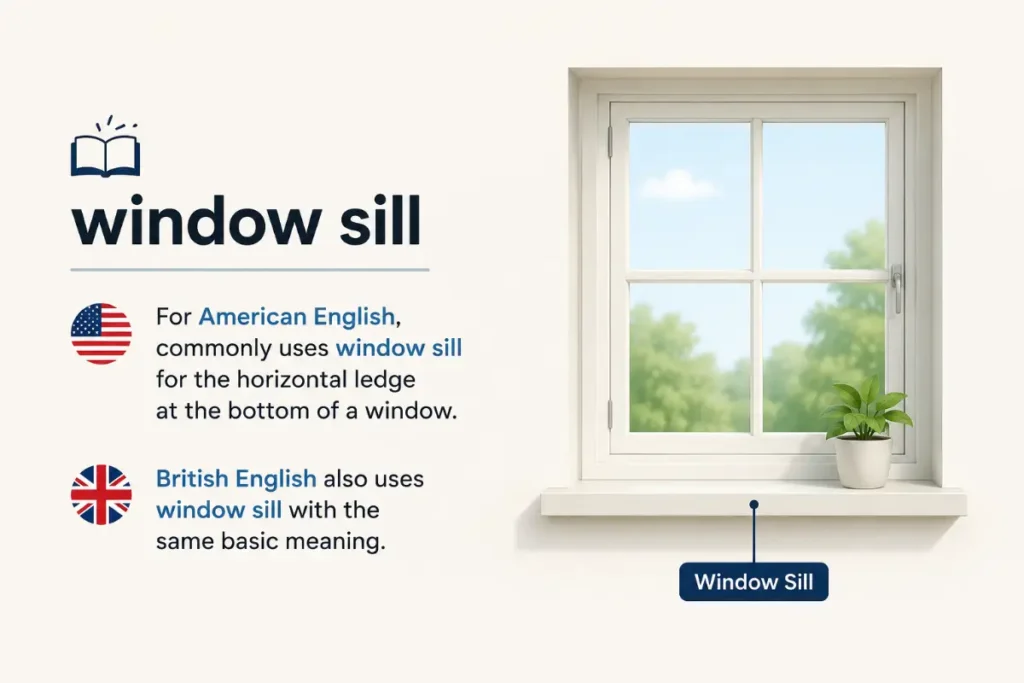
Both terms are standard in American English. Homeowners, builders, window installers, and inspectors use seal for a barrier around a window and sill for the horizontal surface at the bottom.
Common American expressions include:
- Window seal.
- Rubber seal.
- Weather seal.
- Interior window sill.
- Exterior window sill.
The word sill is also common in real estate descriptions and home improvement instructions. Seal appears frequently in repair discussions involving drafts, water leaks, and insulation.
British English
British English uses the same basic distinction. A window seal refers to a barrier that closes a gap, while a window sill is the ledge at the bottom of the window.
One useful regional detail is that British English commonly uses the spelling windowsill as one word, while American English often writes window sill as two words. Both forms are recognized in English usage, and the preferred style may depend on the publication or style guide.
Australian English
Australian English also uses seal and sill in their standard construction meanings. The terms appear in home maintenance, building work, and window installation.
Local building practices and product names may vary, but the core distinction remains the same. A seal closes a gap, and a sill forms the lower ledge.
Canadian English
Canadian English follows the same general usage as American English. Both terms are standard, and neither has a special regional spelling that changes its meaning.
Canadian construction and home repair writing may use more specific names for different window components, but the basic meanings remain consistent.
Grammar Rules and Part of Speech
Both words are nouns, but seal can also function as a verb. Understanding how each word works in a sentence helps you use it correctly.
Seal as a Noun
As a noun, seal refers to a material or component that closes a gap. It can be singular or plural.
Examples:
- The seal is damaged.
- The window needs a new seal.
- The seals around the glass are worn.
- A rubber seal can help reduce drafts.
You can use adjectives to describe the type or condition of the component. Common combinations include rubber seal, weather seal, airtight seal, damaged seal, and flexible seal.
Seal as a Verb
Seal can also describe the action of closing or protecting a gap.
Examples:
- The contractor will seal the frame.
- We sealed the gap around the window.
- The installer is sealing the exterior joint.
The verb takes different forms depending on the tense. Seal is the base form, sealed is the past tense and past participle, and sealing is the present participle.
Sill as a Noun
Sill is a noun that names the bottom ledge or supporting surface of a window or doorway. It is not normally used as a verb in this construction sense.
Examples:
- The sill is made of stone.
- We need to replace the damaged sill.
- The window sills need cleaning.
- Water stains appeared on the wooden sill.
Common combinations include window sill, exterior sill, interior sill, stone sill, wooden sill, and door sill.
Compound Nouns and Spelling
The expression can appear as window sill or windowsill. Both spellings are used, although the one word form is especially familiar in some British English writing. For consistency, follow the spelling style used by your publication, company, or document.
The term window seal is normally written as two words because window describes the type of seal. The same pattern appears in phrases such as rubber seal and weather seal.
Articles and Plurals
Use a or the before a singular countable noun when the sentence requires it.
- The window needs a new seal.
- The sill is damaged.
- We replaced the old seal.
- The contractor repaired the sill.
The usual plurals are seals and sills. For example, a building may have several window seals and several window sills.
Real Life Usage Examples
Daily Conversation
In everyday conversation, people often describe a problem by pointing to the part they mean. Clear terms help a homeowner explain the issue without needing technical language.
- The sill is wet after every storm.
- I think the seal around this window needs replacing.
These sentences identify two different issues. The first concerns the bottom surface, while the second concerns a gap or joint.
Email and Workplace Communication
In emails to contractors, landlords, or property managers, naming the correct component can help prevent confusion.
- Please inspect the window seal in the upstairs bedroom because cold air is entering around the frame.
- The wooden sill in the kitchen has visible water damage and may need repair.
A clear description should include the room, the location, and the visible problem. If possible, add a photo so the person carrying out the repair can identify the exact area.
Academic and Technical Writing
Technical writing often uses specific component names to describe how a window performs.
- The weather seal reduces air movement between the sash and frame.
- The exterior sill helps direct rainwater away from the wall assembly.
In a report, it may also be necessary to distinguish between the window frame, sash, glazing unit, gasket, and surrounding wall joint. Each part has a different function.
News and Journalism
News reports about building maintenance, construction, or property damage may use both terms.
- Inspectors found that damaged window seals contributed to air leakage in the building.
- Heavy rain caused water damage to several wooden window sills.
These examples show how the terms can help explain the cause or location of a building problem.
Literature and Storytelling
In descriptive writing, a sill can help establish a room’s setting, while a damaged seal can suggest weather, age, or poor maintenance.
- She placed the letter on the narrow window sill and watched the rain.
- A cold breeze slipped through the broken seal as the storm grew stronger.
The words can add detail without needing a long explanation of the window itself.
Related and Confused Terms
These eight terms are useful when discussing windows, repairs, and building components.
1. Weatherstripping
Weatherstripping is material fitted around doors or windows to reduce air and water leakage. It is one type of sealing system and is commonly used around movable window parts.
A weatherstrip may be made from rubber, foam, vinyl, or another flexible material. It can wear out over time and may need replacement.
2. Gasket
A gasket is a material placed between two surfaces to create a tight joint. Window gaskets are often made from rubber or another flexible substance.
The term is more specific than seal in many technical settings. A gasket is a physical component, while seal can refer more broadly to the barrier or sealing function.
3. Caulk
Caulk is a flexible material used to fill gaps and joints around building components. It is often applied around the outside of a window frame to reduce water and air entry.
Caulk is not usually suitable for every moving window joint. Using it in the wrong location can interfere with the window’s operation or block drainage paths.
4. Window Frame
The window frame is the fixed structure that holds the window in the wall opening. It supports the sash or glazing and connects the window assembly to the building.
A frame may be made from wood, vinyl, aluminum, fiberglass, or a combination of materials. Seals are often fitted between the frame and other window components.
5. Window Sash
The sash is the part of a window that holds the glass. In many designs, it can move to open or close the window.
Weatherstripping is often fitted around the sash to reduce drafts when the window is shut. The sash should not be confused with the sill, which is at the bottom of the window opening.
6. Glazing
Glazing refers to the glass or other transparent material fitted into a window. It can also refer to the process of installing glass into a frame.
An insulated glass unit usually contains two or more panes separated by a sealed space. If its edge seal fails, moisture can enter the space between the panes and cause fogging.
7. Drip Edge
A drip edge is a feature designed to direct water away from a surface. On some exterior window sills, a groove or projecting edge helps prevent water from running back toward the wall.
This feature is especially useful in areas exposed to heavy rain. It supports drainage but does not replace the need for properly installed seals and flashing.
8. Window Trim
Window trim is the decorative or finishing material around the window opening. It may cover the joint between the frame and the wall or provide a finished appearance.
Trim is not the same as a sill. The sill forms the bottom ledge, while trim usually surrounds or finishes the opening. Some window designs combine these features visually.
Expert Editor Insight
A professional editor looks at the physical object being described rather than relying on how similar the words sound. Homeowners often confuse these terms because both appear in discussions about drafts, leaks, and window repairs. However, a contractor needs to know if the problem involves a flexible gasket, a joint around the frame, or the solid bottom ledge. Spelling tools may accept both words because both are correct. They cannot always tell if the chosen term matches the physical component. The best editing tip is to picture the part: if it closes a gap, call it a seal; if it forms the bottom ledge, call it a sill.
Key Takeaways
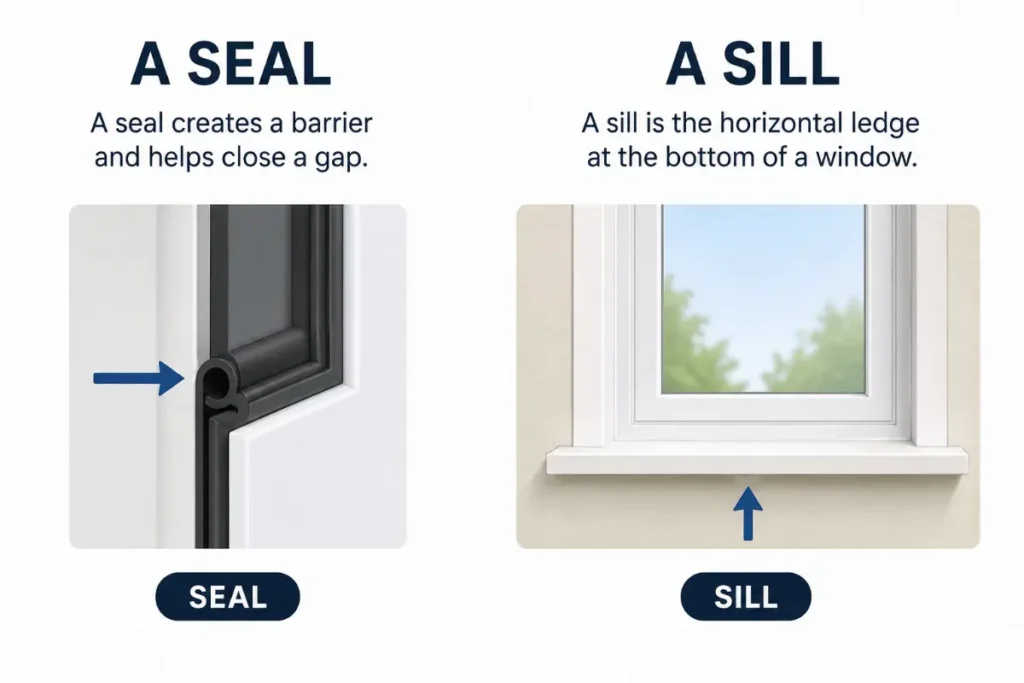
- A seal creates a barrier and helps close a gap.
- A sill is the horizontal ledge at the bottom of a window.
- A window can have both a seal and a sill.
- Water on a sill does not automatically mean the sill caused the leak.
- Weatherstripping gaskets and sealants are related to sealing but can describe different components.
- Seal can function as both a noun and a verb.
- Sill is normally used as a noun in standard English.
- Seal rhymes with feel.
- Sill rhymes with hill.
- Precise terminology is especially useful in construction repair inspection and maintenance writing.
You may also want to read Brake vs Break Which Word Is Correct.
Conclusion
The difference between Window Seal or Sill is based on the part’s location and purpose. A seal closes gaps around a window and helps reduce drafts and water entry. A sill is the horizontal ledge at the bottom of the window, often designed to support the opening and direct water away from the wall.
Both terms are correct, but they cannot replace each other. A simple memory tip makes the choice easy: a seal closes a gap, while a sill is the surface beneath the window. Use the right term when describing repairs, ordering materials, or writing about window construction.
FAQs
Is Window Seal or Sill the Correct Term?
Both terms are correct, but they name different window parts. A seal is a material or component that closes a gap and helps prevent air or water from entering. A sill is the horizontal ledge at the bottom of a window. Use the word that matches the physical part you are describing.
What Is the Difference Between a Window Seal and a Window Sill?
A window seal helps close gaps around the window, while a window sill forms the bottom ledge of the opening. Seals are often made from rubber, foam, or silicone. Sills are commonly made from wood, stone, concrete, metal, or vinyl. One controls leakage, while the other provides a lower surface and may direct rainwater away.
Is a Window Sill Inside or Outside?
A window sill can be inside, outside, or present on both sides of a window. The interior sill is the ledge visible from the room. The exterior sill is designed to help direct rainwater away from the wall. The exact design depends on the window and building construction.
What Is the Rubber Around a Window Called?
The rubber strip around a window is usually called weatherstripping, a gasket, or a window seal, depending on its location and function. It helps close gaps between moving or fixed components. If you are buying a replacement, check the window design and the shape of the existing material so you choose a compatible product.
Can a Damaged Window Seal Cause Water Leaks?
Yes. A damaged seal can allow water to enter around a window, but it is not the only possible cause of a leak. Water may also enter through failed exterior caulk, damaged flashing, poor drainage, or a cracked sill. Inspecting the location of the water entry helps identify the correct repair.
What Is the Bottom Part of a Window Called?
The horizontal ledge at the bottom of a window is called the window sill. It may be made from wood, stone, concrete, metal, or vinyl. The sill can support the lower part of the window area and, in exterior designs, help move rainwater away from the wall.
Is Windowsill One Word or Two?
Both windowsill and window sill are used in English. The one word form is especially familiar in British English, while the two word form is common in American writing. If you are preparing a formal document, choose one spelling and use it consistently throughout the text.
How Do I Know if My Window Seal or Sill Needs Repair?
Look at the type and location of the problem. Cracked rubber, drafts, or gaps around the sash may point to a damaged seal. Rot, cracks, loose material, or water stains on the bottom ledge may indicate sill damage. If water is entering the wall, have the full window area inspected rather than replacing one part without checking the cause.