
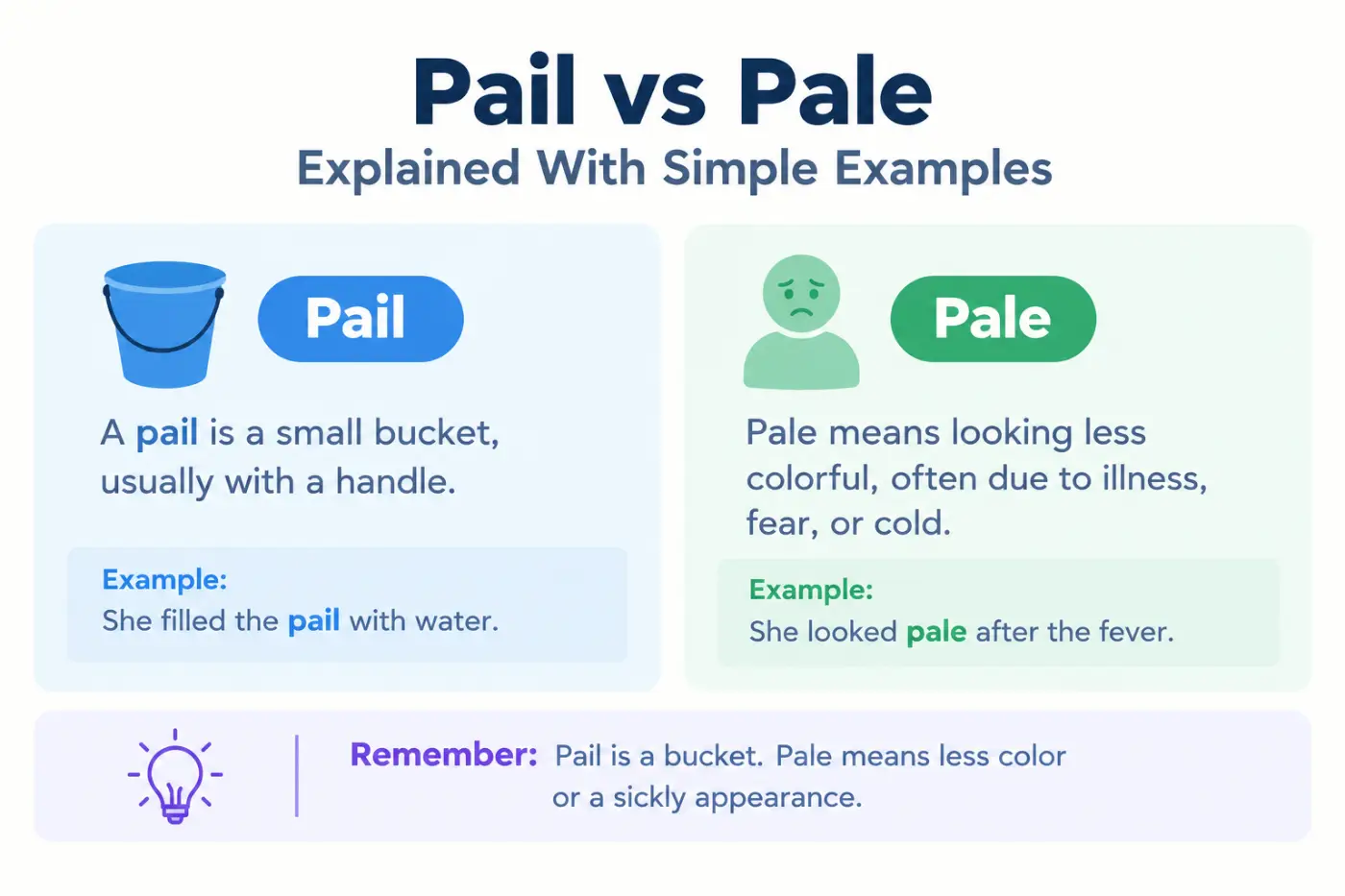
Have you ever wondered if you should write pail vs pale? These words sound exactly alike in standard American English, but their meanings are completely different. A pail is a container, often used for water, sand, or paint. Pale is an adjective that describes a light color, a person’s complexion, or something that seems less intense than another thing.
The confusion happens because both words have four letters and share the same pronunciation. When you hear them in a conversation, you can’t tell which spelling someone means from the sound alone. You have to use the context to understand the message. That makes these words a classic example of English homophones.
The good news is that the difference is easy to remember once you connect each spelling with a clear image. Think of a pail as a bucket sitting beside a garden hose. Think of pale as a light shade of blue or a face that looks unusually white. This guide explains their meanings, pronunciation, grammar, origins, common mistakes, and everyday use so you can choose the right word with confidence.
Many readers also check Courtesy Vs Curtesy Which Word Should You Use in 2026.
Quick Answer
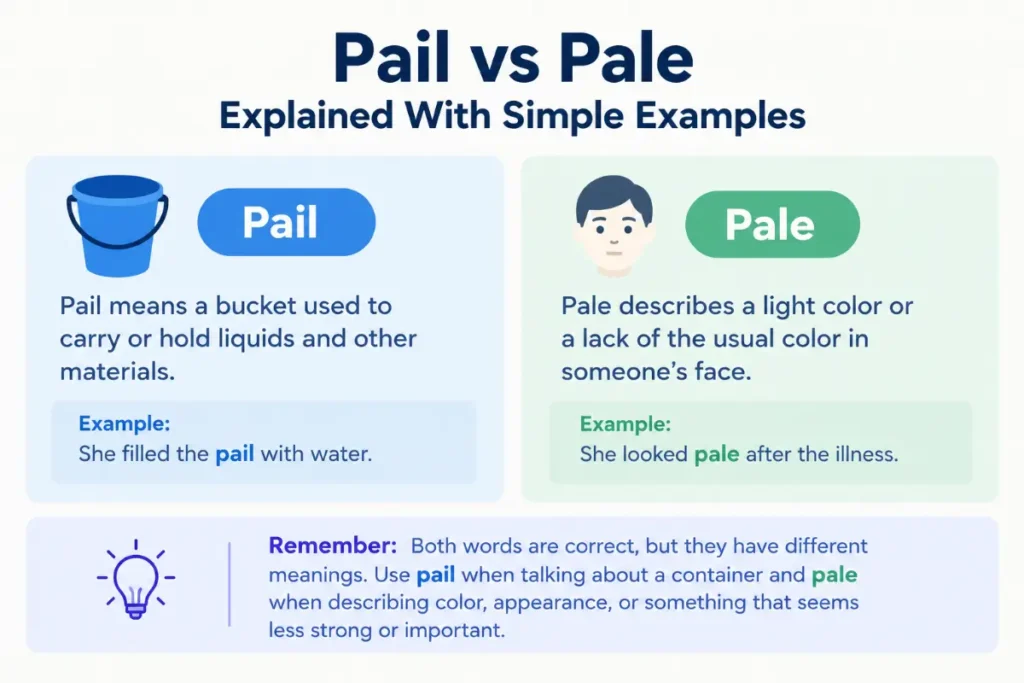
Pail means a bucket used to carry or hold liquids and other materials. Pale describes a light color or a lack of the usual color in someone’s face. Both words are correct, but they have different meanings. Use pail when talking about a container and pale when describing color, appearance, or something that seems less strong or important.
What Is the Difference Between These Words
The main difference is their meaning and grammatical function. Pail is a noun that names a container. Pale is usually an adjective that describes color, appearance, or intensity, although it can also function as a verb.
For example, in the sentence I filled the pail with water, the word identifies the container. In the sentence The walls are pale blue, the word describes the color of the walls.
Neither spelling is generally incorrect. The mistake occurs when you use one in place of the other.
| Feature | Pail | Pale |
|---|---|---|
| Main meaning | A bucket or container | Light in color or lacking usual color |
| Part of speech | Noun | Usually an adjective and sometimes a verb |
| Pronunciation | /peɪl/ | /peɪl/ |
| Syllables | One | One |
| Common contexts | Water, sand, paint, cleaning, gardening | Color, complexion, light, comparison |
| Example | She carried a pail of water. | His face looked pale. |
| Related expressions | Bucket and pail | Pale blue and pale complexion |
| Standard spelling | Correct | Correct |
The table shows why context matters. The pronunciation stays the same, but the sentence tells you which word belongs there.
What Does Pail Mean
Pail is a noun that means a bucket or a similar container used to hold, carry, or store materials. It often refers to a container with a handle, although the exact design can vary.
You might use a pail to carry water from a well, collect sand at the beach, wash a floor, or hold paint during a home improvement project. The word commonly appears in household, gardening, construction, and outdoor settings.
Here are some examples.
1. She filled the pail with fresh water.
Pail names the container that holds the water.
2. The children carried their pails to the beach.
The word refers to the containers they used to collect sand and shells.
3. Dad placed a pail under the leaking pipe.
The pail catches the water dripping from the pipe.
4. The painter dipped a brush into the pail.
The container holds paint for the job.
5. The gardener carried a pail of soil across the yard.
Pail refers to the container used to transport the soil.
In each sentence, the word names a physical object. It doesn’t describe a color or a person’s appearance.
Is Pail the Same as Bucket
Pail and bucket have nearly the same basic meaning. Both refer to containers used to carry or hold materials. In everyday American English, people often use the two words interchangeably.
For example, you can say I filled the bucket with water or I filled the pail with water. Both sentences are correct.
However, pail can sometimes suggest a smaller container, particularly one used for sand, paint, or household tasks. This is a tendency rather than a strict rule. A pail can vary in size, and bucket is the more general everyday term for many people.
The word also appears in familiar expressions such as a pail of water or a child’s sand pail. These phrases refer to ordinary containers rather than any special grammatical category.
Common Types of Pails
Pails come in many shapes and sizes. The name often depends on what the container holds or how someone uses it.
1. Water pail. A container used to carry or store water.
2. Sand pail. A small container children use to collect sand or build sandcastles.
3. Paint pail. A container used to hold paint during a painting project.
4. Cleaning pail. A bucket used for water and cleaning products.
5. Garden pail. A container used to carry soil, weeds, leaves, or harvested produce.
These expressions all use pail as a noun. The word before it tells you what the container holds or what someone uses it for.
What Does Pale Mean
Pale is usually an adjective that describes something with a light color or less color than expected. It can describe objects, clothing, walls, skies, flowers, and other visible things. It also describes a person’s complexion when the skin looks lighter than usual.
For example, a pale yellow shirt has a light shade of yellow. A pale face may look unusually white because of fear, illness, tiredness, or another cause. The word describes appearance, but it doesn’t explain why someone looks that way.
Consider these sentences.
1. She wore a pale pink dress.
Pale describes the light shade of pink.
2. His face turned pale when he heard the news.
Pale describes a change in his facial color.
3. The morning sky looked pale blue.
Pale describes the soft, light blue color.
4. The flowers had pale yellow petals.
Pale describes the light shade of yellow.
5. The old photograph had pale colors.
Pale means the colors looked light or lacked strong intensity.
The word can also describe a weak or less impressive version of something. This meaning is often figurative rather than strictly about color.
For example, The movie was a pale imitation of the original means the movie failed to match the quality or impact of the original.
Pale as a Description of Skin
Pale is often used to describe someone’s skin or face. A person may look pale after a frightening experience, a sudden shock, or a period of exhaustion. The word describes what someone looks like, not necessarily the cause.
For example, Her face grew pale when she saw the damage.
The sentence tells readers that her face lost some of its usual color. It doesn’t establish why this happened beyond the situation described.
Pale can also describe someone’s normal complexion. For instance, He has pale skin and freckles describes a light skin tone without suggesting that the person is unwell.
Context makes the distinction clear. A pale complexion can be a natural feature, while suddenly looking pale may suggest a change in someone’s condition.
Pale as a Description of Color
When pale describes a color, it usually means that the color is light or not very strong.
Common expressions include pale blue, pale green, pale pink, pale yellow, pale gray, and pale purple.
For example, The bedroom walls are pale green.
This means the walls have a light shade of green rather than a deep or dark shade.
Pale can also describe light that appears weak or faint. A pale moon, for example, may look faint against a bright sky. The word gives readers a visual impression of reduced brightness or intensity.
Pale as a Verb
Although pale is most familiar as an adjective, it can also function as a verb. As a verb, it means to become pale or to make something else seem less important or impressive by comparison.
For example, Her face paled with fear.
Here, paled means that her face became pale.
Another example is His earlier achievements paled beside his latest success.
In this sentence, paled means that the earlier achievements seemed less impressive when compared with the new one.
This figurative use is common in written English. The phrase pale in comparison is particularly useful when comparing two things with very different levels of quality, importance, or impact.
How to Use Each Word Correctly
The easiest way to choose between these words is to identify the job the word performs in your sentence.
Use Pail for a Container
Pail is a noun, so it can appear as the subject or object of a sentence. It can also follow words that identify quantity or ownership.
For example:
1. The pail is beside the door.
2. She bought a new pail for gardening.
3. Please bring me a pail of water.
4. His pail was full of sand.
5. We washed the car with a pail and a sponge.
The word names the container in every example. If you can replace pail with bucket and keep the sentence’s basic meaning, you’ve probably chosen the right spelling.
Use Pale for Color or Appearance
Pale generally works as an adjective before a noun or after a linking verb such as look, seem, become, or appear.
For example:
1. She chose a pale blue scarf.
2. The walls look pale in the morning light.
3. His face became pale.
4. The paint appears pale under these lights.
5. The flowers have pale pink centers.
In these sentences, pale gives information about a person’s appearance or the color of an object.
Use Pale for Comparisons
Pale can also appear in figurative expressions that compare the importance or effect of two things.
For example:
1. The sequel paled in comparison with the original movie.
2. His first attempt paled beside his final performance.
3. The small disagreement paled in comparison with the larger problem.
In each example, the verb paled suggests that something seemed less impressive or important next to something else.
Which Spelling Is Correct
Both pail and pale are correct English words. The correct choice depends on what you want to say.
Choose pail when you mean a bucket or container. Choose pale when you mean a light color, a light complexion, or something that appears weaker in comparison with another thing.
For example, The boy carried a pail of water uses the noun correctly. The boy looked pale after the race uses the adjective correctly.
Neither word is a misspelling of the other. They are homophones, which means they share the same pronunciation but differ in spelling and meaning.
If you’re editing a sentence, don’t automatically change one spelling to the other. First, check the context. A spelling tool may recognize both words as valid, so it may not flag the wrong choice when the sentence contains a correctly spelled but unintended word.
Ten Natural Sentence Examples
These examples show how both words appear in everyday American English.
Examples With Pail
1. I left the pail beside the garden hose.
Pail is correct because the sentence refers to a container used for gardening.
2. The little boy filled his pail with sand at the beach.
The word names the container used to collect sand.
3. Can you bring a pail of water from the kitchen?
Pail is a noun that identifies what should hold the water.
4. She used a pail to mix the paint.
The container is used for a practical task.
5. The farmer carried a pail of apples into the barn.
Pail describes the container used to carry the fruit.
Examples With Pale
6. The walls looked pale blue in the afternoon light.
Pale describes the light shade of blue.
7. His face turned pale when the lights suddenly went out.
Pale describes a visible change in his complexion.
8. She chose a pale yellow sweater for spring.
Pale describes the sweater’s light color.
9. The moon looked pale behind the thin clouds.
Pale describes the moon’s faint appearance.
10. The new version paled in comparison with the original.
Paled is the past tense of the verb pale. It means the new version seemed less impressive.
These examples cover the most common uses. The container meaning and the descriptive meaning remain separate even though the words sound alike.
Common Spelling Mistakes
The main mistake is choosing a spelling based on sound alone. Since both words sound the same, you need to pay attention to meaning and sentence structure.
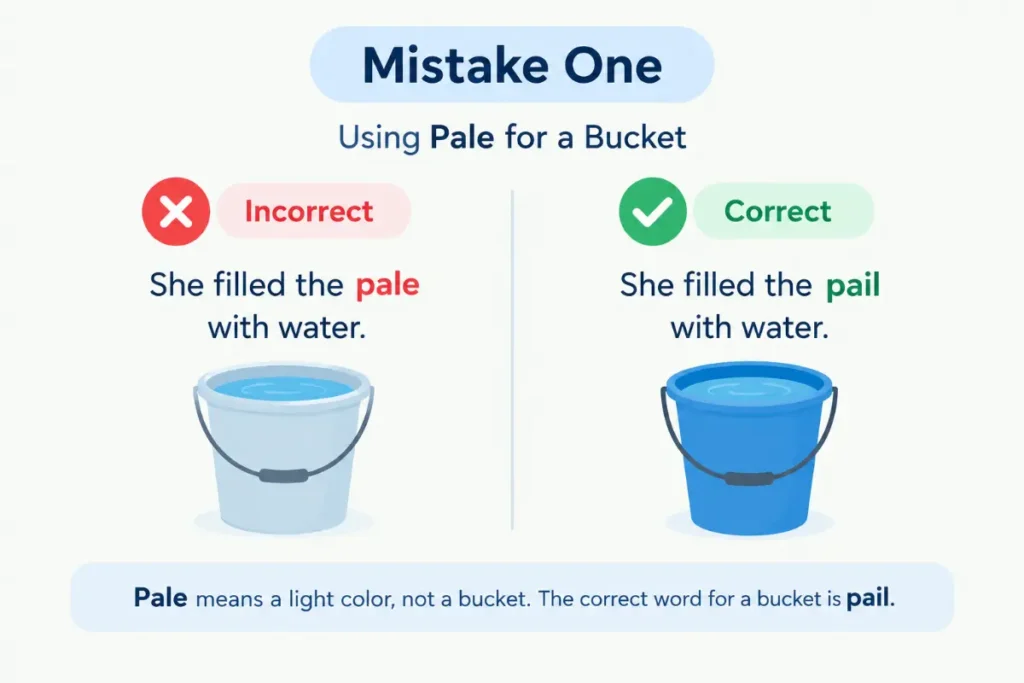
Mistake One Using Pale for a Bucket
Incorrect: She filled the pale with water.
Correct: She filled the pail with water.
The sentence refers to a container. Pale describes color or appearance, so it doesn’t fit.
Mistake Two Using Pail for a Color
Incorrect: He painted the room pail blue.
Correct: He painted the room pale blue.
Pale describes the shade of blue. Pail names a container.
Mistake Three Confusing the Words in a Description
Incorrect: Her face looked pail after the accident.
Correct: Her face looked pale after the accident.
The sentence describes her appearance, so pale is the right word.
Mistake Four Using Pale in a Container Expression
Incorrect: The child carried a pale of sand.
Correct: The child carried a pail of sand.
The phrase refers to a container holding sand.
Mistake Five Using Pail in a Figurative Comparison
Incorrect: The other performances pail in comparison.
Correct: The other performances pale in comparison.
The expression means that the other performances seem less impressive. Pale functions as a verb here.
A useful editing habit is to read the entire sentence instead of checking a word in isolation. The surrounding words usually reveal the intended meaning.
Still confused? Compare shinny vs shiny Correct Spelling Meaning and Usage.
Pronunciation Guide
Pail and pale are homophones in standard American English. Both have the same pronunciation: /peɪl/.
The pronunciation can be divided into three sound parts.
1. /p/ is the opening consonant sound heard in words such as pen and paper.
2. /eɪ/ is the vowel sound heard in day and rain.
3. /l/ is the final consonant sound heard in words such as light and bell.
Both words contain one syllable. Neither word has a separate stressed syllable because each word consists of a single syllable.
The long A sound is important. It is the same vowel sound found in day, say, and gate. Don’t pronounce the words with the short vowel sound heard in words such as pal.
Because the pronunciation is identical, speaking alone won’t show your listener which word you mean. In writing, you must rely on spelling and context.
Etymology and Word Origins
The words have different histories, even though their modern pronunciations are the same.
The Origin of Pail
Pail comes from Middle English and is related to older forms used for a bucket or similar container. Its exact historical development is less straightforward than a simple modern spelling change, but its established meaning has remained connected with containers.
Today, pail is a familiar noun in household and outdoor contexts. Expressions such as a pail of water and a sand pail show how the word continues to serve the same basic purpose.
The Origin of Pale
Pale comes through Old French from Latin pallidus, meaning pale or pallid. The word developed in English as a description of light color or a lack of the usual color in a person’s face.
Its meaning later extended to comparisons. When something pales in comparison, it seems less strong, impressive, or important next to another thing.
The shared pronunciation of the two words doesn’t mean they share the same modern meaning. Their histories help explain why English has two different spellings for words that sound alike.
Regional Usage in English
The distinction between the two words remains the same across major varieties of English.
American English
In the United States, pail is a standard noun for a bucket or container. Pale is the standard spelling for a light color, a light complexion, or the verb used in expressions such as pale in comparison.
Americans often use bucket instead of pail in casual conversation, but both are correct.
British English
British English uses both pail and pale with the same basic meanings. Bucket is also a common term for a container, and the adjective pale describes light colors and complexions.
There is no major British spelling change that turns one of these words into the other.
Canadian English
Canadian English follows the same distinction. Pail refers to a container, while pale describes color, appearance, or reduced intensity.
Australian English
Australian English also uses the standard spellings pail and pale. The choice depends on meaning rather than regional spelling preferences.
In short, regional differences don’t affect the main rule. Use pail for the container and pale for the description or figurative comparison.
Grammar Rules and Parts of Speech
Understanding the grammar behind these words makes it easier to use them correctly.
Pail Is a Countable Noun
Pail is a countable noun. You can use it in singular and plural forms.
1. I bought a pail.
2. She bought two pails.
3. The pails are in the garage.
The singular form normally uses an article or another determiner when it refers to one ordinary countable object. For example, you would usually say I need a pail rather than I need pail.
You can also use pail in compound phrases such as paint pail, water pail, and sand pail.
Pale Is Usually an Adjective
Pale describes a noun or gives information about a subject after a linking verb.
Before a noun: She wore a pale dress.
After a linking verb: The dress looked pale.
After a linking verb, the adjective describes the subject rather than an action. This is why The sky looked pale is correct.
Pale Can Also Be a Verb
The verb pale changes form according to tense.
Present: The colors pale in bright sunlight.
Past: The colors paled over time.
Present participle: The colors are paling.
The verb is less common than the adjective in everyday conversation, but it is standard English.
Punctuation and Sentence Position
Neither word requires special punctuation. Both can appear at the beginning, middle, or end of a sentence when the grammar supports that position.
For example, Pail in hand, she walked toward the well uses pail in an opening phrase. The sentence She looked pale after the long walk uses pale after a linking verb.
Capitalization depends on the word’s position in the sentence, not its meaning. At the beginning of a sentence, write Pail or Pale with a capital letter.
Real Life Usage Examples
Everyday Conversation
Example One: Can you hand me the pail?
This is a natural request when someone needs a container for water, cleaning, or another task.
Example Two: You look pale. Are you feeling okay?
Here pale describes the person’s appearance. The question asks about their condition without claiming to know the cause.
Email and Workplace Communication
Example One: Please leave the pail near the supply closet for the cleaning crew.
Pail identifies a physical object and tells the reader where to put it.
Example Two: The pale background makes the text easier to read.
Pale describes the background color. This type of sentence may appear in design feedback or workplace communication.
Academic Writing
Example One: The sample developed a pale yellow color during the experiment.
Pale describes the observed color. In scientific writing, the description should be as specific as the evidence allows.
Example Two: The researcher placed the collected material in a clean pail.
Pail names the container used to hold the material. In a technical report, the exact type of container may need further description.
News and Journalism
Example One: Emergency workers carried a pail of water toward the damaged area.
The noun identifies the container used to transport water.
Example Two: Witnesses said the suspect looked pale when officers arrived.
Pale describes the person’s appearance. The sentence reports an observation rather than proving the person’s emotional or physical state.
Literature and Storytelling
Example One: The child clutched a small pail as she walked along the shore.
Pail gives the reader a clear image of a container in the character’s hands.
Example Two: A pale moon hung over the quiet village.
Pale creates a visual impression of weak or muted light. Writers often use the word to establish a calm, cold, or mysterious atmosphere.
Eight Related and Confused Terms
Several English words and expressions connect naturally with these two spellings.
1. Bucket
A bucket is a container used to hold or carry materials. It is a close synonym of pail and is often more common in everyday American conversation.
Example: He carried a bucket of water into the yard.
2. Container
Container is a broad term for an object used to hold something. A pail is one type of container.
Example: Place the tools in a suitable container.
3. Pale Blue
Pale blue describes a light shade of blue. The word pale modifies the color name.
Example: She painted the nursery pale blue.
4. Pallid
Pallid means unusually pale or lacking healthy color. It is often used to describe a person’s face and can sound more formal than pale.
Example: His pallid face showed how tired he was.
5. Paleness
Paleness is a noun that describes the quality or state of being pale.
Example: The paleness of the morning sky made the landscape look soft.
6. Paler
Paler is the comparative form of pale. Use it when comparing the lightness of two colors or appearances.
Example: This shade of green is paler than the one on the wall.
7. Palest
Palest is the superlative form of pale. It describes the lightest or least strongly colored member of a group.
Example: That is the palest shade of pink in the collection.
8. Pale in Comparison
Pale in comparison is an expression meaning that something seems less impressive, important, or powerful beside another thing.
Example: The first performance paled in comparison with the final show.
These related terms help expand your vocabulary while keeping the basic distinction clear. Pail belongs to the world of containers, while pale connects with color, appearance, and comparisons.
Expert Editor Insight
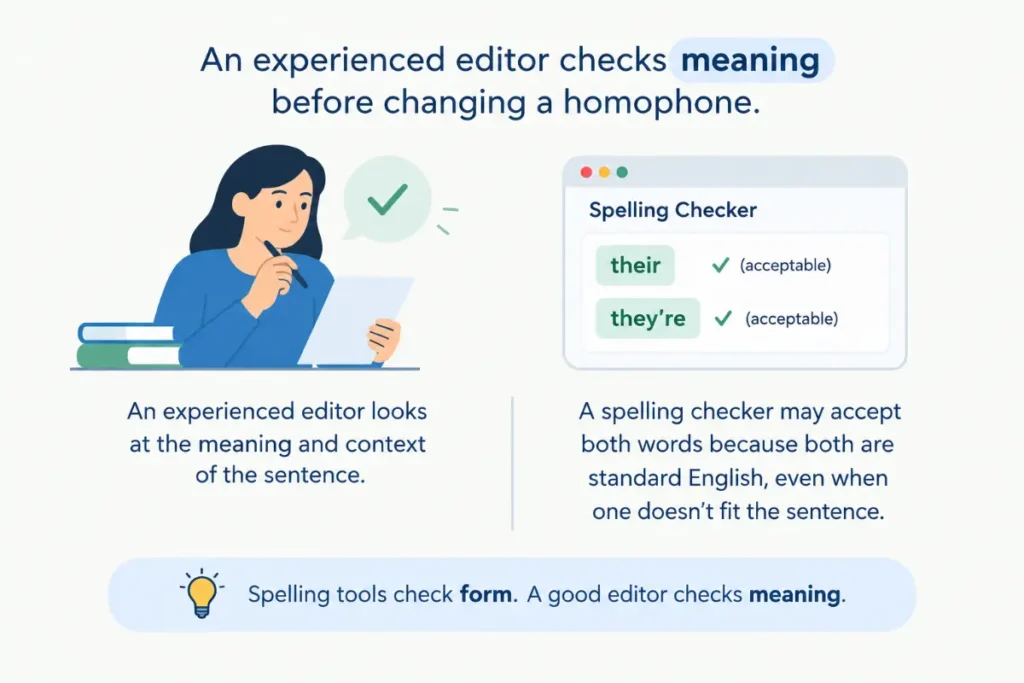
An experienced editor checks meaning before changing a homophone. A spelling checker may accept both words because both are standard English, even when one doesn’t fit the sentence. For example, a sentence about filling a pale with water may pass a basic spell check, but the meaning requires pail. Read the whole sentence, identify the word’s grammatical role, and confirm that the spelling matches the intended meaning. This quick review catches errors that automatic tools can miss.
Memory Tips for Remembering the Difference
The simplest memory trick is to connect each word with a familiar object or image.
Think of the i in pail as standing for the idea of an item you can carry. The word names a physical container.
Think of pale as a word you might use to describe a paint color. A pale wall might be pale blue, pale green, or pale yellow.
You can also remember the difference through two short phrases.
1. A pail holds water.
2. A pale color looks light.
These phrases connect each spelling to its main meaning. They are not grammar rules, but they are useful memory aids.
Another method is to substitute a synonym while editing. If bucket fits the sentence, pail may be correct. If light or lacking color fits, pale may be correct.
For instance, She carried a bucket of water makes sense, so pail is appropriate in the original sentence. The sky looked light blue also makes sense, so pale is the correct choice for a color description.
The goal is to remember the meaning rather than rely on the sound. Since the words are homophones, pronunciation alone won’t help you choose the right spelling.
Many readers also check Momment or Moment Which Spelling Is Correct.
Conclusion
Pail and pale sound alike, but they serve different purposes in English. Pail is a noun for a bucket or container, while pale usually describes a light color or a person’s appearance. The word can also function as a verb in expressions such as pale in comparison. Both spellings are correct, so context determines which one belongs in your sentence.
To remember the difference, picture a pail holding water and a pale blue wall. When you’re unsure, check the meaning before relying on pronunciation or spell check.
FAQs
Is pail or pale the correct spelling?
Both spellings are correct English words. Pail means a bucket or container, while pale describes a light color or a person’s appearance. The right choice depends on the sentence. If you’re talking about carrying water or sand, use pail. If you’re describing a light shade or a face that has lost color, use pale.
Is pale a real word?
Yes, pale is a standard English word. It commonly functions as an adjective describing a light color or a person’s complexion. It can also function as a verb meaning to become pale or to seem less impressive by comparison. The spelling is correct in expressions such as pale blue, pale skin, and pale in comparison.
What does pail mean in simple English?
A pail is a bucket or container used to hold or carry something. People may use a pail for water, sand, paint, cleaning, or gardening. The word is a noun, so it names an object rather than describing an object’s color. In many everyday sentences, bucket can replace pail without changing the basic meaning.
How do you pronounce pail and pale?
Both words are pronounced /peɪl/ in standard American English. They have one syllable and rhyme with words such as mail, sail, and tail. Because the pronunciation is identical, you can’t determine the intended spelling from sound alone. You must use the meaning and context of the sentence to choose correctly.
Why do people confuse these two words?
People confuse them because they are homophones. They sound alike but have different spellings and meanings. When someone speaks, the distinction isn’t audible, so writers must rely on context. A spelling tool may not catch the mistake because both forms are legitimate words. Learning a clear example for each meaning makes the difference easier to remember.
Can pale be used as a verb?
Yes, pale can function as a verb. It can mean to become pale or to seem less important or impressive compared with something else. For example, Her face paled with fear describes a change in appearance. The sentence His achievements paled in comparison means his achievements seemed less impressive beside another person’s accomplishments.
Is pail more common than bucket in American English?
Bucket is a common everyday term in American English, and many speakers use it more often than pail in casual conversation. However, pail is also standard and appears in expressions such as sand pail, paint pail, and a pail of water. Both words can refer to a similar container, although the preferred choice may depend on context.
What is an easy way to remember the difference?
Remember that a pail holds things, while pale describes how something looks. Picture a pail filled with water and a pale blue wall. These mental images connect the spellings to their meanings. When editing, try replacing pail with bucket or pale with light in color. The replacement that makes sense will usually point you toward the correct word.