

A legal department plan gives an in house legal team a clear way to decide what matters most and how the department will support the business. It connects legal work with company goals instead of treating every request as an isolated task. A good plan can improve risk control reduce unnecessary spending and help lawyers respond faster when the business needs them.
Many legal teams struggle because their workload grows faster than their resources. Contracts pile up. Compliance questions arrive without warning. Business leaders want quick answers. Outside counsel costs can climb. Meanwhile the legal team still needs time for strategic work that may not have an obvious deadline.
A thoughtful plan brings order to that pressure. It identifies the department’s priorities and explains how the team will handle work across contracts compliance disputes governance privacy employment matters and other legal needs. It also gives leaders a practical way to measure progress. This guide explains how to build a useful plan from the ground up and turn it into a working tool that your legal team can actually use.
Still confused? Compare Shakey or Shaky Which Spelling Is Correct in 2026?.
Quick Definition
A legal department plan is a structured roadmap for managing an organization’s legal work resources priorities risks and goals. It typically covers legal services staffing budgets outside counsel contracts compliance technology workflows and performance measures. Its purpose is to align legal operations with business strategy while controlling risk and using available resources effectively.
Quick Answer
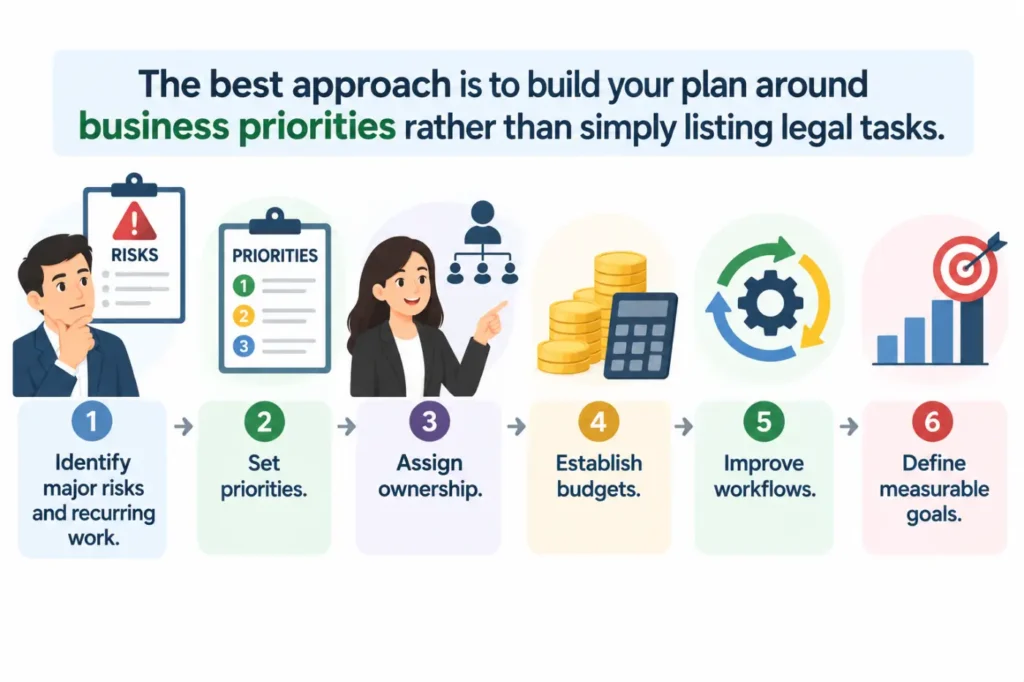
The best approach is to build your plan around business priorities rather than simply listing legal tasks. Start by identifying major risks and recurring work. Then set priorities assign ownership establish budgets improve workflows and define measurable goals.
A strong plan should answer five basic questions. What legal work matters most. What risks need attention. Who will handle the work. What resources are required. How will the department know it is performing well.
What A Legal Department Plan Should Accomplish
An effective plan does more than organize a lawyer’s calendar. It creates a shared understanding of how the legal function operates and what the business can expect from it.
The plan should help the department move from reactive work toward deliberate decision making. That doesn’t mean lawyers can predict every lawsuit contract issue or regulatory development. Legal work will always contain surprises. The goal is to make the predictable work easier to manage so the team has more capacity for the unexpected.
A well designed plan should accomplish several things.
- Connect legal work to business goals. If the company plans to enter new markets then regulatory research contracts and local legal requirements may become priorities.
- Identify material legal risks. The department should know which risks could create serious financial operational regulatory or reputational consequences.
- Clarify priorities. Not every request deserves the same level of attention. A good framework helps lawyers distinguish urgent high impact matters from routine work.
- Use resources wisely. Staffing outside counsel technology and administrative support should match the actual workload.
- Improve service delivery. Business teams should understand how to request legal support and what they can expect from the department.
- Create measurable goals. Leaders need more than a feeling that the legal team is busy. They need useful evidence of performance and progress.
The best plans are practical. If the document becomes a long collection of vague aspirations it won’t guide daily decisions. A shorter plan with clear priorities often has far more value.
Core Elements Of The Plan
Although every organization has different needs the strongest legal operating plans usually contain several core components.
Business Context
Begin with the organization itself. What does the company sell. Which markets does it serve. What major changes are expected during the planning period. What risks could affect growth.
A legal team cannot set useful priorities without understanding the business environment. A technology company may need to focus heavily on intellectual property privacy data use and commercial agreements. A manufacturer may face greater concerns around product liability supply contracts environmental requirements and employment matters.
The legal function should therefore start with business strategy rather than legal categories alone.
Current State Assessment
Before deciding what to improve take an honest look at the current operation.
Review the department’s workload staffing budget outside counsel spending technology tools contract processes compliance responsibilities and major open matters. Look for recurring bottlenecks.
Ask practical questions.
- Which types of work consume the most lawyer time.
- Which matters create the longest delays.
- Which requests arrive repeatedly from business teams.
- Which tasks could be standardized.
- Which work requires specialized outside expertise.
- Which processes depend too heavily on one person.
- Which risks have received too little attention.
- Which activities create significant administrative effort without adding much value.
This assessment creates a baseline. Without one the department may choose improvements based on assumptions instead of evidence.
Legal Priorities
Priorities should reflect both risk and business value.
A useful way to think about priority is to consider potential impact and urgency together. A small routine contract may need a fast response because it supports an important customer. A complex legal issue may require deep analysis even if nobody needs an answer today.
Avoid creating ten urgent priorities. If everything is urgent then nothing is truly prioritized.
Instead divide work into meaningful categories such as critical risk matters strategic business support recurring legal work and routine requests.
Building A Legal Risk Framework
Risk assessment sits near the heart of good legal planning.
Legal teams often know their risks intuitively. The problem is that intuition can remain scattered across individual lawyers. A simple risk framework turns that knowledge into something leadership can understand.
Start by identifying major risk areas. Depending on the business these may include contracts litigation regulatory compliance privacy intellectual property employment corporate governance consumer protection cybersecurity transactions and licensing.
Then assess each area based on factors such as potential impact likelihood exposure and current controls.
A simple internal scale can help.
- Low priority. The issue has limited potential impact and existing controls appear adequate.
- Moderate priority. The issue deserves attention and may require process improvement or monitoring.
- High priority. The issue could materially affect the business and needs active management.
- Critical priority. The issue could create severe legal or business consequences and requires immediate leadership attention.
The exact scoring method matters less than consistency. Your team should use the same logic across major risks.
Risk planning should also identify the owner of each major risk. A legal department may advise on the risk but the business owner often controls the underlying process.
That distinction matters. Legal teams don’t eliminate business risk. They help the organization understand it and make informed decisions about managing it.
Setting Legal Department Goals
Goals should describe outcomes rather than activity alone.
A weak goal might say that lawyers will review contracts more efficiently. A stronger goal might focus on reducing average review time for standard agreements while maintaining appropriate legal controls.
Useful goals often fall into five areas.
- Risk management. Reduce major unresolved risks or strengthen controls around high exposure areas.
- Service quality. Improve response times and make legal support easier for business teams to access.
- Efficiency. Standardize repeatable work and reduce unnecessary manual effort.
- Cost control. Improve outside counsel management and align spending with business priorities.
- Strategic support. Help the company execute important initiatives such as expansion acquisitions new products or major partnerships.
Each goal should have an owner and a measurable indicator. A goal without ownership can quickly become a forgotten sentence in a planning document.
Designing The Legal Work Intake Process
Legal teams often lose efficiency before a lawyer even begins the work.
Requests arrive through email chat meetings spreadsheets and hallway conversations. Important information may be missing. The lawyer then has to spend time figuring out what the business actually needs.
A structured intake process can solve much of this friction.
The request should capture enough information to understand the matter. That might include the business owner the type of request deadline commercial value relevant documents and potential risk.
The process should remain simple. If requesting legal help takes longer than explaining the issue directly to a lawyer then people will avoid the system.
A useful intake model can separate work into categories.
- Contract review.
- Legal advice.
- Compliance questions.
- Disputes and claims.
- Corporate matters.
- Privacy and data issues.
- Employment matters.
- Intellectual property.
- Transactions and strategic projects.
- Other legal requests.
The categories should reflect the actual business. Don’t create a complicated taxonomy simply because another organization uses one.
Contract Management And Standardization
Contracts often consume a large share of in house legal capacity. That makes contract work an obvious place to look for efficiency gains.
Start by identifying high volume agreements. Standard sales contracts vendor agreements confidentiality agreements employment documents and basic amendments may follow repeatable patterns.
Standardization can reduce unnecessary legal review. Approved templates play an important role because business teams can use them for lower risk transactions without starting from scratch.
The legal team can also establish clear escalation rules. A standard agreement with approved language may receive a faster path. A contract involving unusual liability intellectual property ownership regulatory obligations or major financial exposure may receive deeper review.
The goal isn’t to remove lawyers from the process. It is to reserve legal judgment for situations that actually require it.
Compliance Planning
Compliance should have a visible place in the department’s operating priorities.
Start with the laws regulations and internal policies that materially affect the organization. Then identify the people responsible for each area and determine how compliance activity will be monitored.
A useful compliance program may include policy reviews training reporting procedures investigations audits and periodic risk assessments.
Legal teams should also distinguish between having a policy and having an effective control. A document stored in a shared folder doesn’t necessarily mean employees understand or follow it.
For each major compliance area ask three questions.
- What requirement applies.
- What control addresses it.
- How do we know that control works.
That third question often reveals the biggest gaps.
Staffing And Team Structure
People are one of the most important resources in a legal function.
Staffing decisions should reflect workload complexity risk and expected business growth. A department may need more lawyers as the company expands. Yet adding headcount isn’t always the best answer. Process improvement technology paralegal support and outside specialists can sometimes address capacity problems more effectively.
Review the work performed by each role. Separate high judgment legal work from administrative or repeatable tasks.
Lawyers should spend their time where legal judgment creates the most value. Routine document handling research tracking and administrative coordination may be appropriate for other roles or automated workflows when the risk level allows it.
A staffing review should also consider resilience. If one lawyer holds nearly all knowledge about a major legal area the department has a continuity risk.
Cross training and documented procedures can reduce that dependency.
Managing Outside Counsel
Outside counsel can provide valuable expertise but unmanaged spending can quickly become a problem.
The department should define when external lawyers are needed and what work should normally stay inside the company.
External support often makes sense for specialized matters major litigation transactions unfamiliar jurisdictions or situations requiring substantial temporary capacity.
Before engaging a firm establish the scope of work expected deliverables communication process billing expectations and responsible internal lawyer.
Regular matter reviews can prevent unnecessary cost. Ask whether the work remains aligned with the original objective. Ask if the company still needs the same level of external support.
The goal isn’t simply to spend less. The goal is to get the right legal expertise at the right cost.
Many readers also check Please Disregard My Previous Email Meaning and Usage.
Legal Technology And Automation
Technology can improve legal operations when it solves a real problem.
Common tools may support contract management document management matter tracking legal intake workflow automation reporting and knowledge management.
Before buying software identify the problem first.
If contracts are difficult to locate then document organization may be the issue. If leaders can’t understand legal workload then reporting may need improvement.
Technology should follow process design rather than replace it.
A poorly designed process can become a poorly designed automated process. Automation doesn’t magically remove confusion. It often makes the underlying process move faster.
For that reason legal teams should simplify workflows before automating them whenever practical.
Budget Planning
A legal budget should reflect the department’s priorities.
Start with known internal costs such as salaries benefits technology training professional services and administrative expenses. Then estimate variable costs such as outside counsel litigation transactions and specialist advice.
Separate predictable spending from uncertain exposure.
For example a recurring legal technology subscription may be relatively predictable. Litigation costs may not be.
Scenario planning can help. Create a base expectation and consider realistic changes that could affect spending. A major transaction an investigation regulatory change or unexpected dispute can shift the budget quickly.
Good budgeting also creates a conversation with leadership. It explains why the legal team needs certain resources and what business value those resources support.
Legal Department Plan Metrics
Legal teams need useful metrics but they shouldn’t measure activity simply because activity is easy to count.
The number of emails answered doesn’t tell leadership much about legal value. Neither does the number of contracts reviewed by itself.
Better metrics connect legal activity to outcomes.
Potential measures include:
- Average contract turnaround time.
- Percentage of standard contracts handled through approved processes.
- Outside counsel spending against budget.
- Matter cycle time.
- Legal request response time.
- Number of major unresolved risks.
- Compliance training completion.
- Percentage of matters with clear owners.
- Business satisfaction with legal support.
- Percentage of recurring work supported by standardized processes.
Metrics should be used carefully. A team that focuses too heavily on speed may sacrifice quality. A team that focuses only on cost may create unnecessary risk.
Good measurement balances efficiency quality risk and business support.
Communication With Business Leaders
A legal team can do excellent work and still struggle if leaders don’t understand its priorities.
The department should communicate its plan in business language.
Instead of saying the team will improve legal operations describe the business outcome. Explain that a standardized contract process can help sales teams close routine deals faster while preserving appropriate protections.
Instead of saying the department will strengthen compliance explain the specific exposure being addressed and the expected result.
Leadership communication should be short and focused. Executives usually need to understand the biggest risks the most important initiatives resource requirements and major decisions.
The legal leader should also explain tradeoffs. Resources are limited. If the company wants faster support for one major initiative then some lower priority work may need to wait.
That transparency builds trust.
Creating A Practical Planning Cycle
A plan should not sit untouched in a folder for twelve months.
Legal priorities change. Business conditions change. New regulations appear. Litigation develops. Company strategy shifts.
A practical planning cycle can include quarterly reviews with a more detailed annual planning process.
During each review ask:
- What has changed.
- Which priorities remain important.
- Which risks have increased.
- Which risks have decreased.
- Which projects have finished.
- Which resources are under pressure.
- Which metrics have improved.
- Which processes need adjustment.
- What does leadership need to know.
This keeps the plan alive without turning planning itself into a major administrative burden.
Common Planning Mistakes
Even experienced legal teams can make planning mistakes. Most aren’t caused by a lack of legal knowledge. They happen because the planning process becomes disconnected from daily work.
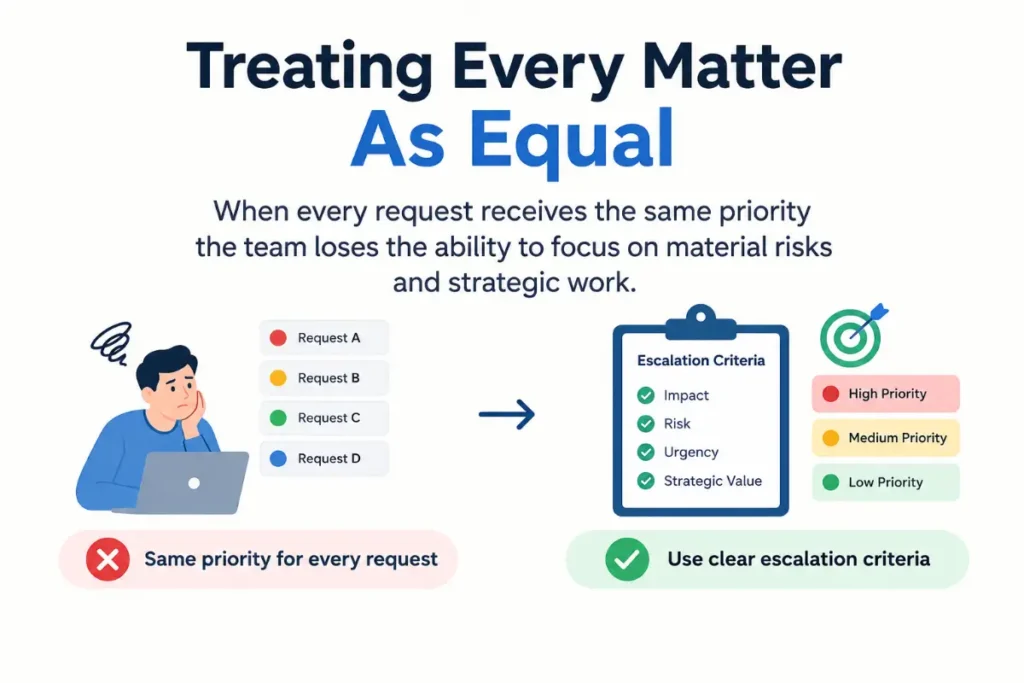
Treating Every Matter As Equal
When every request receives the same priority the team loses the ability to focus on material risks and strategic work.
Create clear escalation criteria instead.
Building A Plan Around Legal Tasks
A list of contracts compliance reviews and disputes isn’t a strategy. It describes activity without explaining the business purpose.
Connect legal work to company goals and risk.
Ignoring Internal Customers
Business teams depend on legal support. Their experience matters.
Ask where legal processes create unnecessary friction. The answer may reveal improvements that lawyers can’t see from inside the department.
Measuring Volume Instead Of Value
More work completed doesn’t always mean better performance.
A department may close hundreds of routine contracts while missing a serious emerging risk. Metrics should therefore include risk quality and strategic outcomes.
Overcomplicating Technology
Buying a sophisticated platform won’t fix an unclear process.
Start with the workflow. Then decide what technology can improve it.
Failing To Plan For Surprises
A plan that allocates every hour and dollar leaves no room for unexpected matters.
Reserve some capacity for urgent issues. Legal work rarely follows a perfectly straight road.
Related Terms And Concepts
Several concepts sit close to this type of planning and can help you understand the broader legal operations picture.
- Legal operations. This focuses on how the legal function delivers services efficiently through people processes technology and data.
- Legal strategy. This connects legal priorities with broader organizational goals and risk decisions.
- Legal risk management. This focuses on identifying assessing and managing legal exposure.
- Department budget. This covers expected spending and resource allocation for the legal function.
- Outside counsel management. This concerns selecting supervising and evaluating external law firms.
- Contract lifecycle management. This covers the stages a contract moves through from creation and review to approval execution and later management.
- Compliance program. This provides the policies controls training monitoring and reporting needed to address applicable legal requirements.
- Matter management. This involves organizing legal matters their owners deadlines documents costs and outcomes.
These ideas overlap but they aren’t interchangeable. Together they form much of the operating structure behind an effective in house legal function.
How To Build The Plan Step By Step
If you’re starting from a blank page the process doesn’t need to feel overwhelming.
Use this practical sequence.
- Understand the business. Review company strategy growth plans major markets products and upcoming initiatives.
- Map the workload. Identify recurring legal requests major matters and projects that consume significant capacity.
- Assess risk. Identify the legal issues that could have the greatest business impact.
- Review resources. Look at lawyers support staff technology outside counsel and budget.
- Set priorities. Choose the areas that deserve the greatest attention during the planning period.
- Define goals. Turn those priorities into specific outcomes.
- Assign owners. Every major goal and risk should have someone accountable for moving it forward.
- Improve workflows. Standardize repeatable work and create clear intake and escalation paths.
- Set metrics. Choose a small group of measures that reveal performance and business value.
- Review with leadership. Confirm that the proposed priorities match business needs.
- Communicate with the team. Make sure everyone understands the plan and their role in it.
- Review regularly. Update priorities as the business changes.
This sequence works because it moves from context to evidence then from evidence to action.
A Sample Planning Framework
A simple structure can make the final document easy for executives and lawyers to use.
Executive Priorities
State the three to five most important goals for the planning period. Keep them focused on business outcomes.
Major Legal Risks
List the most significant risks and explain the current response for each one.
Strategic Projects
Identify major business initiatives requiring legal support. Include ownership timing and expected outcomes.
Core Legal Services
Describe how the department will handle recurring contracts compliance disputes governance employment intellectual property privacy and other relevant work.
People And Resources
Summarize staffing capacity external support technology and training needs.
Budget
Show expected internal and external legal spending. Explain major changes from the previous period.
Performance Measures
Choose a small set of metrics that leadership can understand and the legal team can influence.
Review Process
Explain how progress will be reviewed and how priorities will change when business conditions shift.
This structure keeps the document useful. A leader should be able to understand the department’s direction quickly while lawyers should have enough detail to translate that direction into daily work.
How To Make The Plan More Strategic
The biggest shift happens when the legal department stops thinking only about incoming requests and starts looking ahead.
Suppose the company expects rapid expansion into a new market. The legal team shouldn’t wait for individual questions to arrive. It can identify likely regulatory requirements contract changes employment issues intellectual property concerns and local legal support needs in advance.
The same principle applies to acquisitions product launches major technology changes and new partnerships.
Forward planning creates leverage. A lawyer who anticipates the issue can often solve it before it becomes an emergency.
That doesn’t mean legal teams should try to predict everything. It means they should watch the business roadmap and identify legal consequences early.
Expert Editor Insight
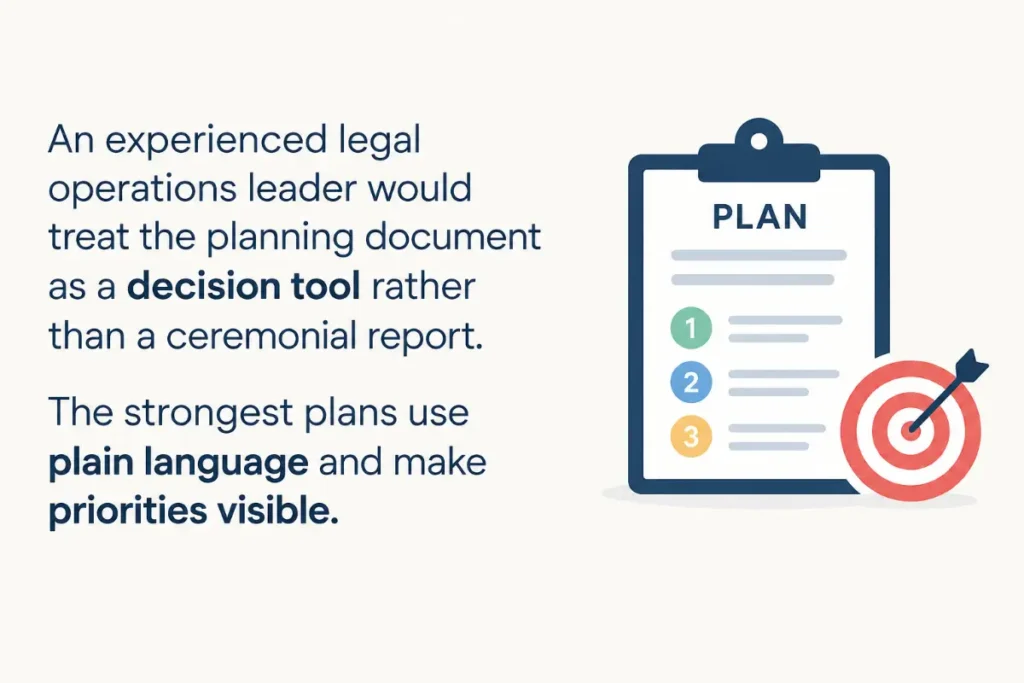
An experienced legal operations leader would treat the planning document as a decision tool rather than a ceremonial report. The strongest plans use plain language and make priorities visible. They also distinguish legal advice from business ownership because lawyers advise on risk while business leaders often decide how much risk the organization will accept. A useful editing test is to remove vague phrases such as improve efficiency or enhance collaboration and replace them with a specific outcome that someone can observe or measure.
You may also want to read Busing or Bussing Grammar Rules and Usage Guide 2026.
Conclusion
A legal department plan gives an in house legal team a practical framework for connecting legal work with business priorities. The strongest plans identify major risks and recurring demands while making clear choices about staffing budget technology outside counsel and internal workflows. They don’t try to predict every legal issue that might appear.
The real value comes from turning priorities into action. Assign owners. Set useful measures. Standardize routine work. Keep business leaders informed. Leave enough capacity for unexpected matters. Most importantly keep the plan connected to the organization’s actual strategy instead of treating it as a yearly paperwork exercise.
A simple practical tip can make the plan stronger from day one. Review it regularly and remove anything that no longer helps the team make a better decision. A useful plan should guide the work rather than sit on a shelf.
FAQs
What is a legal department plan?
A legal department plan is a practical roadmap for managing an organization’s legal work and resources. It typically covers priorities risks staffing budgets outside counsel technology contracts compliance and performance. The purpose is to make legal support more predictable and strategic while helping the business understand where the legal team will focus its time and resources.
What should a legal department plan include?
A strong plan usually includes business priorities legal risks core services staffing resource needs budget outside counsel management technology workflows and performance measures. It should also identify owners for major initiatives. The exact structure depends on the organization but the document should explain what the department will focus on why those priorities matter and how progress will be measured.
How do you create a legal department plan?
Start by understanding the business and reviewing the department’s current workload. Identify major legal risks and recurring work. Then assess staffing budget technology and external support. Set a small number of priorities and convert them into measurable goals. Assign owners and review the plan with business leadership. Finally establish a regular review cycle so the plan stays useful as conditions change.
Why does an in house legal team need a plan?
An in house legal team needs a plan because legal demand can easily exceed available capacity. Without clear priorities lawyers may spend too much time on low value requests while important risks receive less attention. Planning helps the department allocate resources deliberately and communicate expectations to business leaders. It also creates a framework for measuring improvement over time.
What metrics should a legal department track?
Useful metrics can include contract turnaround time request response time outside counsel spending matter cycle time major unresolved risks and adoption of standard processes. Business satisfaction can also provide valuable feedback. The best metrics depend on the department’s goals. Avoid measuring activity simply because it is easy to count. Metrics should help leaders understand risk efficiency quality and business value.
How can a legal department control outside counsel costs?
Start by defining clear reasons for using external lawyers. Establish scope staffing expectations communication practices and billing arrangements before work begins. Review significant matters regularly and compare spending with the agreed scope. Internal lawyers should also reconsider the need for external support as a matter develops. Cost control works best when the goal is value rather than simply choosing the lowest price.
How often should a legal department plan be reviewed?
Many legal teams benefit from a formal annual planning process supported by quarterly reviews. A quarterly check gives leaders a chance to reassess priorities risks workload resources and major projects. Some events may require an immediate update. A major transaction regulatory change investigation or significant dispute can change priorities quickly and shouldn’t have to wait for the next scheduled review.
What is the difference between legal strategy and legal operations?
Legal strategy focuses on where the legal function should concentrate its attention and how it supports business goals. Legal operations focuses more on how that work gets delivered through people processes technology data and resources. The two areas work together. Strategy establishes direction while operations helps the department deliver that direction efficiently and consistently.