
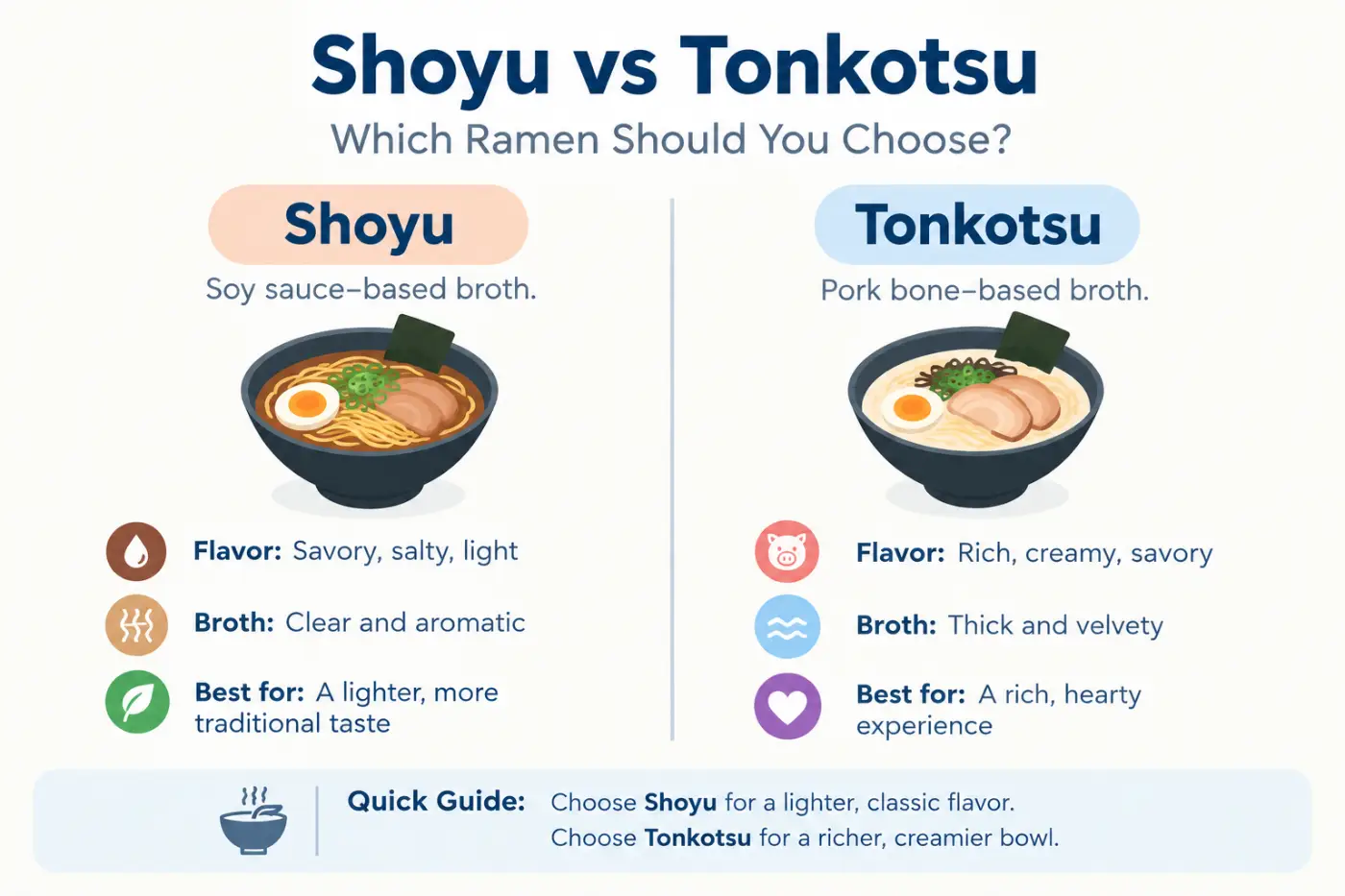
Shoyu vs tonkotsu is a common ramen comparison, but the two terms do not describe exactly the same thing. Shoyu refers mainly to the soy sauce seasoning used to flavor ramen broth, while tonkotsu refers to a rich broth made by simmering pork bones for a long time. That difference matters because a bowl can actually combine both styles.
Shoyu ramen usually has a savory, salty, slightly sweet flavor with a lighter and clearer broth. Tonkotsu ramen is known for its creamy appearance, deep pork flavor, and rich mouthfeel. The final taste can vary greatly because ramen shops use different stocks, seasonings, noodles, toppings, and cooking methods.
If you are deciding what to order, the simplest rule is this. Choose shoyu if you want a cleaner and more savory bowl. Choose tonkotsu if you want something richer, heavier, and deeply pork flavored. The sections below explain the difference so you can order with confidence.
Learn the difference in Carrer or Career Which Spelling Is Correct? 2026.
Quick Answer
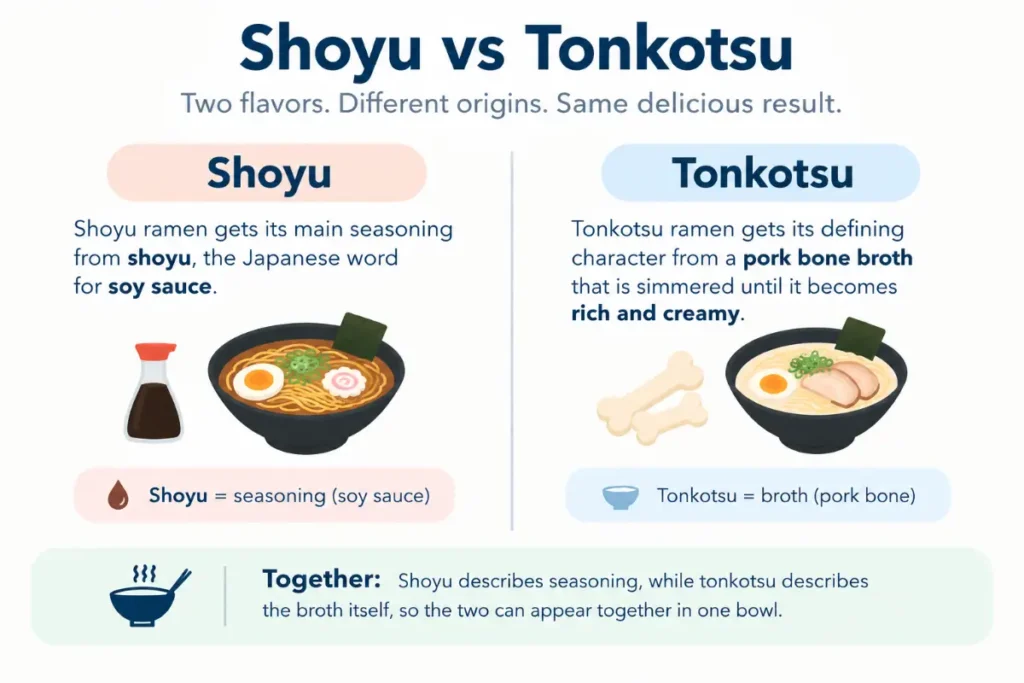
Shoyu ramen gets its main seasoning from shoyu, the Japanese word for soy sauce. Tonkotsu ramen gets its defining character from a pork bone broth that is simmered until it becomes rich and creamy. Shoyu describes seasoning, while tonkotsu describes the broth itself, so the two can appear together in one bowl.
The Main Difference
The easiest way to understand the distinction is to think about what each word tells you about the ramen.
Shoyu tells you about the seasoning.
Tonkotsu tells you about the broth base.
Shoyu means soy sauce in Japanese. In ramen, it is usually added to a concentrated seasoning mixture called tare. The tare gives the broth much of its salty, savory flavor and can also contribute sweetness, aroma, and depth.
Tonkotsu means pork bones. Tonkotsu broth is made by cooking pork bones for many hours, often at a vigorous simmer. The process extracts fat, collagen, marrow, and other compounds from the bones. The result is a thick, creamy looking broth with a strong pork character.
This distinction explains why comparing the two as simple opposites can be misleading. A ramen bowl can have a tonkotsu broth seasoned with shoyu. A restaurant may also offer a chicken or seafood broth seasoned with shoyu.
So the most accurate comparison is not soy sauce broth versus pork broth. It is shoyu as a seasoning style versus tonkotsu as a broth style.
Shoyu Ramen Explained
Shoyu ramen is one of the classic ramen styles associated with Japanese cooking. Its defining feature is the use of soy sauce as a major seasoning component.
The broth itself does not have to come from soy sauce. A ramen chef can build the stock from chicken, pork, seafood, vegetables, or a combination of ingredients. The shoyu seasoning is then added to give the bowl its characteristic savory profile.
The finished broth is often brown or amber, although its color depends on the ingredients and preparation method. It can range from light and delicate to dark and intense.
The flavor usually centers on savory umami with noticeable saltiness. Depending on the recipe, you may also taste sweetness, roasted notes, seafood flavors, chicken, pork, or aromatic vegetables.
Shoyu ramen often feels more balanced and less heavy than a very rich tonkotsu bowl. That does not mean every shoyu ramen is light. A strongly seasoned shoyu bowl can be quite intense.
What Shoyu Means
Shoyu is the Japanese term commonly used for Japanese style soy sauce.
Soy sauce is made through fermentation and contributes salt, umami, color, and aroma. Different Japanese soy sauces have different characteristics, so the exact flavor of shoyu ramen depends on the sauce selected by the chef.
In ramen, shoyu is normally not poured into the bowl as the only flavoring. Instead, it forms part of the seasoning mixture that works with the stock.
That is why two bowls labeled shoyu ramen can taste very different.
What Shoyu Ramen Tastes Like
A typical shoyu ramen can taste savory, salty, aromatic, slightly sweet, and deeply umami rich.
The broth may have a clean finish, especially when the underlying stock is made from chicken or seafood. Other versions can be darker and more powerful.
Common flavor notes include soy sauce, roasted meat, dried fish, seaweed, mushrooms, chicken, pork, ginger, garlic, and green onion.
The noodles and toppings also affect the final experience. A thin noodle can make the broth feel more delicate, while a thicker noodle can provide a stronger contrast.
Tonkotsu Ramen Explained
Tonkotsu ramen is defined by its pork bone broth.
The name comes from Japanese words referring to pork and bones. Chefs make the broth by simmering pork bones for an extended period. Strong cooking breaks down and extracts components from the bones and surrounding connective tissue.
The resulting broth often has a pale cream color. Its texture can feel thick, silky, and rich.
The exact appearance depends on the cooking process. Some tonkotsu broths are extremely opaque and creamy, while others have a slightly lighter appearance.
The defining feature is not simply that pork appears in the recipe. Pork bones are central to the stock itself.
What Tonkotsu Tastes Like
Tonkotsu usually delivers a rich savory flavor with a strong pork character.
It can taste fatty, meaty, creamy, salty, and deeply savory. The broth may also carry garlic, ginger, green onion, sesame, dried seafood, or other aromatic flavors.
Despite its richness, good tonkotsu does not have to taste overwhelmingly heavy. A skilled chef can balance the pork broth with seasoning, acidity, aromatics, noodles, and toppings.
The texture is one of the biggest reasons people notice tonkotsu immediately. The broth can coat the mouth more heavily than a clear shoyu broth.
Shoyu And Tonkotsu Can Work Together
This is the detail that causes much of the confusion.
Shoyu and tonkotsu are not always competing choices.
A bowl can have a tonkotsu broth and use shoyu as its seasoning. In that case, the pork bone stock supplies the richness while the soy sauce based seasoning supplies salt, umami, color, and additional depth.
For example, a restaurant might serve a ramen described as tonkotsu shoyu. The name tells you that the bowl combines a pork bone broth with a shoyu based seasoning.
This combination can create a particularly rich and savory bowl. The pork gives the broth body while the soy sauce adds a sharper savory edge.
The same principle applies to other ramen styles. Shoyu can season chicken based ramen. It can season seafood based ramen. It can also appear in pork based ramen.
So if a menu lists shoyu and tonkotsu as two choices, the restaurant may be simplifying the terminology for customers. Always look at the full menu description if you want to know exactly what the broth contains.
Comparison Table
| Feature | Shoyu Ramen | Tonkotsu Ramen |
|---|---|---|
| Defining element | Shoyu or Japanese soy sauce seasoning | Pork bone broth |
| Main flavor | Savory, salty, umami rich | Rich, creamy, pork focused |
| Typical appearance | Amber, brown, or clear depending on broth | Often pale, cloudy, or creamy |
| Broth base | Can use chicken, pork, seafood, vegetables, or combinations | Pork bones are central to the stock |
| Texture | Often lighter and cleaner | Usually thicker and more coating |
| Salt perception | Often noticeable because of soy sauce seasoning | Can also be salty but richness may dominate |
| Pork flavor | Depends on the underlying stock | Usually prominent |
| Common experience | Balanced, savory, aromatic | Rich, hearty, deeply savory |
| Can they be combined | Yes | Yes |
| Best for | People who enjoy savory flavors without excessive richness | People who enjoy rich pork based broth |
Flavor Difference
The biggest practical difference is the way each bowl delivers flavor.
Shoyu ramen tends to put savory seasoning at the front. You may notice soy sauce, umami, salt, aromatics, and the character of the underlying stock.
Tonkotsu tends to put richness and body at the front. The pork broth creates a thick foundation that carries other flavors.
This does not mean shoyu lacks depth or tonkotsu lacks seasoning. Both can be complex. The difference lies in the element that gives each style its identity.
Think of shoyu as a seasoning voice and tonkotsu as a broth foundation.
That simple distinction makes the menu much easier to understand.
Texture And Mouthfeel
Texture can be just as important as flavor.
Shoyu ramen often has a clearer broth with a lighter mouthfeel. You can usually taste the individual components more easily because the stock does not have the same creamy body associated with tonkotsu.
Tonkotsu has a more coating texture. The broth can feel silky and substantial because of the ingredients extracted during long cooking.
This does not mean every bowl follows the same pattern. A rich shoyu ramen can have plenty of body, while some tonkotsu broths can be surprisingly smooth and balanced.
The noodle choice also changes the texture. Thin noodles are common in some tonkotsu styles, while shoyu ramen can use several different noodle shapes and thicknesses.
Which One Is Saltier
People often assume tonkotsu is automatically saltier because it tastes stronger. That is not always true.
Saltiness depends largely on the seasoning level and the type of tare used by the restaurant.
Shoyu ramen can taste quite salty because soy sauce is a major seasoning ingredient. Tonkotsu broth can also contain a substantial amount of seasoning, especially when the restaurant wants to balance its rich pork base.
The better question is not which style always contains more salt. Instead, consider how the salt interacts with the rest of the bowl.
In shoyu ramen, salt and soy sauce can stand out clearly. In tonkotsu ramen, salt often works against the richness of the pork broth.
Which One Is Richer
Tonkotsu is generally the richer choice.
The long cooking process used for pork bone broth creates a dense and creamy character. The broth can feel filling even before you finish the noodles.
Shoyu ramen can also be rich, especially when the underlying stock contains pork or concentrated chicken. Still, its defining flavor comes from its soy sauce seasoning rather than the creamy body of a pork bone broth.
If you want a bowl that feels hearty and substantial, tonkotsu is usually the more obvious choice.
If you want a bowl where the seasoning and stock feel more distinct, shoyu may suit you better.
Which One Is Better For Beginners
There is no universal winner because taste matters more than the label.
People who are new to ramen may find shoyu easier to approach because many versions have a clean broth and familiar savory flavor. The soy sauce character can be noticeable without making the bowl feel extremely heavy.
Tonkotsu can be a great introduction for people who already enjoy rich soups, pork, creamy textures, or strong savory flavors.
If you dislike fatty or very rich foods, a lighter shoyu ramen may be the safer first choice.
If you love hearty soups and want a bold bowl, tonkotsu may be more appealing.
Which One Is Better For A Light Meal
A lighter shoyu ramen is usually the better fit for a meal that does not feel overly rich.
The important word is lighter, because not every shoyu ramen is light. Some versions contain fatty pork stock, concentrated seasoning, or substantial toppings.
Tonkotsu generally creates a more filling experience because the broth has a rich texture and strong pork character.
You can also make either style feel lighter by choosing fewer rich toppings and avoiding excessive added oil. The restaurant’s recipe matters more than the label alone.
Which One Has More Pork Flavor
Tonkotsu normally has the stronger pork identity because pork bones form the foundation of its broth.
A shoyu ramen can contain pork and still taste strongly meaty. However, if the stock is made from chicken or seafood, the pork flavor may be minimal or absent.
This makes tonkotsu the clearer choice for someone specifically looking for a pork centered broth.
Shoyu is more flexible because the soy sauce seasoning can work with several different stock types.
Many readers also check alter vs altar The Complete Difference Guide 2026.
Common Toppings
Toppings vary by restaurant, region, and ramen style. There is no single fixed topping list for either category.
Common toppings include:
- Chashu pork.
- Soft boiled or marinated egg.
- Green onion.
- Bamboo shoots.
- Nori seaweed.
- Wood ear mushrooms.
- Corn.
- Bean sprouts.
- Garlic.
- Sesame seeds.
Tonkotsu ramen often pairs naturally with toppings that complement its pork richness. Garlic, green onion, sesame, and pickled ginger can add contrast.
Shoyu ramen can support a broader range of toppings because its seasoning works well with chicken, pork, seafood, vegetables, mushrooms, and seaweed.
Noodles In Each Style
Noodles are another part of the ramen experience that changes from shop to shop.
Tonkotsu ramen is strongly associated with thin noodles in several famous regional traditions. These noodles cook quickly and can provide a useful contrast to the rich broth.
Shoyu ramen has no single mandatory noodle shape. You may find thin, medium, wavy, straight, or thicker noodles depending on the restaurant and regional style.
Freshness and cooking time matter too. A noodle cooked slightly firm can maintain its texture longer in hot broth.
That is one reason ramen shops often pay as much attention to noodle preparation as they do to the soup.
Common Mistakes About These Terms
Several misunderstandings appear again and again when people compare the two styles.
Mistaking Shoyu For A Complete Broth Type
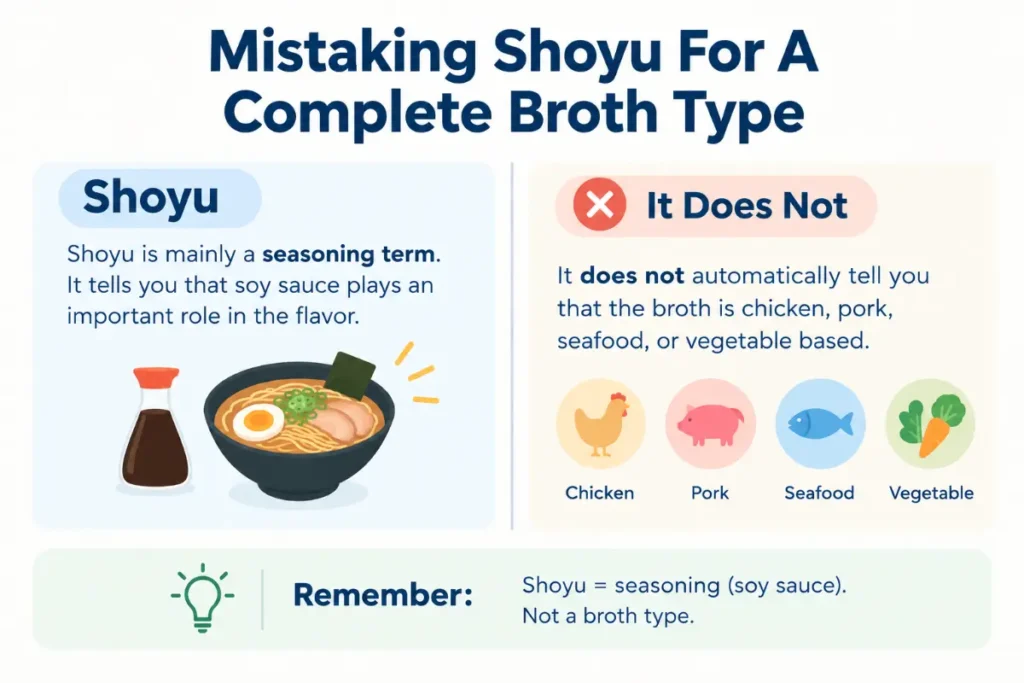
Shoyu is mainly a seasoning term. It tells you that soy sauce plays an important role in the flavor.
It does not automatically tell you that the broth is chicken, pork, seafood, or vegetable based.
Assuming Tonkotsu Means Soy Sauce Free
A tonkotsu broth can be seasoned with shoyu.
The pork bone broth and the soy sauce seasoning perform different roles, so they can work together.
Assuming Every Tonkotsu Bowl Is Extremely Heavy
Tonkotsu is rich by nature, but chefs can control how intense the final bowl feels.
Seasoning, broth concentration, added oil, toppings, and noodle quantity all affect the final experience.
Assuming Shoyu Always Means Light
Some shoyu ramen is light and clear. Other versions are dark, concentrated, oily, and powerful.
The label tells you about the seasoning style more than the total weight of the meal.
Treating The Two Names As Exact Opposites
This is the biggest mistake.
The terms can describe different elements of one bowl. A ramen shop can serve a tonkotsu broth seasoned with shoyu.
Pronunciation Guide
The Japanese terms are fairly simple once you know the syllables.
Shoyu is commonly pronounced approximately as:
IPA: /ɕoːjɯ/
For English speakers, an easy approximation is SHOH yoo.
The first sound is similar to the beginning of show. The second part sounds close to you, although the Japanese vowel is not exactly the same as the English sound.
Tonkotsu is commonly pronounced approximately as:
IPA: /to̞ŋko̞t͡sɯ/
An easy English approximation is tohn KOH tsoo.
The middle consonants can sound quick in natural Japanese speech. English speakers often pronounce every syllable too strongly, but a smoother rhythm sounds more natural.
Etymology And Word Origin
The two names come from Japanese culinary vocabulary and describe different ingredients or components.
Shoyu is the Japanese term for soy sauce. The word is associated with Japanese soy sauce traditions and appears in the names of dishes where soy sauce plays an important seasoning role.
Tonkotsu combines Japanese terms referring to pork and bones. In ramen terminology, it identifies a broth made from pork bones.
The difference in their names reflects the difference in their culinary roles. One points to a seasoning ingredient, while the other points to the foundation of the soup.
That distinction remains useful even when chefs combine the two.
Regional Usage
American English
In the United States, shoyu and tonkotsu are widely used on Japanese restaurant menus and ramen shop menus.
American menus sometimes use the terms as simple categories for customers. As a result, a menu may list them as separate choices even though the underlying culinary definitions allow them to overlap.
Tonkotsu is often associated with creamy pork broth. Shoyu is often associated with a savory soy sauce seasoned broth.
British English
British English uses the same basic culinary meanings.
There is no major spelling difference between the terms in British usage. Restaurant menus may explain the terms for customers who are less familiar with Japanese ramen vocabulary.
Australian English
Australian restaurant usage also follows the Japanese culinary meanings.
You may see shoyu used to identify soy sauce seasoning and tonkotsu used for pork bone broth. Local restaurants may adapt toppings and portion sizes, but the core distinction stays the same.
Canadian English
Canadian English follows the same general terminology.
Ramen menus may use shoyu and tonkotsu as style labels. The precise flavor can still vary considerably from one restaurant to another.
There is no meaningful regional English variation that changes the basic definitions.
Grammar And Part Of Speech
Both terms are Japanese culinary nouns used in English.
They can function as labels before the word ramen.
Examples include:
- Shoyu ramen is a popular menu choice.
- Tonkotsu ramen has a rich pork broth.
- I ordered the shoyu ramen.
- She prefers tonkotsu.
In English restaurant writing, the terms usually appear without translation because they have become recognizable food terms.
You may also see descriptions such as shoyu broth, shoyu seasoning, tonkotsu broth, or tonkotsu style ramen.
The exact grammar is less important than using the terms in a way that reflects their culinary meaning.
Real Life Usage
Daily Conversation
In casual conversation, people often use the names as quick ways to describe their preferred ramen.
I usually order shoyu because I like a savory broth that is not too heavy.
He always chooses tonkotsu because he loves rich pork flavor.
Restaurant Orders
You might say:
I will have the shoyu ramen with an egg.
Can I get the tonkotsu with extra green onion?
If the menu offers a tonkotsu shoyu option, you can also ask the server to explain how the two flavors are combined.
Workplace Communication
Food discussions at work may use the terms casually.
The new ramen place has a good tonkotsu bowl.
I tried their shoyu ramen yesterday and liked the lighter broth.
These expressions are clear to people familiar with ramen terminology.
Academic Or Informational Writing
In more formal writing, define the terms the first time you use them.
For example:
Shoyu ramen uses soy sauce as a major seasoning component, while tonkotsu ramen is defined by its pork bone broth.
That sentence gives readers the distinction immediately.
Food Journalism
Food writers often use the terms to describe both flavor and preparation.
The restaurant serves a deeply savory shoyu broth with roasted chicken notes.
Its tonkotsu broth has a creamy texture and a pronounced pork flavor.
The strongest descriptions explain what the reader can expect instead of relying on the name alone.
Related And Confused Terms
Several ramen terms can help you understand the menu more clearly.
Miso
It is a fermented soybean paste used as a seasoning. Miso ramen tends to have a deep savory flavor and can range from mild to very rich.
Shio
It means salt in Japanese. Shio ramen uses salt based seasoning and often has a lighter appearance than darker soy sauce seasoned versions.
Tare
Tare is the concentrated seasoning mixture added to ramen broth. Shoyu can be part of a tare, which helps explain why shoyu does not always describe the stock itself.
Dashi
Dashi is a Japanese soup stock made from ingredients such as kombu and dried fish. It contributes umami and can be used as part of a ramen broth.
Chintan
Chintan refers to a clear style of ramen broth. It is generally associated with a cleaner appearance and lighter body than highly emulsified broths.
Paitan
Paitan refers to a cloudy or opaque broth created through cooking methods that emulsify fats and proteins into the liquid. Tonkotsu is one well known example.
Shoyu Tare
Shoyu tare is a concentrated seasoning mixture built around soy sauce. It can be combined with different stocks.
Tonkotsu Shoyu
Tonkotsu shoyu combines a pork bone broth with shoyu based seasoning. This is a useful example of why the two terms should not always be treated as competing categories.
How To Choose At A Ramen Shop
If you are standing at a ramen counter and do not know what to order, start with the flavor you want.
Choose a shoyu based bowl if you prefer:
- Savory soy sauce flavor.
- A cleaner tasting broth.
- More noticeable seasoning.
- A broth that may feel lighter.
- Chicken, seafood, or mixed stock options.
Choose a tonkotsu based bowl if you prefer:
- Rich pork flavor.
- Creamy broth.
- A heavier mouthfeel.
- Deep savory notes.
- A filling and hearty bowl.
If you want both, look for tonkotsu shoyu.
That option can give you the richness of pork bone broth with the savory character of soy sauce seasoning.
How Restaurants Can Make The Same Style Taste Different
The label alone never tells the entire story.
Two restaurants can both serve shoyu ramen and produce very different bowls. One may use chicken stock with a light soy sauce tare. Another may use a darker seasoning with pork stock, dried fish, mushrooms, or other ingredients.
The same applies to tonkotsu.
One restaurant may serve an extremely creamy pork broth. Another may create a cleaner and more balanced version. Some chefs add aromatic oils, seafood ingredients, garlic, or spicy seasoning to change the final character.
This is why personal experience matters more than rigid assumptions.
If you like a particular bowl, ask the restaurant what makes its broth distinctive. Ramen chefs often build their recipes around several layers of flavor rather than one ingredient.
Expert Editor Insight
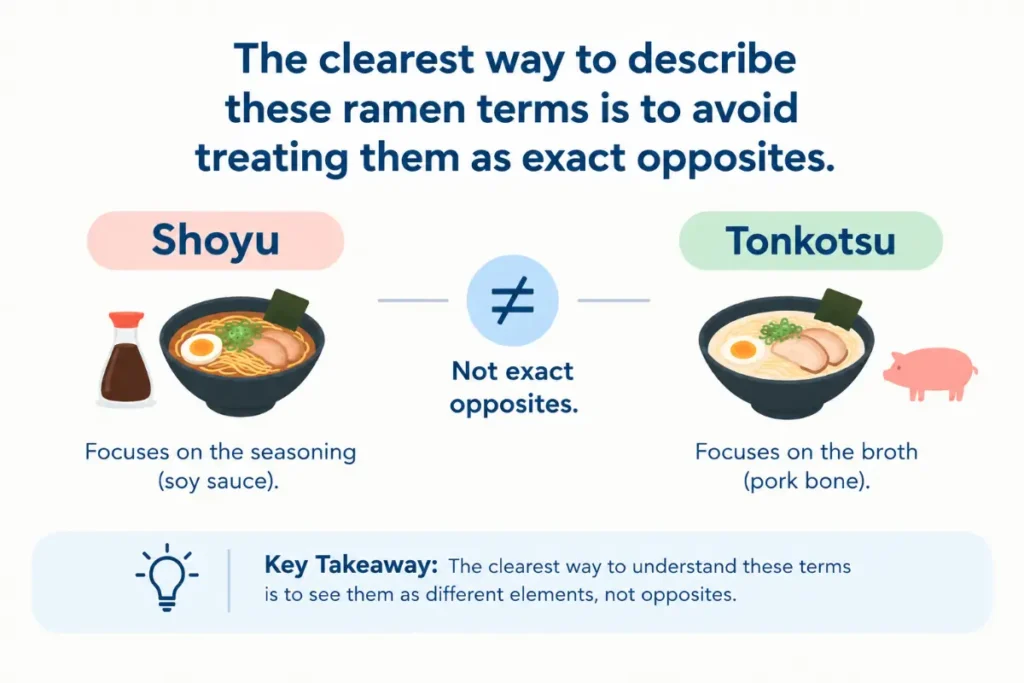
The clearest way to describe these ramen terms is to avoid treating them as exact opposites. Shoyu identifies a major seasoning, while tonkotsu identifies a broth foundation. Professional food editors look for that distinction because it prevents misleading descriptions such as calling every shoyu ramen a soy sauce broth or assuming every tonkotsu bowl excludes soy sauce. When writing a menu description, explain the stock and seasoning separately. That gives readers a much more accurate picture of what they will eat.
Many readers also check complaint vs complain Meaning Difference And Correct Usage.
Final Takeaway
The simplest way to remember the distinction is this. Shoyu describes soy sauce seasoning, while tonkotsu describes a pork bone broth. They are not strict opposites, and a single ramen bowl can use both.
If you want a savory bowl with a cleaner profile, try a shoyu style ramen. If you want a creamy, rich, pork focused broth, try tonkotsu and If you want both characteristics, look for tonkotsu shoyu.
The best practical tip is to read the full menu description instead of relying on one label. The stock, seasoning, noodles, toppings, and cooking method all shape the final bowl.
FAQs
Is shoyu the same as soy sauce?
Shoyu is the Japanese term commonly used for Japanese style soy sauce. In ramen, shoyu usually refers to soy sauce used as a major seasoning component. It does not necessarily mean the entire broth consists of soy sauce. The underlying stock can contain chicken, pork, seafood, vegetables, or several ingredients working together.
Is tonkotsu always made from pork?
Traditional tonkotsu broth is made from pork bones. The bones are simmered for a long time to create the rich, creamy broth associated with this style. A dish described as tonkotsu should therefore have a pork bone based foundation. Restaurants can vary the recipe, but pork bones are central to the traditional meaning.
Can shoyu and tonkotsu be used together?
Yes. A bowl can use tonkotsu as its pork bone broth and shoyu as part of its seasoning. This combination is often described as tonkotsu shoyu. The two terms describe different elements, so combining them is completely natural in ramen cooking.
Which has a stronger flavor shoyu or tonkotsu?
The answer depends on the recipe, but they tend to emphasize different kinds of intensity. Shoyu can have a strong salty and savory flavor because of its soy sauce seasoning. Tonkotsu usually feels richer and heavier because of its pork bone broth. A concentrated shoyu ramen can taste more intense than a mild tonkotsu.
Which ramen is healthier shoyu or tonkotsu?
Neither label alone gives enough information to make a reliable health comparison. Portion size, sodium, fat, toppings, noodles, and the exact recipe all matter. Tonkotsu often has a richer broth, while shoyu can contain substantial sodium from soy sauce seasoning. If nutrition matters to you, ask the restaurant about ingredients and portion details.
Is shoyu ramen always light?
No. Shoyu ramen can be light and clear, but it can also be rich and strongly seasoned. The term mainly tells you that soy sauce is an important seasoning element. The underlying stock determines much of the broth’s body. A pork based shoyu ramen can therefore feel much richer than a clear chicken based version.
What does tonkotsu mean?
Tonkotsu refers to pork bones in Japanese culinary terminology. In ramen, the term identifies a broth made by simmering pork bones for an extended period. The process creates a rich broth that can become cloudy, creamy, and full of savory pork flavor. The term describes the broth foundation rather than a seasoning such as soy sauce.
Which should a first time ramen eater try?
A first time ramen eater can choose based on personal taste. Shoyu may be easier for someone who prefers savory flavors and a cleaner broth. Tonkotsu may appeal more to someone who enjoys rich soups and strong pork flavor. If you are unsure, ask the restaurant for a popular house recommendation and mention the flavors you normally enjoy.