
The confusion around suit vs suite is more common than many people realize. These two words look similar, sound somewhat alike, and often appear in business, hospitality, legal, and everyday conversations. Yet their meanings are completely different. Someone might book a hotel suite, wear a business suit, file a lawsuit, or purchase a software suite. Because the spellings differ by only one letter, many writers accidentally use the wrong word. Spell checkers don’t always catch the mistake because both words are legitimate English terms.
The good news is that understanding the difference is surprisingly simple once you see how each word functions in real situations. In most cases, suit refers to clothing, compatibility, legal action, or something that satisfies a need. Suite usually refers to a group of connected rooms or a collection of related items, especially software programs.
This guide explains the meanings, pronunciation, grammar, origins, examples, and real world usage of both words. By the end, you’ll know exactly when to use suit and when to use suite without second guessing yourself.
For another common grammar confusion, see Loot vs Lute Which Word Is Correct and What Is the Difference.
Quick Definition
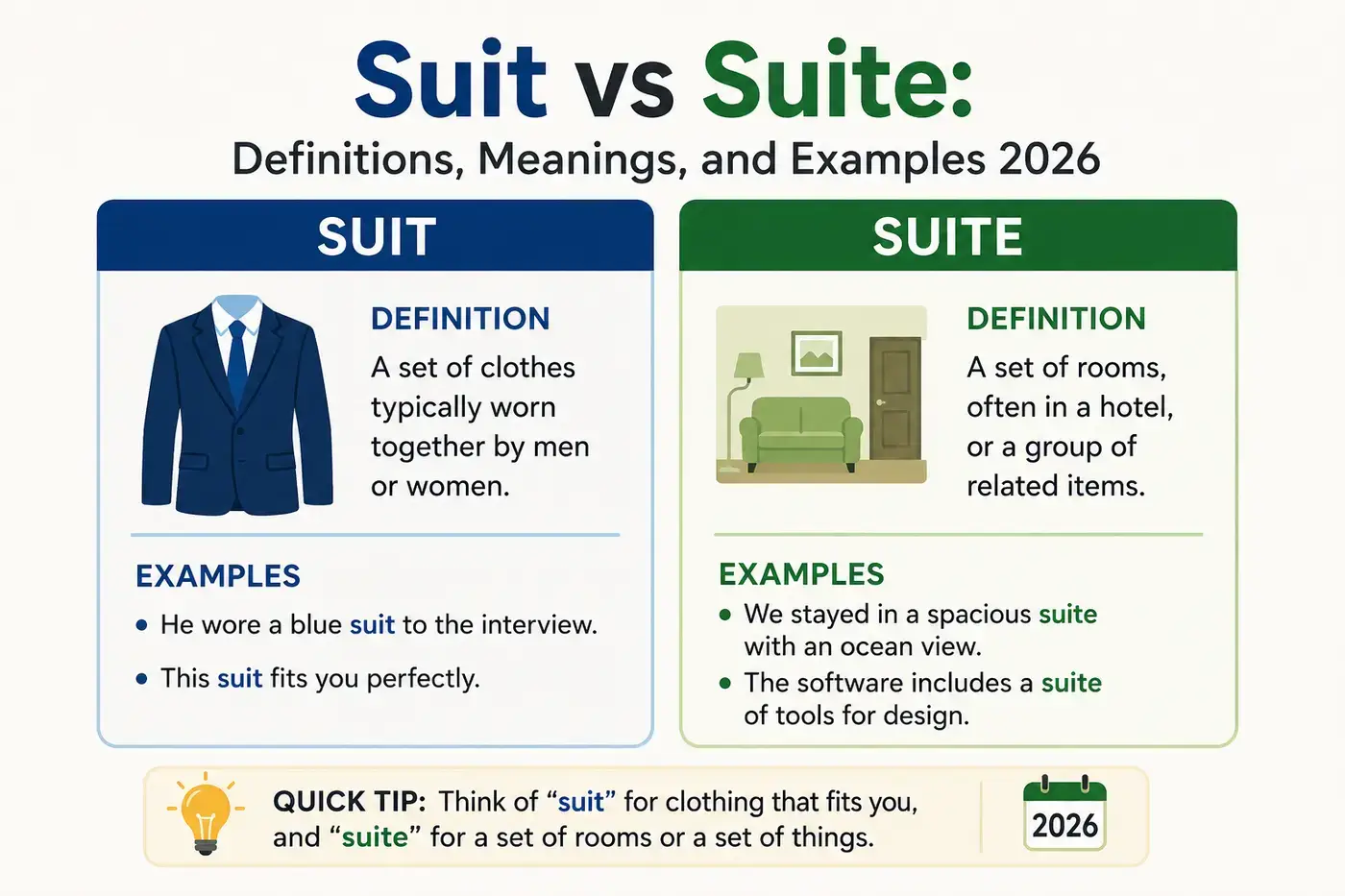
Suit and suite are different words with different meanings. Suit commonly refers to a set of matching clothes, a legal action, or something that fits a person’s needs. Suite usually refers to a group of connected rooms or a collection of related products or services. Despite their similar spelling and pronunciation, they are not interchangeable.
Quick Answer
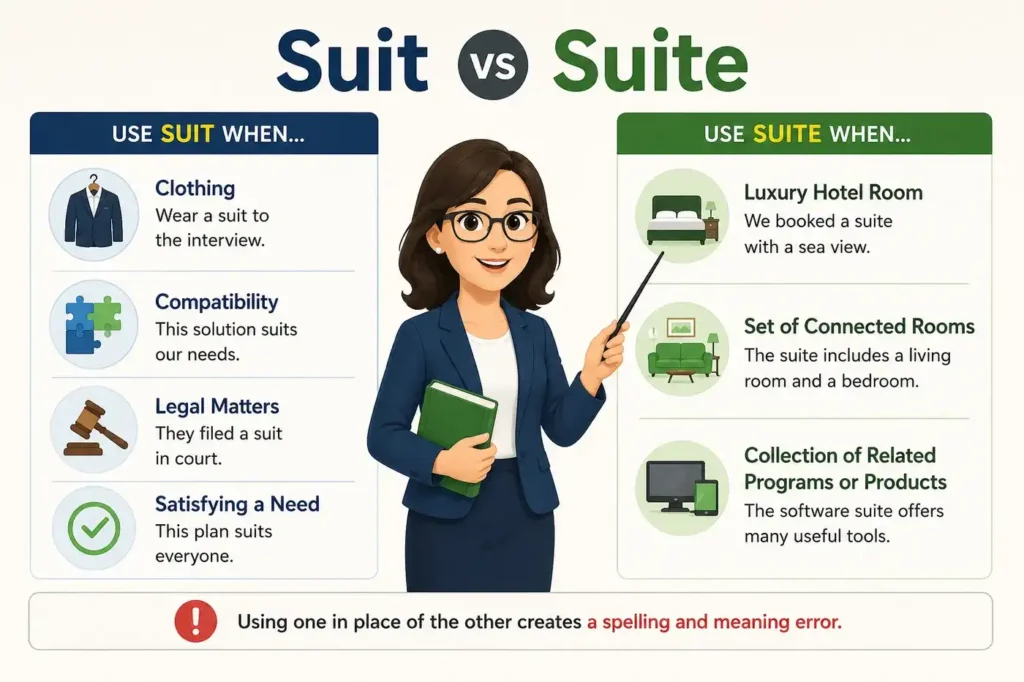
If you’re talking about clothing, compatibility, legal matters, or satisfying a need, use suit. If you’re talking about a luxury hotel room, a set of connected rooms, or a collection of related programs or products, use suite. Using one in place of the other creates a spelling and meaning error.
Suit Vs Suite Comparison Table
| Feature | Suit | Suite |
|---|---|---|
| Correct Form | Yes | Yes |
| Primary Meaning | Clothing set or compatibility | Connected rooms or collection |
| Part Of Speech | Noun and verb | Noun |
| Origin | Old French and Latin roots | French origin |
| Common Usage | Clothing, law, preferences | Hotels, software, offices |
| Formality Level | Neutral to formal | Neutral to formal |
| Frequency Of Use | Very common | Common |
| Business Context | Suit a requirement | Software suite |
| Travel Context | Rare | Hotel suite |
| Legal Context | Lawsuit or legal suit | Not used |
| Example | The blue suit fits perfectly. | We booked a luxury suite. |
Meaning Of Suit
Suit is one of those versatile English words that carries several related meanings.
Suit As Clothing
A suit is a set of matching garments designed to be worn together.
Examples include:
- Business suits.
- Wedding suits.
- Formal suits.
- Three piece suits.
In professional environments, the word often suggests formality, confidence, and polished appearance.
Example:
He wore a navy suit to the interview.
Suit As Compatibility
Suit can also mean to be appropriate, convenient, or satisfactory.
Example:
Friday afternoon would suit me better.
In this sense, the word functions as a verb.
Suit In Legal Language
A suit may refer to a legal action brought before a court.
Example:
The company filed a civil suit against its competitor.
Although modern speakers often use lawsuit, the shorter form suit still appears in legal writing.
Suit In Card Games
In card games, suit refers to categories such as hearts, clubs, diamonds, and spades.
Example:
She collected every card from the same suit.
Etymology Of Suit
Suit comes from Old French words related to following or pursuing. Over time, the meaning expanded into legal pursuits, matching garments, and actions that satisfy a person’s needs.
Meaning Of Suite
Suite has a much narrower meaning than suit. It almost always refers to a connected group of things.
Suite In Hotels
A suite is a set of connected rooms designed as a single accommodation unit. Unlike a standard hotel room, a suite typically includes additional living space.
Example:
The family reserved a two bedroom suite overlooking the ocean.
Suite In Office Buildings
Businesses often use the word suite to identify office spaces.
Example:
The law firm is located in Suite 500. In this context, suite functions similarly to an office number.
Suite In Software
Technology companies frequently use suite to describe a collection of related programs.
Examples include:
- Productivity suites.
- Security suites.
- Design suites.
- Office suites.
Example:
The software suite includes word processing, spreadsheets, and presentation tools.
Suite In Music
In classical music, a suite is a collection of related musical compositions performed together.
Example:
The orchestra performed a famous Baroque suite.
Etymology Of Suite
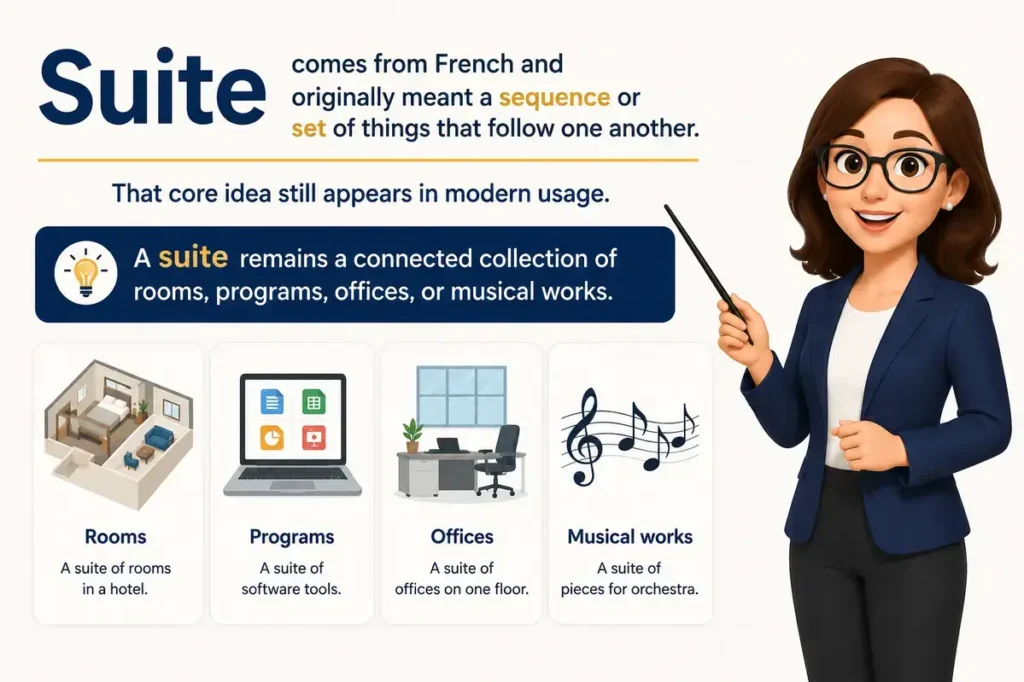
Suite comes from French and originally meant a sequence or set of things that follow one another. That core idea still appears in modern usage. A suite remains a connected collection of rooms, programs, offices, or musical works.
Suit Vs Suite Key Differences
Understanding the distinction becomes easier when comparing the words directly.
Meaning Difference
Suit focuses on fitness, clothing, or legal action.
Suite focuses on a connected group or collection.
Grammar Difference
Suit functions as both a noun and a verb.
Examples:
- That suit looks expensive.
- The schedule suits my needs.
Suite functions almost exclusively as a noun.
Example:
The executive suite includes a conference room.
Context Difference
Suit appears in:
- Fashion.
- Business attire.
- Legal writing.
- Personal preferences.
- Card games.
Suite appears in:
- Hotels.
- Office addresses.
- Technology.
- Music.
- Real estate.
Usage Difference
Suit is generally more common in everyday conversation.
Suite appears more often in hospitality, technology, and professional settings.
Which One Is Correct?
Both words are correct.
The real question is which word fits the situation. Use suit when discussing clothing, legal action, compatibility, or personal preferences. Use suite when discussing connected rooms, office locations, software collections, or grouped items. A quick memory trick helps. Suit is often about a single person. A suit is worn by one person. Something may suit one person. A legal suit may involve one party. Suite is usually about a collection or group. A suite contains multiple rooms. A software suite contains multiple applications. An office suite may contain multiple workspaces.
Suit Vs Suite In Everyday Writing
Many spelling mistakes happen because people rely on sound instead of meaning.
For example:
- Incorrect: We booked a luxury suit at the hotel.
- Correct: We booked a luxury suite at the hotel.
Another example:
- Incorrect: He purchased a new business suite.
- Correct: He purchased a new business suit.
Notice how changing a single letter completely changes the meaning. Professional writers, editors, and teachers always check context before choosing between these words.
Suit Vs Suite In Business Communication
Business communication often includes both words, which makes confusion even more likely.
Examples involving suit:
- This schedule suits our team.
- The proposal suits the client’s goals.
- He wore a gray suit to the meeting.
Examples involving suite:
- The company purchased a software suite.
- The office is located in Suite 800.
- The marketing suite includes several integrated tools.
Because both words appear frequently in corporate settings, careful proofreading matters.
Suit Vs Suite Examples In Sentences
Learning through examples is often the fastest way to remember the difference. Seeing both words in real situations helps the meanings stick.
Ten Examples Using Suit
- He bought a new suit for the wedding.
- The black suit made him look more professional.
- That meeting time doesn’t suit my schedule.
- This solution might suit your needs perfectly.
- She wore a tailored suit to the conference.
- The company filed a legal suit against the contractor.
- A navy suit is a classic choice for interviews.
- The flexible work arrangement suits many employees.
- The manager chose a suit that reflected the company’s dress code.
- This role would suit someone with leadership experience.
Ten Examples Using Suite
- We stayed in a luxury suite during our vacation.
- The hotel suite included a private balcony.
- The office is located in Suite 405.
- The company invested in a productivity suite.
- Their software suite supports multiple devices.
- The executive suite occupies the top floor.
- The musician composed a beautiful orchestral suite.
- Our family booked a two room suite.
- The design suite contains several creative tools.
- The presidential suite offers premium amenities.
You may also want to read focussed or focused Correct Spelling and Usage.
Suit Vs Suite Common Mistakes
Because the words look and sound similar, writers often mix them up. Most mistakes happen when people focus on pronunciation instead of meaning.
Using Suit Instead Of Suite
This is one of the most common errors.
Incorrect:
We reserved a hotel suit.
Correct:
We reserved a hotel suite.
Hotels offer suites, not suits.
Using Suite Instead Of Suit
Another frequent mistake appears in business and fashion writing.
Incorrect:
He arrived wearing a blue suite.
Correct:
He arrived wearing a blue suit.
People wear suits. They don’t wear suites.
Confusing Software And Clothing Contexts
Incorrect:
The company purchased a security suit.
Correct:
The company purchased a security suite.
When referring to a collection of programs, suite is the correct word.
Ignoring Context
Many spelling mistakes happen because both words pass spell check.
For example:
The executive checked into a luxury suit. The sentence is grammatically correct from a spelling perspective, but the meaning is wrong. Human proofreading remains essential.
Why The Confusion Continues
Several factors contribute to the confusion.
- The words look similar.
- Their pronunciation is somewhat alike.
- Both appear frequently in business settings.
- Spell checkers rarely flag the error.
- Many people encounter the words more often in writing than in conversation.
Suit Vs Suite Pronunciation Guide
Pronunciation plays a major role in this confusion.
Although the words aren’t pronounced exactly the same, they sound close enough that many speakers mix them up.
Pronunciation Of Suit
IPA:
/suːt/
Syllable breakdown:
Suit
One syllable.
It rhymes with words such as:
- Boot.
- Fruit.
- Root.
- Shoot.
Example pronunciation:
Soot.
Pronunciation Of Suite
IPA:
/swiːt/
Syllable breakdown:
Suite
One syllable.
It sounds similar to:
- Sweet.
- Street.
- Complete.
Many native speakers pronounce suite exactly like sweet.
Common Pronunciation Mistakes
- Pronouncing suite exactly like suit.
- Assuming identical pronunciation means identical meaning.
- Using the wrong spelling because of similar sounds.
Remember that English contains many words that sound similar but carry different meanings. Suit and suite are a classic example.
Suit Vs Suite Etymology And Word Origin
Understanding the history of these words helps explain why they look alike but mean different things.
Origin Of Suit
Suit traces its roots to Old French and Latin. The original idea involved following, pursuing, or attending. Over centuries, English speakers expanded the meaning into several areas.
These included:
- Legal pursuits.
- Sets of matching garments.
- Actions that satisfy a person’s needs.
- Card game categories.
The word gradually developed into one of the most versatile nouns and verbs in modern English.
Origin Of Suite
Suite also entered English through French. The French word referred to a sequence, series, or group that follows together. That idea remains visible today. A hotel suite contains connected rooms. A software suite contains connected programs. A musical suite contains connected compositions. Even modern office suites reflect the original idea of grouped spaces.
How The Meanings Diverged
Both words share historical connections through French language influences. However, they evolved in different directions. Suit became associated with fitting, following, and matching. Suite became associated with collections and connected groups. Today, the meanings are completely separate despite their similar appearance.
Suit Vs Suite In American English And Other Regions
The meanings of suit and suite remain largely consistent across English speaking countries. However, certain usage patterns vary slightly.
Suit Vs Suite American English
In the United States:
- Suit commonly refers to business attire.
- Suite commonly refers to hotel accommodations and software collections.
- Office addresses frequently use suite.
Examples:
- Suite 210.
- Suite 500.
- Executive suite.
American businesses use the term extensively.
Suit Vs Suite British English
British English uses both words similarly. However, office addresses sometimes rely less heavily on suite compared to American business culture. Hotel suite remains standard. Business suit remains standard.
Suit Vs Suite Australian English
Australian English follows the same distinctions.
Examples include:
- Business suit.
- Hotel suite.
- Software suite.
The meanings rarely differ from American usage.
Suit Vs Suite Canadian English
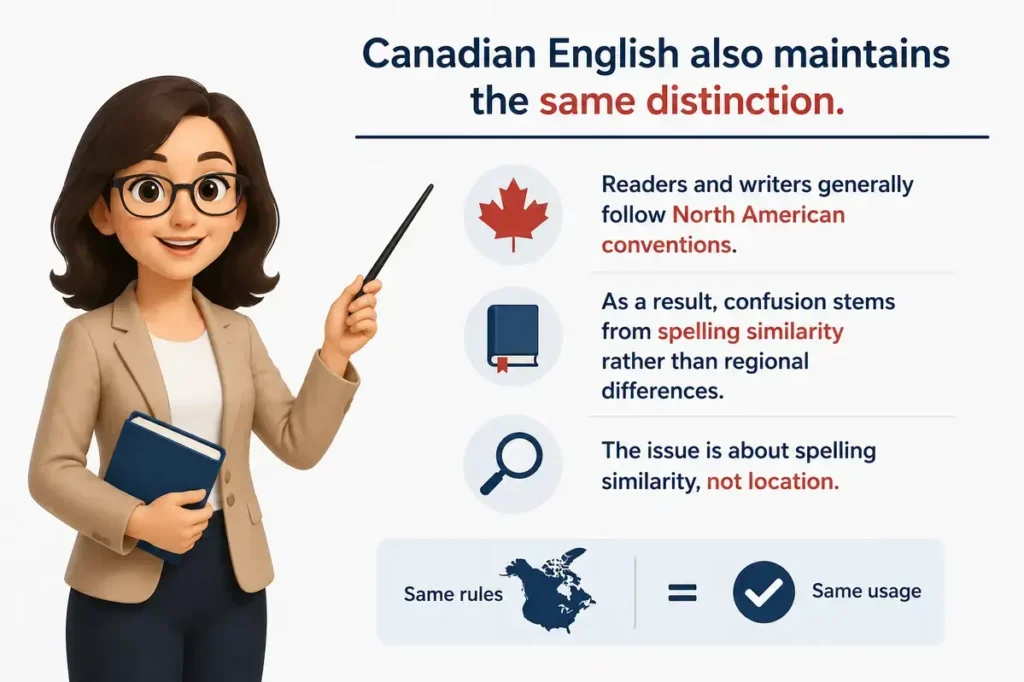
Canadian English also maintains the same distinction. Readers and writers generally follow North American conventions. As a result, confusion stems from spelling similarity rather than regional differences.
Is One Version More Correct?
No. The distinction between suit and suite remains consistent throughout major English speaking regions. The correct choice depends on meaning, not location.
Suit Vs Suite Grammar Rules
Grammar helps reinforce the difference between these words.
Suit As A Noun
When used as a noun, suit usually refers to clothing or legal action.
Examples:
- He bought a new suit.
- The company filed a suit.
Suit As A Verb
Suit frequently functions as a verb.
Examples:
- The arrangement suits our goals.
- The schedule suits everyone.
This flexibility makes suit more grammatically versatile than suite.
Suite As A Noun
Suite functions almost exclusively as a noun.
Examples:
- The family reserved a suite.
- The software suite includes several tools.
Unlike suit, suite rarely appears as a verb.
Plural Forms
Plural of suit:
Suits.
Examples:
- Several suits hung in the closet.
- Multiple legal suits were filed.
Plural of suite:
Suites.
Examples:
- The hotel offers luxury suites.
- The company occupies several office suites.
Common Sentence Structures
Suit as a noun:
Subject + Verb + Suit.
Example:
He purchased a suit.
Suit as a verb:
Subject + Suit + Object.
Example:
The proposal suits our needs.
Suite as a noun:
Subject + Verb + Suite.
Example:
The suite overlooks the city. Understanding these structures makes it easier to choose the correct word during writing and editing.
Editor Tip For Remembering The Difference
As an editor, I recommend focusing on the letter E in suite. Think of E as standing for extra. A suite usually contains extra things.
- Extra rooms.
- Extra space.
- Extra software tools.
- Extra amenities.
A suit does not represent a collection. It’s usually a single garment set or an action that fits a need. This simple association helps many writers remember the distinction instantly.
Suit Vs Suite In Real Life Usage
Understanding dictionary definitions is helpful, but seeing how native speakers use these words in everyday situations makes the difference much clearer.
Daily Conversation
In ordinary conversations, suit often relates to clothing or personal preference.
Examples:
- That time doesn’t suit me.
- Your new suit looks great.
- The plan suits everyone involved.
- A dark suit is perfect for the event.
Suite usually appears when discussing hotels, offices, or technology.
Examples:
- We upgraded to a larger suite.
- The doctor’s office is in Suite 300.
- Our company uses a productivity suite.
Academic Writing
Academic texts may use suit when discussing appropriateness or suitability.
Examples:
- This method may suit the research objectives.
- The model suits the available data.
Suite often appears in technology, music, and architecture discussions.
Examples:
- The software suite supports data analysis.
- The musical suite reflects Baroque influences.
Professional Communication
Business professionals use both words frequently.
Examples using suit:
- This proposal suits our budget.
- The candidate wore a formal suit.
- The revised timeline suits the client.
Examples using suite:
- The office is located in Suite 450.
- The software suite improves productivity.
- The executive suite approved the proposal.
Literature And Publishing
Writers often use suit metaphorically.
Examples:
- The role suited his personality.
- The circumstances suited her ambitions.
Suite appears less often in fiction but remains common in stories involving hotels, luxury living, and business environments.
Media And Advertising
Advertising regularly features both words.
Examples:
- Shop premium business suits.
- Experience our luxury suites.
- Discover an all in one software suite.
The surrounding context immediately reveals which word is correct.
Suit Vs Suite Related Words And Confused Terms
Several English words create similar confusion because they look or sound alike.
Related To Suit
- Suitable.
- Suitability.
- Suited.
- Suitor.
- Lawsuit.
- Pursuit.
These words share historical and semantic connections with suit.
Related To Suite
- Sweet.
- Collection.
- Package.
- Bundle.
- Set.
- Group.
While not direct relatives, these words often appear in similar contexts.
Commonly Confused Word Pairs
- Suit vs Suite.
- Principal vs Principle.
- Affect vs Effect.
- Stationary vs Stationery.
- Compliment vs Complement.
- Than vs Then.
- Advice vs Advise.
- Accept vs Except.
These pairs frequently appear in grammar questions because spelling similarities can hide important meaning differences.a complete understanding of the topic.
Suit Vs Suite Expert Language Insight
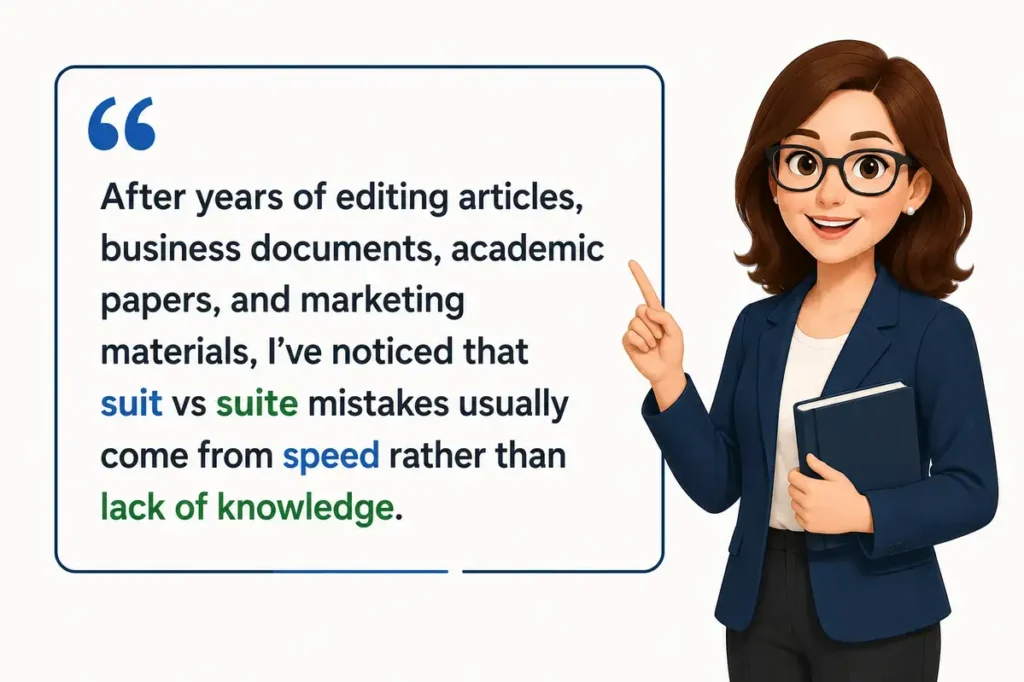
After years of editing articles, business documents, academic papers, and marketing materials, I’ve noticed that suit vs suite mistakes usually come from speed rather than lack of knowledge. Most people actually understand the difference when they stop and think about the context. Native English speakers rarely confuse the meanings during conversation. The mistake usually happens while typing.
A simple question can prevent nearly every error: Am I talking about one thing or a collection of things?
If you’re discussing clothing, legal action, or something that fits a need, suit is usually correct. If you’re discussing connected rooms, grouped products, software packages, or office locations, suite is usually correct. Professional editors often rely on context instead of pronunciation because pronunciation can be misleading. The strongest writers don’t memorize endless grammar rules. They understand meaning first and spelling second. That’s the approach that works best with suit and suite.
Frequently Asked Questions About Suit Vs Suite
Is suit or suite correct for a hotel room?
Suite is correct. A hotel suite refers to a group of connected rooms or a larger accommodation space. Hotels offer suites, not suits. Using suit in this context is a spelling mistake.
Is suit or suite correct for clothing?
Suit is correct. A suit is a set of matching garments typically worn for business, formal events, weddings, or professional occasions. Suite never refers to clothing.
Why do people confuse suit and suite?
People confuse them because the words look similar and sound somewhat alike. Both are valid English words, so spell checking software may not catch the mistake. Context determines which spelling is correct.
What is a software suite?
A software suite is a collection of related programs designed to work together. Examples include productivity tools, design applications, and security packages that share common features and functions.
Can suit be used as a verb?
Yes. Suit can function as a verb meaning to fit, satisfy, match, or be appropriate.
Example:
The schedule suits our team perfectly. Suite cannot normally be used as a verb.
What is the plural of suit?
The plural form is suits.
Examples include:
- Business suits.
- Legal suits.
- Formal suits.
The spelling changes only by adding an S.
What is the plural of suite?
The plural form is suites.
Examples include:
- Hotel suites.
- Office suites.
- Software suites.
The spelling follows standard English plural formation rules.
How can I remember the difference between suit and suite?
Think of the letter E in suite as meaning extra. A suite usually contains extra things such as rooms, space, services, or programs. A suit refers to clothing, legal action, or something that fits a person’s needs. This memory trick works well for many writers and students.
A related grammar guide is one-third or one third Correct Spelling and Usage.
Suit Vs Suite Conclusion
The difference between suit vs suite comes down to meaning and context. Suit usually refers to clothing, legal action, card categories, or something that fits a person’s needs. It can function as both a noun and a verb, making it one of the more flexible words in English.
Suite refers to a connected group of things. Common examples include hotel suites, office suites, software suites, and musical suites. It functions primarily as a noun and almost always describes a collection or grouping. If you’re talking about a person wearing formal clothing, choose suit. If you’re talking about connected rooms or a package of related products, choose suite. Remember one simple rule. A suite contains a set of connected things. A suit does not. Once you focus on meaning instead of spelling similarities, choosing the correct word becomes easy.
2 thoughts on “Suit vs Suite: Definitions, Meanings, and Examples 2026”