
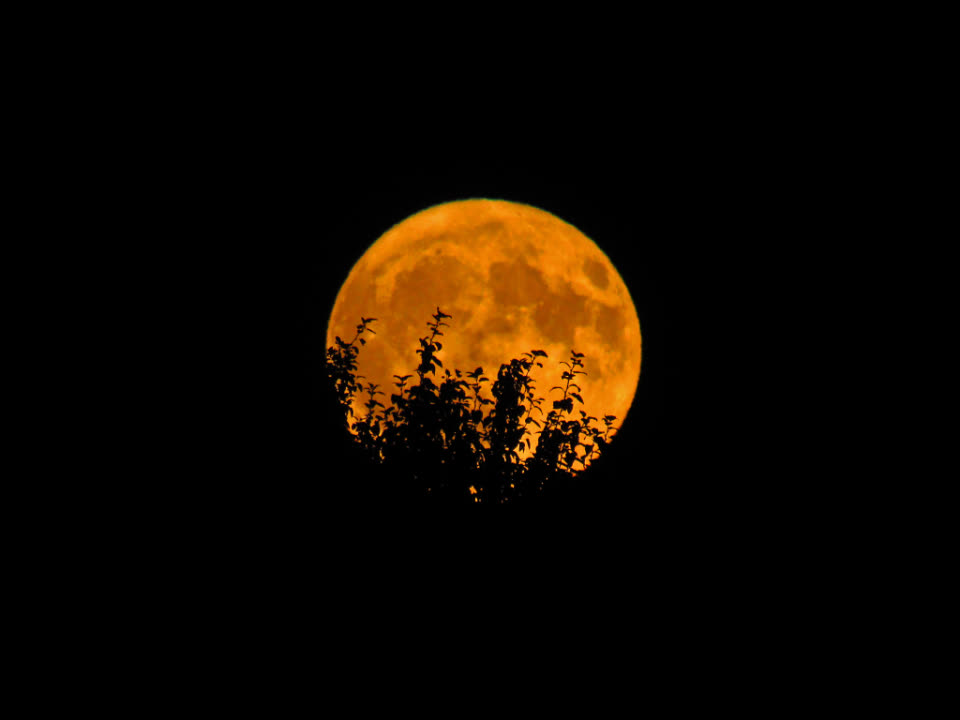
Some things happen every day. Others happen so rarely that you almost forget they’re possible: a friend who never calls suddenly ringing you, a sunny week in a famously rainy city, finding a parking space right outside the shop. For events like these, English has a lovely expression. They happen once in a blue moon.
Learn the difference in Eying Or Eyeing: Definition, Pronunciation, and Examples.
What “Once in a Blue Moon” Means
The idiom means very rarely or almost never. It describes something that does happen, just not often enough to count on. The tone is usually light, sometimes a little wistful, and it works in both everyday speech and relaxed writing.
Importantly, it doesn’t mean “never”. Saying “I eat fast food once in a blue moon” means you do it occasionally, perhaps a few times a year.
Is a Blue Moon a Real Thing?
Yes, though not quite in the way the name suggests. In astronomy, “blue moon” has two common meanings:
- The calendar definition: the second full moon in a single calendar month. Because the lunar cycle is about 29.5 days, this happens roughly every two to three years.
- The seasonal definition: the third full moon in an astronomical season that has four full moons instead of the usual three. This older definition comes from farmers’ almanacs.
Neither kind of blue moon is actually blue. It looks like any other full moon. Genuinely blue-tinted moons are far rarer and happen when smoke or dust in the atmosphere, for example after a large volcanic eruption or wildfire, scatters red light and lets the moon appear bluish.
Where the Phrase Came From
The expression is older than the modern astronomical definitions. In the sixteenth century, saying someone would argue that “the moon is blue” was a way of calling their claim absurd, a bit like saying pigs might fly. Over time the idea shifted from “impossible” to “extremely rare”, and by the nineteenth century “once in a blue moon” was being used much as we use it today.
The “second full moon in a month” definition became popular much later, in the twentieth century, partly because of a magazine article that misread the old almanac rule. The mistake stuck, and now both definitions are widely accepted.
Many readers also check Please Disregard My Previous Email Meaning and Usage.
Example Sentences
- “My brother lives abroad, so we only see each other once in a blue moon.”
- “I treat myself to a fancy dinner once in a blue moon.”
- “Snow falls here once in a blue moon, so the whole city stops when it does.”
- “He’s usually calm, but once in a blue moon he loses his temper.”
Placement in a sentence
The phrase usually comes at the end of a clause, though it can open a sentence for emphasis: “Once in a blue moon, the team actually wins an away game.” Keep the words in order and keep “a”: once in a blue moon, not “once in the blue moon”.
Similar Expressions
- Hardly ever: plain and neutral.
- Few and far between: describes things that are rare or scattered.
- Every so often: occasionally, but more frequently than a blue moon.
- When pigs fly: means “never”, not “rarely”. It’s sarcastic and stronger.
- Rare as hen’s teeth: extremely rare, a more colourful option.
The difference between “once in a blue moon” and “when pigs fly” is worth remembering. One allows the event to happen now and then. The other suggests it simply won’t happen.
Learn the difference in Natzi or Nazi Meaning, Usage, and Correct Form 2026.
Final Thoughts
“Once in a blue moon” is a gentle, slightly poetic way to say something is rare. It began as a joke about impossibility, grew into a phrase about rarity, and later borrowed a real astronomical name. Next time the calendar shows two full moons in one month, you’ll have a nice bit of trivia to share, which, fittingly, might only come up once in a blue moon.